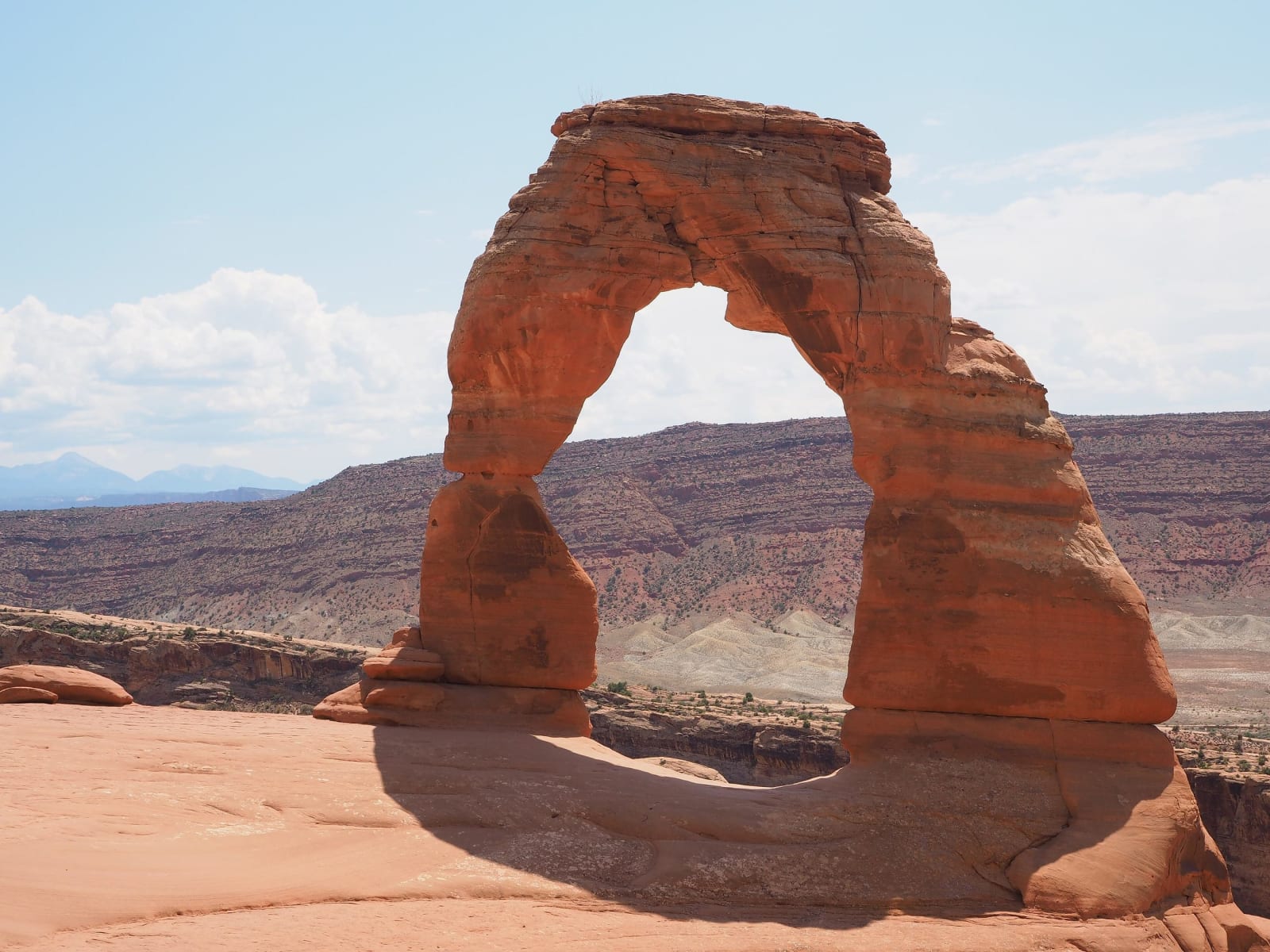
Utah
A Road Trip Guide

Utah

From the red-rock canyon country of the south to the alpine Wasatch in the north — five national parks, a hundred ghost towns, and more empty road than almost anywhere left in the country.

182 places · 14 regions · 24 stories · 12 drives

All of Utah, One Map

Tap any dot to discover what makes a place worth the stop.

Architectural
Attraction
Culinary
Cultural
Geological
Historical
Industrial
Natural
Recreational
Roadside

Regions of Utah

Each region gathers the parks, towns, drives, and roadside stops that define one corner of the state.

Region

Bryce Canyon Country

The high-plateau heart of Scenic Byway 12 — Bryce Canyon's hoodoos, the Grand Staircase–Escalante, and the string of towns and parks along one of America's great drives.

25 places to explore
Explore region →
Region

Cache Valley & Bear Lake

Utah's green northern corner — the dairy-and-college town of Logan, the Logan Canyon scenic byway, and the turquoise water of Bear Lake.

12 places to explore
Explore region →
Region

Capitol Reef Country

Utah's quietest red-rock park and the country around it — Capitol Reef, the Waterpocket Fold, the orchards of Fruita, and the desert towns of Highway 24.

9 places to explore
Explore region →
Region

Castle Country & the San Rafael Swell

The empty heart of east-central Utah — the San Rafael Swell, the richest dinosaur quarry on earth, the rock art of Nine Mile Canyon, and the coal town of Price.

8 places to explore
Explore region →
Region

Cedar Breaks & Brian Head

The high, cool plateau above Cedar City — Cedar Breaks' wildflower amphitheater, the ski town of Brian Head, and the ancient rock art at Parowan Gap.

3 places to explore
Explore region →
Region

Central Utah

The heartland between the Wasatch Front and the red-rock south — pioneer towns along I-15, Cove Fort, Big Rock Candy Mountain, Fish Lake, and the Manti Temple.

23 places to explore
Explore region →
Region

Dinosaurland & Flaming Gorge

Utah's far-northeast corner — the dinosaur fossil beds around Vernal and the red-rock canyon country of Flaming Gorge, deep in the Uinta Basin.

9 places to explore
Explore region →
Region

Greater Zion

Utah's red-rock southwest corner — Zion National Park and the canyons, ghost towns, and desert parks of Washington County around it.

11 places to explore
Explore region →
Region

Kanab & the Grand Staircase

The red-rock crossroads of southern Utah — the movie-history town of Kanab, the Coral Pink Sand Dunes, and the largest animal sanctuary in the country.

3 places to explore
Explore region →
Region

Moab & Canyon Country

Utah's red-rock basecamp on the Colorado River — Arches, Canyonlands, and a dense web of overlooks, river roads, and slickrock around the town of Moab.

19 places to explore
Explore region →
Region

Monument Valley & the Trail of the Ancients

Utah's remote far southeast — Monument Valley, the San Juan River canyons, and the Ancestral Puebloan country of the Trail of the Ancients.

8 places to explore
Explore region →
Region

Park City & the Wasatch Back

Salt Lake's high-country playground — Park City's ski resorts and silver-mining history, the Mirror Lake Highway into the Uintas, and the Heber Valley.

16 places to explore
Explore region →
Region

Salt Lake & the Wasatch Front

Utah's capital and the urban corridor along the mountains — Temple Square, the Great Salt Lake, the Cottonwood ski canyons, Ogden, and the Golden Spike.

26 places to explore
Explore region →
Region

Utah Valley

The valley between Utah Lake and Mount Timpanogos — Provo's canyons and waterfalls, Sundance, Timpanogos Cave, and the family attractions of Lehi.

10 places to explore
Explore region →

Stories from Utah

The histories behind the places — the people, the disasters, the inventions, and the long memory of the land.
Mount Timpanogos at sunset, its long snow-capped ridgeline catching alpenglow above Utah Valley — the reclining profile behind the 'sleeping princess' legend.
Culture

The Invented Legend of Mount Timpanogos

The sleeping princess everyone in Utah Valley knows was written by a track coach in 1922 — and the real story underneath is harder.

JoAnn · Jun 17, 2026 · 5 min read
The turquoise water of Bear Lake on the Utah–Idaho line, its Caribbean color owed to limestone sediment suspended in the water.
Geology

Where the Red Runs Out

Everyone pictures Utah as red sandstone. But drive far enough north and the red runs out: Cache Valley and Bear Lake are built on gray limestone twice as old — the floor of vanished tropical seas. And the same rock that makes the canyons gray is what turns Bear Lake its impossible turquoise.

JoAnn · Jun 17, 2026 · 6 min read
Coal cars emerging from the portal of the Castle Gate Mine in Carbon County, Utah, beneath a sign reading "this mine has worked 12 days without a lost-time accident."
Culture

The County They Named Carbon

Carbon County was named for coal — one of the forms the element takes, along with soot, graphite, and diamond. But coal is only half of what this overlooked corner of Utah has always pulled out of the ground. The other half is far older, and it has teeth.

JoAnn · Jun 17, 2026 · 7 min read
Snow-clad chutes and cliffs above Alta in Little Cottonwood Canyon, Utah, under a blue winter sky.
Nature

The Greatest Snow on Earth

Utah puts “The Greatest Snow on Earth” on its license plates, and the snow is real — but almost everything people believe about why is wrong. It isn't the lake, and it isn't even the driest snow in the country. It is a recipe, and the same warming that is drying the Great Salt Lake is starting to take it apart.

JoAnn · Jun 17, 2026 · 6 min read
The Utah State Capitol and downtown Salt Lake City on the Bonneville benches, the valley spreading to the Wasatch and Oquirrh ranges — the basin dropped by the Wasatch Fault.
Geology

The Fault Under Everything

Most of Utah lives on the Wasatch Front because one crack in the crust raised the mountains, dropped the valleys, cut the benches the cities are terraced onto, and warms the springs — and the same crack is the largest earthquake hazard in the interior West, quiet now for a very long time.

JoAnn · Jun 16, 2026 · 7 min read
The Milky Way arching over Owachomo Bridge at Natural Bridges National Monument, Utah — the world's first International Dark Sky Park.
Nature

The Last of the Dark

Across the modern world the night sky has been all but erased by artificial light — most people will never see the Milky Way from home. The high, empty Colorado Plateau is the largest reservoir of real darkness left in the country, and Utah protects more of it than anywhere on Earth.

JoAnn · Jun 16, 2026 · 6 min read
Dark, knobby cryptobiotic soil crust spread between junipers and sandstone slabs in southern Utah — a living skin of cyanobacteria, lichen, and moss.
Nature

The Skin of the Desert

The black, knobby crust between the rocks and shrubs of southern Utah is alive — a community of ancient organisms that quietly holds the whole landscape together. It can take a human lifetime to grow back, and it dies under a single boot.

JoAnn · Jun 16, 2026 · 6 min read
A single clone of aspen turning gold and orange on a sagebrush hillside in Fishlake National Forest, Utah, its uniform color marking the borders of one organism.
Nature

Where One Tree Ends

Every gold aspen hillside in Utah is a handful of giant, ancient, single organisms — and the patchwork of autumn color is a map of where one stops and the next begins. They are also quietly disappearing.

JoAnn · Jun 16, 2026 · 6 min read
The tilted Carnegie Quarry wall of bones at Dinosaur National Monument, Utah — roughly 1,500 Jurassic dinosaur bones still embedded in the sandstone face beneath the Quarry Exhibit Hall.
Geology

The Country That Ran Out of Water

Two of the richest dinosaur quarries on Earth lie a hundred miles apart in the same Jurassic rock — one a jumbled pond, one a river of articulated skeletons — and the same thing killed both: a country that kept running out of water.

JoAnn · Jun 16, 2026 · 7 min read
Electric-blue potash evaporation ponds set against layered red sandstone cliffs near Moab, Utah, where buried salt from an evaporated sea is pumped up and dried.
Geology

The Sea That Never Left

Every arch, sunken valley, and crumbling spire around Moab is the work of a bed of salt left behind when an inland sea dried up — and three hundred million years later, the salt is still moving.

JoAnn · Jun 16, 2026 · 7 min read
The restored Ephraim Co-op, a two-story white limestone storefront with a gold beehive and "Holiness to the Lord" painted in its pediment, under a dark storm sky beside the 1876 Relief Society granary
History

The Store That Tried to Secede from the Economy

Brigham Young built a network of cooperative stores to wall Utah off from American capitalism. The one in Ephraim outlived the experiment — and ended up a co-op again.

JoAnn · Jun 12, 2026 · 5 min read
The Virgin River gorge above Hurricane in 1971, with the Hurricane Canal traversing the canyon wall as a thin line above the river
Culture

The Town They Dug Before They Built It

For eleven winters, farmers from the flood-wrecked villages of the upper Virgin River blasted a canal along a gorge wall to water a bench where nobody lived. The water arrived in 1904. The first family arrived two years later.

JoAnn · Jun 11, 2026 · 5 min read
A granite trail monument with a bronze plaque marking Brigham Young's last camp on the Mormon Pioneer National Historic Trail, set among pines and golden grass
Culture

The Small Print at the Side of the Road

Utah's historical markers carry two stories: the one on the front, and the one at the bottom — a hundred and twenty-five years of daughters, sons, counties, towns, and one museum deciding what deserved bronze.

JoAnn · Jun 10, 2026 · 6 min read
The core of the Milky Way rising over a silhouetted red-rock formation in the dark-sky country around Torrey, Utah, gateway to Capitol Reef.
Culture

The Town You Were Supposed to Drive Through

Torrey, Utah exists because of the road to Capitol Reef — a farm town that became a gas-and-bed stop on the way to somewhere more famous. Then a settlement of a couple hundred people gave its name to a national publisher, won Utah's first dark-sky designation, and decided it would not be only a place you pass.

JoAnn · Jun 5, 2026 · 7 min read
A 1964 Historic American Buildings Survey photograph of the one-room Fruita schoolhouse, built 1896, on Highway 24 in Capitol Reef National Park, Utah.
Culture

The Orchard That Outlived the Town

No one has lived in Fruita, Utah, since 1969, and the town has never been better tended. How a Mormon farm settlement came to be preserved by the government that emptied it.

JoAnn · Jun 4, 2026 · 6 min read
An 1854 portrait of Wakara (Chief Walker), a Northern Ute leader of the Timpanogo and Sanpete band, painted from life by Solomon Nunes Carvalho.
History

The People the Valley Was Named For

Sanpete is a settler's spelling of San Pitch — the Ute people whose homeland this was, and whose displacement set off the longest, hardest war in Utah's history.

JoAnn · Jun 3, 2026 · 6 min read
An 1891 engraving of the Manti Temple in Sanpete Valley, Utah, dedicated in 1888 and built by the region's Mormon settlers, many of them Scandinavian immigrants.
History

The Valley They Called Little Denmark

How a wave of Scandinavian converts settled Sanpete in the 1850s and built a stretch of Utah that still half-belongs to the old country.

JoAnn · Jun 3, 2026 · 5 min read
A 1930s photograph of a road crew and machinery grading the switchbacks of the Zion–Mount Carmel Highway, Zion National Park, Utah.
History

The Roads the Depression Built

How three million out-of-work young men built the mountain roads Utah still drives on.

JoAnn · Jun 3, 2026 · 5 min read
A mid-19th-century American pieced quilt in the Log Cabin pattern — the patchwork tradition behind the name of Scenic Byway 143, the "Patchwork Parkway."
History

The Quilt That Named a Highway

How a desperate winter crossing in 1864 gave Utah's strangest-named scenic byway its name.

JoAnn · Jun 2, 2026 · 6 min read
An 1879 wood engraving, "Alta City and Emma Mine," showing the silver-mining town of Alta in Utah's Little Cottonwood Canyon, with mine workings cut into the surrounding Wasatch hillsides.
History

What the Mines Left Behind

Utah's greatest ski resorts were built on the wreckage of the industries that came before them — silver mines gone bust, a uranium fortune, a sheep range, a watershed logged and grazed nearly to ruin. The lifts went up exactly where the money ran out.

JoAnn · Jun 1, 2026 · 7 min read
A 1930s photograph of a road crew at work on the cliffside switchbacks of the Zion–Mount Carmel Highway, Zion National Park, Utah.
History

The Poison Road

How the CCC built the most dangerous road in southern Utah in a single summer, and why it took seven more years before Boulder finally stopped getting its mail by mule.

JoAnn · May 19, 2026 · 8 min read
Green ranchland in a valley amid the white slickrock and canyon country of the Hogsback on Scenic Byway 12, the remote road into Boulder, Utah.
Culture

The Restaurant at the End of the Road

Hell's Backbone Grill opened in 1999 in Boulder, Utah, with three thousand dollars and a year of free rent. By every reasonable accounting of how restaurants work, it should have closed inside two years. Instead it built a farm, helped mount a legal challenge to the largest reduction of federal land protection in U.S. history, and in 2025 bought the lodge it had been renting since the start.

JoAnn · May 16, 2026 · 7 min read
An 1882 chromolithograph by William Henry Holmes, "The Grand Cañon at the Foot of the Toroweap — Looking East," from Clarence Dutton's U.S. Geological Survey atlas, showing the layered sedimentary cliffs of the Colorado Plateau.
Geology

The Staircase You Can Drive

Most geology happens vertically and out of reach. Along Utah Highway 12, the entire 270-million-year stack tilts sideways into the windshield.

JoAnn · May 15, 2026 · 7 min read
A historic horse-and-mule pack train in Utah's canyon country — the kind of string that carried mail and freight to isolated towns like Boulder before the road came through.
History

The Last Mule Mail Town in America

How Boulder, Utah went from the most isolated settlement in the lower 48 to one stop on the most beautiful drive in America — and stayed, somehow, mostly itself.

JoAnn · May 14, 2026 · 6 min read

Scenic Drives

The roads themselves — traced end to end, with the stops worth making along the way.

Scenic Byway

Alpine Loop Scenic Byway

Twenty hairpin miles over the shoulder of Mount Timpanogos — UT-92 from American Fork Canyon into Provo Canyon, past Timpanogos Cave, Cascade Springs, and Sundance. Paved and narrow, closed in winter, unbeatable in fall.

Distance
20 mi
Drive
1.5 hrs
Best
Summer · Fall
Plan this drive →
Scenic Byway

Highway 12 Scenic Byway

A 124-mile All-American Road through southern Utah's red-rock canyons, alpine forests, and slickrock wilderness — widely regarded as one of the most scenic drives in America.

Distance
124 mi
Drive
3.5 hrs
Best
Spring · Summer · Fall
Plan this drive →
Scenic Byway

Highway 20

Twenty unsigned miles between I-15 and US-89 over Bear Valley — the Old Spanish Trail crossing that carried Panguitch's founders and the Quilt Walk of 1864.

Distance
20.5 mi
Drive
0.5 hrs
Best
Spring · Summer · Fall
Plan this drive →
Scenic Byway

Highway 24 Scenic Byway

A 47-mile drive through the Waterpocket Fold — the geological wave that defines Capitol Reef — from Torrey at Highway 12's eastern terminus to the desert crossroads of Hanksville.

Distance
47 mi
Drive
1.5 hrs
Best
Spring · Summer · Fall
Plan this drive →
Scenic Byway

Highway 9 Scenic Byway

A 57-mile drive from the I-15 gateway through Springdale and Zion National Park to Mount Carmel Junction — climbing the cliff-face switchbacks and the 1930 Zion–Mount Carmel Tunnel along the way.

Distance
57 mi
Drive
2 hrs
Best
Spring · Summer · Fall
Plan this drive →
Scenic Byway

Logan Canyon Scenic Byway

US-89 climbs forty-one miles from Logan up its limestone canyon to a pass near 7,800 feet, then drops to the turquoise water of Bear Lake — a National Scenic Byway, glorious in fall and open year-round.

Distance
41 mi
Drive
1.5 hrs
Best
Spring · Summer · Fall
Plan this drive →
Scenic Byway

Mirror Lake Scenic Byway

UT-150 climbs from Kamas into the Uintas over Bald Mountain Pass — at 10,715 feet, Utah's highest paved road — to the glassy alpine water of Mirror Lake. A short, spectacular season, roughly late June through early October.

Distance
32 mi
Drive
1.5 hrs
Best
Summer · Fall
Plan this drive →
Scenic Byway

Nebo Loop Scenic Byway

Thirty-eight winding miles over the back of Mount Nebo, the highest peak in the Wasatch — a CCC-built byway from Payson to Nephi, past alpine lakes, a 9,300-foot overlook, and a pocket of red-rock hoodoos. Closed in winter, unforgettable in fall.

Distance
38 mi
Drive
2 hrs
Best
Summer · Fall
Plan this drive →
Scenic Byway

Nine Mile Canyon Backway

The old freight road up the world's longest art gallery — a slow drive past a thousand years of Fremont and Ute rock art, from Wellington toward the Uinta Basin.

Distance
78 mi
Drive
3.5 hrs
Best
Spring · Summer · Fall
Plan this drive →
Scenic Byway

Scenic Byway 143

Utah's Patchwork Parkway — 51 miles from Parowan to Panguitch, climbing 4,400 feet out of the desert to a 10,000-foot rim past Brian Head, Cedar Breaks, and Panguitch Lake.

Distance
51 mi
Drive
2 hrs
Best
Summer · Fall
Plan this drive →
Scenic Byway

US-89 Heritage Highway

Forty-some miles down the floor of Sanpete Valley, US-89 threads the best-preserved string of pioneer Mormon towns in Utah — the "Little Denmark" heart of the Mormon Pioneer National Heritage Area, from Fairview's Ice Age mammoth past Manti's 1888 temple to Gunnison's century-old Casino Star Theatre.

Distance
43 mi
Drive
1.5 hrs
Best
Spring · Summer · Fall
Plan this drive →
Scenic Byway

UT-128 Colorado River Road

A 44-mile scenic drive along the Colorado River through towering red-rock canyons — locals' choice for the most beautiful road in Utah.

Distance
44 mi
Drive
1.5 hrs
Best
Spring · Summer · Fall
Plan this drive →
← Explore another state