Deep inside Timpanogos Cave, past the tunnels the Civilian Conservation Corps blasted by hand and the helictites that grow sideways in open defiance of gravity, a ranger raises a flashlight to the ceiling and finds the Great Heart — a pink, heart-shaped knot of stone hanging in the dark — and tells the story the way it has always been told here. A maiden and a warrior, their two hearts melted into one by a grieving god and left to hang forever in the rock. The visitors go quiet. It is a good story, and it carries the worn smoothness of something very old.
It is not old. The legend is younger than the electric lights that illuminate it. A version of it has echoed through this cave for a hundred years, but it was written — beginning, middle, and tragic end — by a Brigham Young University track coach named Eugene Lusk Roberts, and the year was 1922.
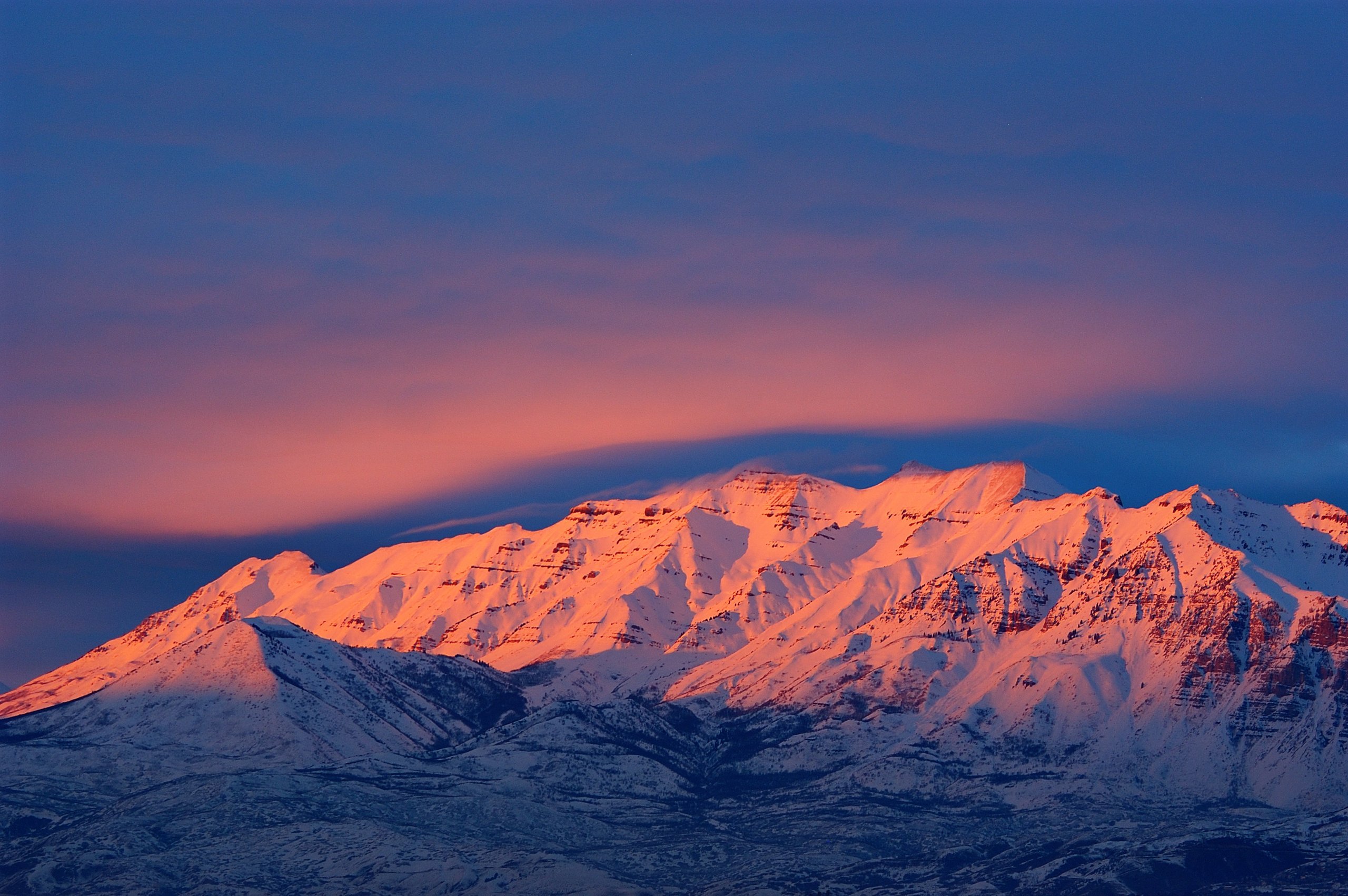
Roberts was the kind of man a mountain attaches itself to; people called him "Timp" long before most of us were born. In 1912 he led twenty students up to the summit on a lark, and the outing grew into an annual community hike that ran for nearly six decades, with a firelit pageant the night before that drew crowds of as many as ten thousand to the clearing at Aspen Grove. And around that fire, before the climbers set off in the dark, Roberts told a legend of his own making. He called it "The Story of Utahna and Red Eagle": a drought grips the valley, the god of the mountain demands the sacrifice of a maiden, and the chief's daughter, Utahna, climbs the peak to throw herself from it — only to be intercepted by a warrior, Red Eagle, who hides her in a cave and lets her believe he is the god. They live concealed in the stone until she discovers he is mortal; heartbroken, she leaps after all, and the grieving god fuses their two hearts into the pink formation that still hangs in the cavern below. Her body, the story finishes, became the mountain itself — the long reclining ridgeline that, once someone has told you to see it, looks unmistakably like a woman lying on her back with her hair spilling down the western slope.
It is a tidy piece of invention, and it was built to be sold. Roberts published it in a slim 1922 booklet, "Timpanogos: Wonder Mountain," underwritten by BYU, the Provo Chamber of Commerce, and the American Fork Commercial Club — the boosters, in other words, of a valley that wanted its mountain on the national map. A peak with a tragic Indian princess is more memorable than a peak with good snow, and Roberts knew it. He was not even unusual in this. The same decades minted a whole genre of invented "sleeping Indian" mountains across the West — the Sleeping Ute in Colorado, sleeping maidens and giants from California to Montana — pseudo-Native legends grafted onto American skylines by chambers of commerce that had discovered romance was good for business. The legend gave Timpanogos a soul that fit on a postcard.
Here is what the firelight left out. The name Timpanogos was already, deeply, Native — and it had nothing to do with a princess. In the old Numic tongue of the region the word joined something like "rock" and "water," and it named a people and the water system that kept them alive — Utah Lake, the Provo River, and the Great Salt Lake — long before it was ever fixed to the peak. The river that still runs cold and clear past Bridal Veil Falls carried the name before the mountain did. When the Franciscan fathers Domínguez and Escalante passed through in 1776, they wrote the word down and let it spread upward to the whole range.
And the people it belonged to were nearly gone from their own valley by the time Roberts lit his first bonfire. Within a generation of the Mormon settlement of their lakeshore in 1849 — and the disease, dispossession, and violence that arrived with it — the Timpanog were emptied out of Utah Valley; in 1865 the survivors agreed to move east to the Uintah Reservation, and by one accounting the band that still carried the Timpanogos name had dwindled to fewer than six families. Their descendants are usually filed under "Ute," though they identify as Shoshone, hold themselves apart from the Ute Indian Tribe of the Uintah and Ouray Reservation, and will tell you the distinction is not a footnote. A real nation, with real chiefs and a real history of removal, stands behind the name that Roberts dressed up in a love story.
So the mountain carries two Native stories, and a track coach authored only one of them. The invented one is easy to love: it has a maiden, a moral, and a heart in a cave you can light up on cue. The true one is harder to hold — a people named for rock and water, the lake and river that bore the name first, and a removal that scattered them before the legend was ever written. One is a romance; the other is the loss the romance was laid over, like flowers on a grave nobody local quite remembers digging.
Stand at the Alpine Loop Summit, eight thousand feet up with the glacier-carved east face rearing across the canyon close enough to read the snowfields on it, and you can hold both at once. The ridgeline does look like a sleeping woman, if you have been told to look — that is the strange power of a good invention. But the word on the map is older and truer than the story told beneath it, and it remembers people who were here for centuries before a chamber of commerce went looking for mystique. The best stories about a place are the ones that send you back to look again, and this is one of them — not because the legend is true, but because learning it was made tells you something the view alone never will: that we name our mountains after what we have lost, and then, every so often, invent something prettier to hang in the empty space where the real story should be.