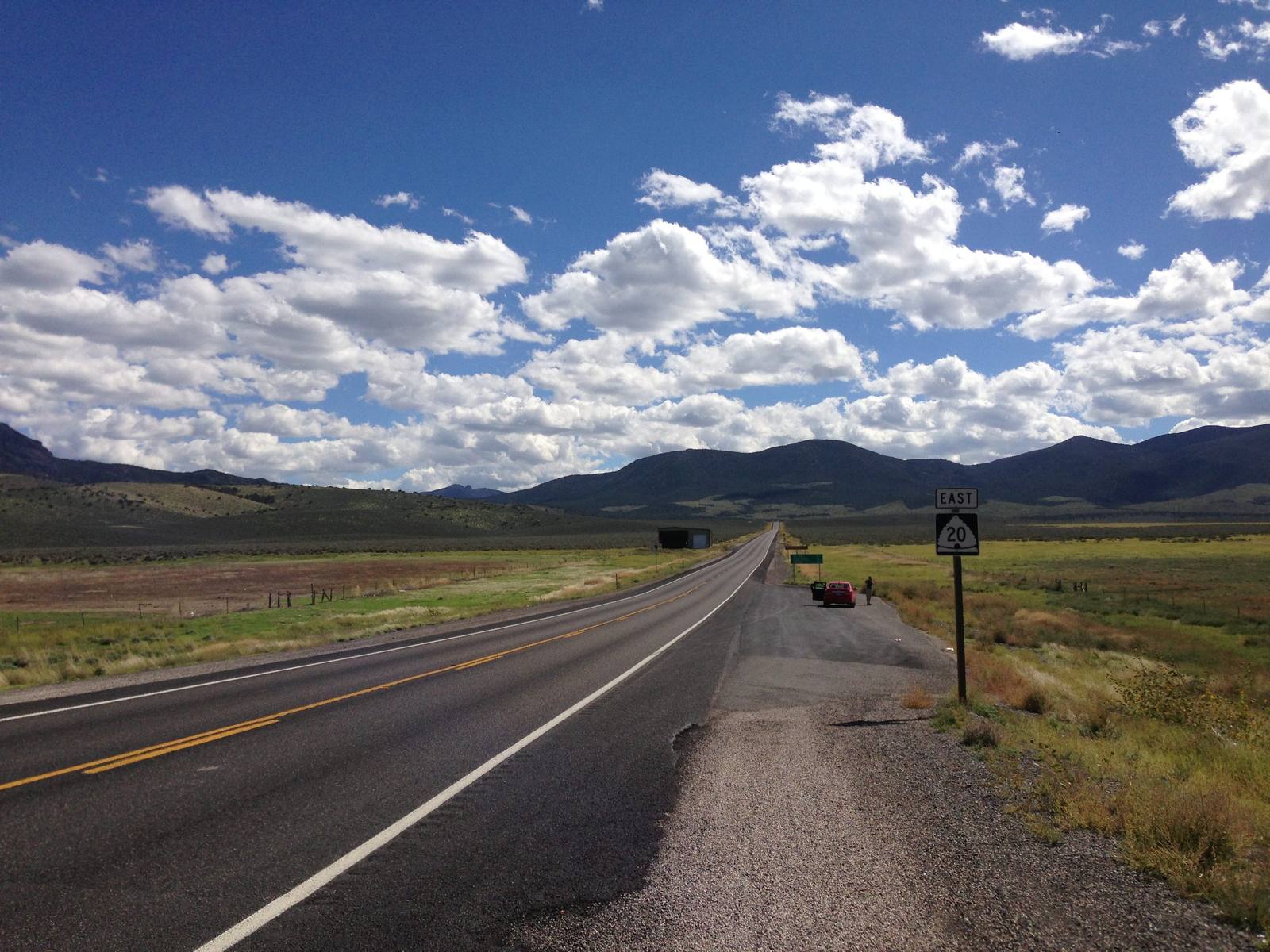
Highway 20
Twenty unsigned miles between I-15 and US-89 over Bear Valley — the Old Spanish Trail crossing that carried Panguitch's founders and the Quilt Walk of 1864.
The Route at a Glance
Highway 20 is twenty miles of road that almost nobody drives on purpose, and it carries more history per mile than either of the celebrated routes it connects. It leaves Interstate 15 at Exit 95, climbs east through Bear Valley to a 7,910-foot pass between the Markagunt Plateau and the Tushar Mountains, and drops to US-89 at Bear Valley Junction — the unsigned back door between the interstate and Panguitch, Bryce Canyon, and the upper Sevier. There is no scenic-byway designation at either end. The road never needed one. For two centuries this gap has simply been the way through.
It is old infrastructure. The Old Spanish Trail — the mule-caravan route that moved woven goods west and horses east between Santa Fe and Los Angeles in the 1830s and 1840s — crossed this exact saddle, climbing Bear Creek through Lower and Upper Bear Valley and then descending Little Creek Canyon to the Parowan Valley near Paragonah, an alignment the National Park Service still cites on the trail's official touring route. The fifty-four pioneer families who founded Panguitch came through the gap from Parowan by wagon, and in the famine winter that followed, seven of their men recrossed it on foot, laying quilts over snow too deep to wade and walking to Parowan and back for flour. That crossing is the Quilt Walk — the story behind the Patchwork Parkway name on neighboring Scenic Byway 143. The byway got the name; Bear Valley is where the walking happened.
Utah made the corridor a state highway in 1917, gave it the number 20 in 1927, and in 1953 shifted its western end north to the present interstate junction, retiring the original Little Creek alignment to a gravel backroad. The modern highway is the crossing the state actually wants you on: UDOT routes trucks over Highway 20 in preference to the steeper, twistier climbs of highways 14 and 9 farther south, and the road is built for the job — climbing lanes on the ascent, an eight-percent, three-mile descent into Little Bear Valley on the far side, plowed and open year-round.
The drive takes half an hour, and its pleasures are quiet ones: ranchland and sage, the long pull up through pinyon to the summit, aspen and meadow in the two Bear Valleys, and almost no one else on the road. At Bear Valley Junction the choice is simple — eleven miles south on US-89 to Panguitch, or ten minutes north to the Butch Cassidy Boyhood Home at Circleville. Either way, you have crossed the mountains the way the mules, the wagons, and the quilt walkers did, on the one road through this country that history picked first and the signs never caught up with.
The Drive, Stop by Stop
3 stops along the route, in driving order from I-15 Exit 95 to Bear Valley Junction (US-89). 3 of them sit off the road itself — the distance is noted on each.
- 1
- 2
- 3
Markers Along This Road
Roadside plaques and monuments worth a pull-over — small history, standing exactly where it happened.
John Christopher Armstrong
Armstrong carved his name in the cliffs of Fremont Canyon during the 1849 expedition's December crossing; the carving is still there.
Panguitch Fort
Beside the Quilt Walk marker; the families who crossed Bear Valley by wagon built their fort on what is now the school square.
Southern Utah Expedition of 1849 — Winter Trail in Fremont Canyon
One of four monuments to Parley P. Pratt's fifty-five-man winter expedition of 1849, whose report seeded Parowan, Cedar City, and most of Iron County.
The Old Spanish Trail
One of three markers sharing a pullout off I-15 exit 100 — the mule-caravan road to Los Angeles passed this way a generation before any wagon did.
The Panguitch Quilt Walk
Garfield County's 1997 marker at Center and 200 East carries the full account — and all seven names — of the men who walked to Parowan on their bedding in the winter of 1864.
Stories Along This Route
Go deeper into the history and character of this drive.
That's the drive. Take your time, pull over often, and let Highway 20 do what it does best.
← Explore more of Open Road Guide