Scenic Byway 143
Utah's Patchwork Parkway — 51 miles from Parowan to Panguitch, climbing 4,400 feet out of the desert to a 10,000-foot rim past Brian Head, Cedar Breaks, and Panguitch Lake.
The Route at a Glance
Scenic Byway 143 climbs faster and higher than any road in this guide, and it has the strangest name. Officially it is State Route 143, the Brian Head–Panguitch Lake Scenic Byway; nearly everyone calls it the Patchwork Parkway, after a piece of local history. In the winter of 1864, settlers from the young town of Panguitch, cut off and short of food, are said to have crossed the deep plateau snow toward Parowan by laying handmade quilts on the crust to keep from sinking through — and the name stuck, a patchwork stitched across the mountain.
The drive is a fast vertical climb out of the desert. It begins at Parowan, just off I-15, at about 6,000 feet, and immediately enters Parowan Canyon, gaining roughly 4,400 feet in less than ten miles of switchbacks. In that short distance it crosses six major life zones — from sagebrush flats to alpine forest — and tops out near 10,626 feet by Cedar Breaks, which makes it the second-highest paved road in Utah after the Mirror Lake Highway. The fifty-one miles end gently, descending through forest to the pioneer town of Panguitch on US-89.
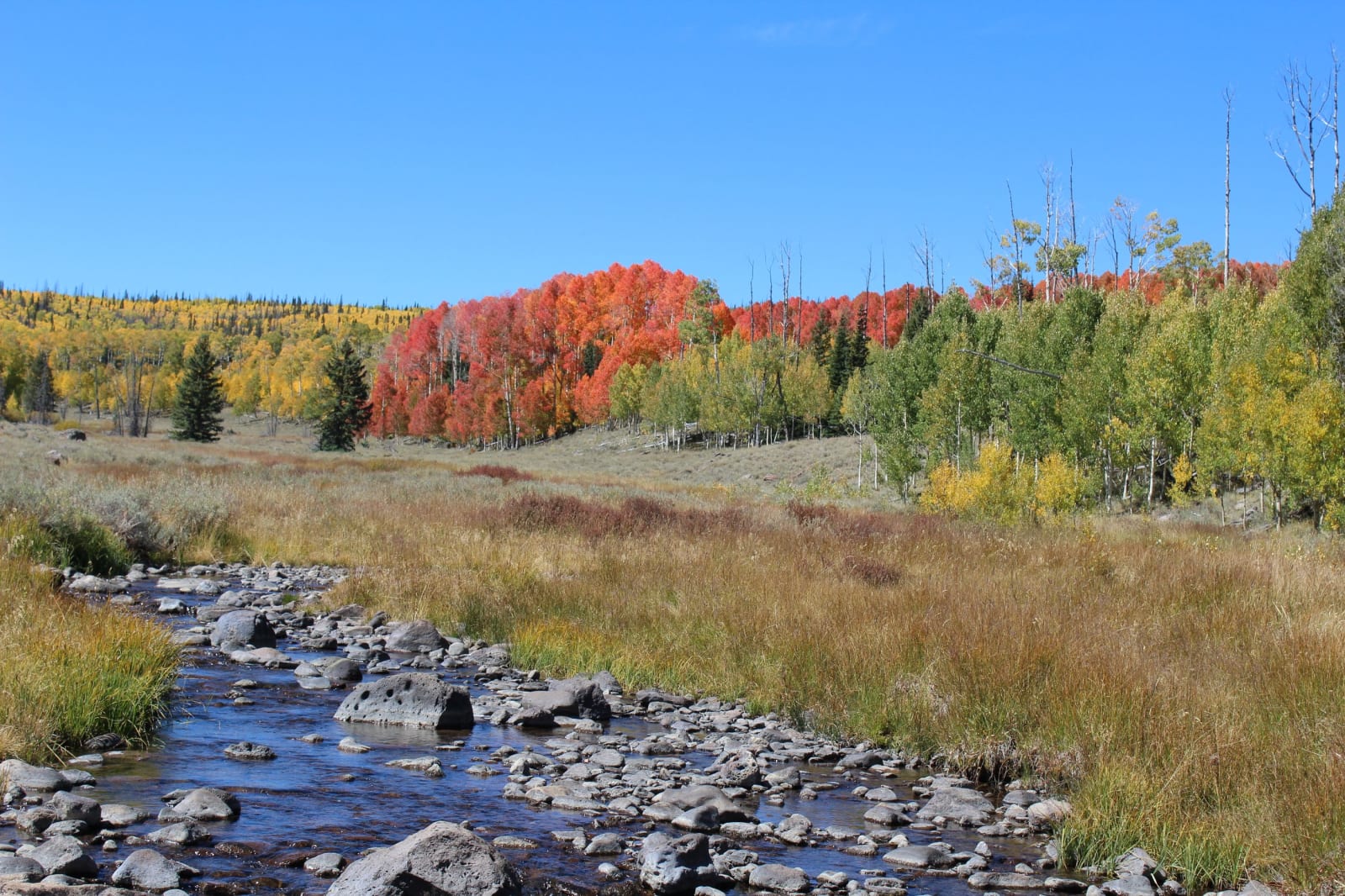
What is strung along it is the appeal. The byway climbs past Brian Head, Utah's highest town and southernmost ski resort, then skirts the rim of Cedar Breaks National Monument, a 2,000-foot amphitheater of pink and orange rock eroded from the Claron Formation. It crosses high meadows, slides past lava flows only a few thousand years old, and runs along the eastern shore of Panguitch Lake, a Blue Ribbon trout fishery at 8,400 feet, before the long descent through South Canyon. Historic Mormon pioneer towns bookend the route — Parowan, settled in 1851, and Panguitch, whose original townsite is listed on the National Register of Historic Places.
One caveat worth planning around: this is a summer-and-fall road. The high section over the plateau closes under snow and Cedar Breaks itself is shut for winter, so the byway is best driven roughly from late spring through October. When it is open, it is one of the great short drives in the state — a 4,500-foot climb from desert to alpine and back, packed into an afternoon.
The Drive, Stop by Stop
5 stops along the route, in driving order from Parowan to Panguitch. One of them sits off the road itself — the distance is noted on each.
- 1
- 2
- 3
- 4
- 5
Markers Along This Road
Roadside plaques and monuments worth a pull-over — small history, standing exactly where it happened.
Panguitch Fort
Beside the Quilt Walk marker; the families who crossed Bear Valley by wagon built their fort on what is now the school square.
The Panguitch Quilt Walk
Garfield County's 1997 marker at Center and 200 East carries the full account — and all seven names — of the men who walked to Parowan on their bedding in the winter of 1864.
Stories Along This Route
Go deeper into the history and character of this drive.
That's the drive. Take your time, pull over often, and let Scenic Byway 143 do what it does best.
← Explore more of Open Road Guide