Nine Mile Canyon Backway
The old freight road up the world's longest art gallery — a slow drive past a thousand years of Fremont and Ute rock art, from Wellington toward the Uinta Basin.
The Route at a Glance
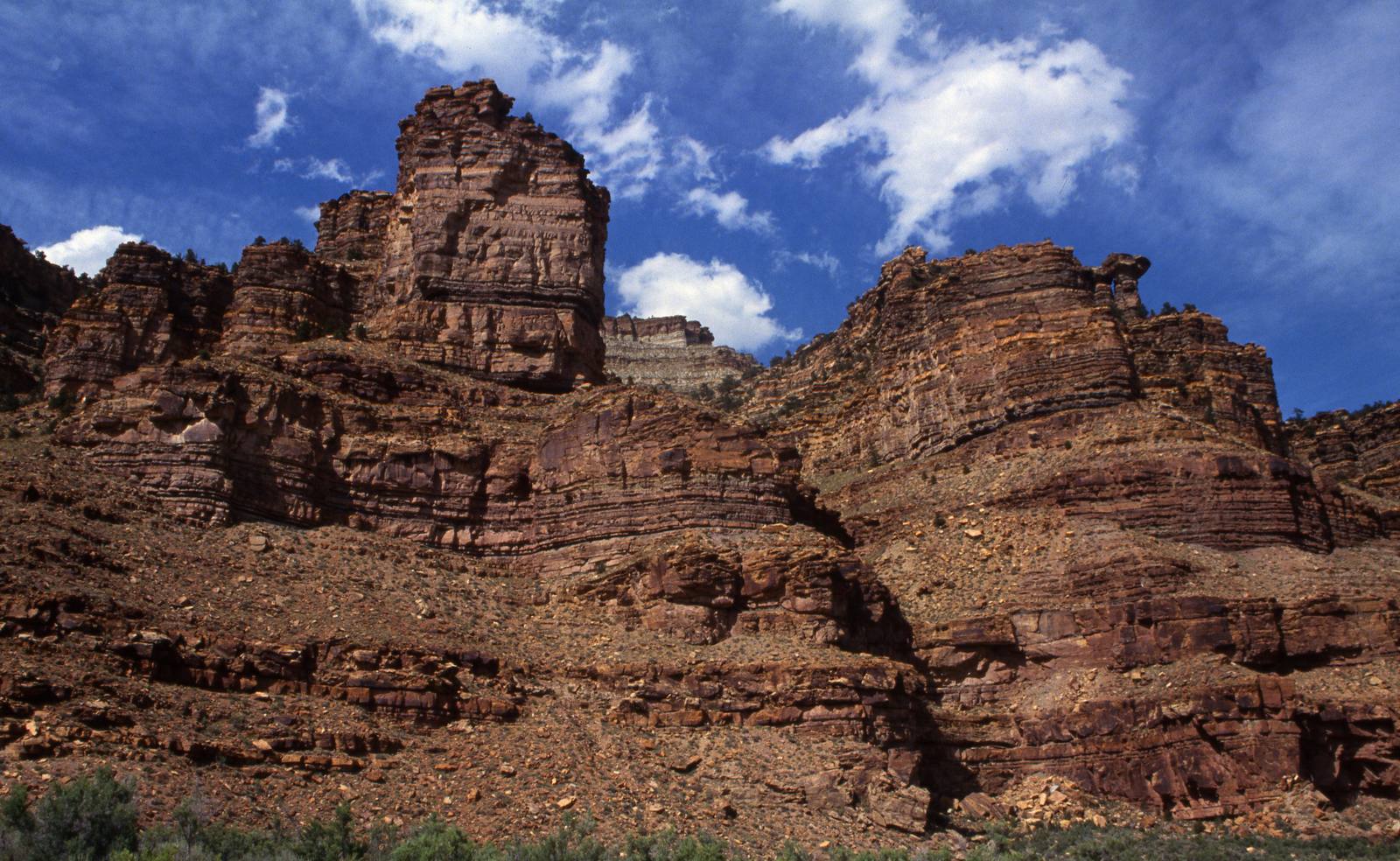
Nine Mile Canyon is the only drive in Utah where the road is the artifact. Most scenic byways are about what you see out the windshield; this one is about the windshield being there at all. The route up the canyon began as a freight and stagecoach road — the old SR-53 — that carried mail, supplies, and passengers between the railhead at Wellington and the Uinta Basin before any highway existed, and it is the reason that a thousand years of Fremont and Ute rock art, pecked and painted onto canyon walls that would otherwise be the province of climbers and archaeologists, can be reached from the seat of an ordinary car. The canyon earned its enduring nickname — the world's longest art gallery — honestly: more than a thousand rock art sites have been cataloged along its walls, among the densest concentrations of ancient imagery anywhere in North America.
The name is a surveyor's error that everyone has agreed to keep. The canyon runs roughly forty miles, not nine; the "nine" came from a triangulation baseline a member of John Wesley Powell's survey laid out along a creek, and the label migrated onto the canyon and stuck. "Forty Mile Canyon" would be accurate and would have no music to it, so Nine Mile Canyon it remains.
Begin in Price, the old coal-and-railroad town that is the last place with fuel, food, and a worthwhile museum before the canyon. From Price it is a short run southeast on US-6/191 to Wellington, where the drive proper begins: turn north at Walker's Chevron on the east edge of town, set your odometer to zero, and follow Soldier Creek Road up into the canyon. The first dozen miles climb out of farmland before the canyon walls close in and the rock art begins.
What follows is not a place you rush. The established approach is to drive slowly, scan both canyon walls for the dark, varnished surfaces the ancient artists preferred, and stop often. Nine Mile Canyon rewards the patient and punishes the hurried — panels hide behind cottonwoods, perch high on cliffs, and reveal themselves only to drivers willing to look. Several stops anchor the drive. Around mile twenty-eight, the Cottonwood Glen picnic area offers the canyon's only developed facilities — vault toilets, a pavilion beside Nine Mile Creek, and the preserved Christensen Ranch homestead, settled in 1896 — a rare shaded pause on a long, dry road. A few miles on, the Daddy Canyon Complex marks one of the two great rock art concentrations, with a graveled pullout, restrooms, and a walking trail that threads past Fremont and Ute panels and the excavated remains of a village. And near mile forty-six, at the mouth of Cottonwood Canyon, the drive reaches its destination: the Great Hunt Panel, the most famous petroglyph in the canyon and one of the most reproduced in the country, an easy fifty-meter walk from a paved pullout.
For most visitors the Great Hunt is the turnaround. The pavement ends just beyond it, and the road continues as graded dirt — narrow, blind-cornered, and impassable when wet — climbing through Gate Canyon to emerge near Myton in the Uinta Basin, the full historic through-route of roughly seventy-eight miles. That dirt section is for the prepared and the dry-weather traveler only; the out-and-back to the Great Hunt on pavement is the drive most people make, and it is more than enough.
The canyon carries a tension it cannot resolve. The same paving that made this drive easy was completed in 2013 as part of the deal that opened the West Tavaputs natural gas field on the mesas above, and the truck traffic and fugitive dust that came with the boom are precisely what threaten the rock art people drive here to see. Sixty-three sites were added to the National Register of Historic Places in 2009 in an effort to force limits on that traffic. The road giveth and the road taketh: the freight route that preserved the canyon's accessibility now endangers the very thing it grants access to. Drive it slowly, touch nothing, and understand that you are passing through a working industrial corridor and an irreplaceable open-air museum at the same time — because in Nine Mile Canyon, they are the same road.
The Drive, Stop by Stop
3 stops along the route, in driving order from Wellington to Myton. 3 of them sit off the road itself — the distance is noted on each.
- 1
- 2
- 3
That's the drive. Take your time, pull over often, and let Nine Mile Canyon Backway do what it does best.
← Explore more of Open Road Guide