 Roc0ast3r / CC0 via Wikimedia Commons
The Story
Sacramento began as John Sutter's outpost and became, almost overnight, the place where the Gold Rush did business: the head of navigation, where riverboats from San Francisco met the wagon roads into the foothills. It was also built at the meeting of two rivers on ground that flooded, and the flood of 1861 and 1862 turned the valley into an inland sea and the city into a wreck.
So the city raised itself. Through the 1860s and 1870s, Sacramento jacked buildings up on screws, filled the streets to the new grade, and left the old ground floors buried beneath. Those spaces are still down there, and you can tour them: hollow sidewalks, sloped alleys, and doorways opening onto packed fill.
The other thing built here was the railroad. The Central Pacific broke ground in Sacramento in 1863 and drove east toward Promontory, and the California State Railroad Museum in Old Sacramento holds twenty-one restored locomotives and cars, some dating to 1862, alongside a faithful reconstruction of the 1876 passenger station. The Pony Express ended its run here too.
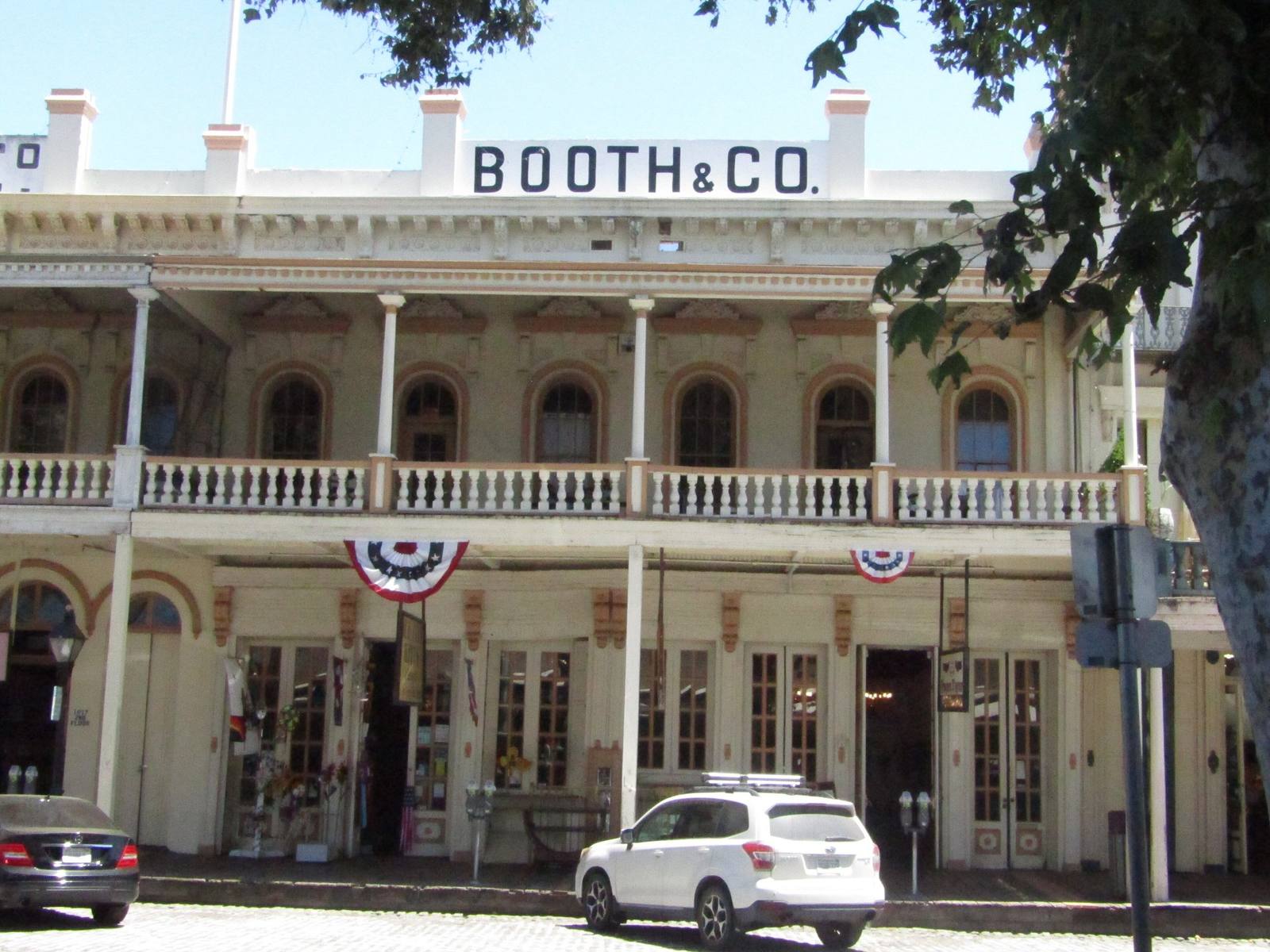
Old Sacramento is a National Historic Landmark district, wooden sidewalks and river light and a fair amount of fudge. The state capitol stands a few blocks east. US-50, which this guide has already followed across Nevada, starts here and climbs toward Echo Summit.
Visitor Info
On the Map
A story featuring this place
Go deeper into the history and character of this stop
Nearby
The closest stops worth working into your route
Historical markers nearby
Roadside plaques and monuments within a short detour