Home / California / Gold Country & the Northern Passes / Marshall Gold Discovery State Historic Park
Marshall Gold Discovery State Historic ParkMissvain / CC BY 4.0 via Wikimedia Commons
🏛️Historical

Marshall Gold Discovery State Historic Park

Part ofGold Country & the Northern Passes

The tailrace at Coloma where a carpenter found gold in January 1848 and the world came running.

Duration
Two to three hours for the mill, museum, and monument.
🎟
Admission
Day-use fee per vehicle; gold panning is available for a separate fee.
📅
Best Season
Spring and fall; summer in the foothills is hot but the river helps.
💡
Fun Fact
The Gooch and Monroe families, who arrived in Coloma enslaved in 1849, later owned much of the gold discovery site and sold it to the state so it could be preserved.

The Story

The Nisenan called this bend on the South Fork of the American River Cullumah, and had lived along it for a thousand years and more. On January 24, 1848, a carpenter named James Marshall, building a sawmill here in partnership with John Sutter, noticed flecks of metal in the mill's tailrace. Both men tried to keep it quiet. It was hopeless. Within a year the Gold Rush had emptied ships in San Francisco Bay and filled these foothills, and for the Nisenan and their neighbors it was a catastrophe of disease, displacement, and organized killing that the state itself helped pay for.

Neither Marshall nor Sutter got rich. Miners overran the mill site and pushed Marshall off it; he died in 1885 with nothing. The monument above town, raised the following year, marks his grave with a bronze figure pointing down at the river.

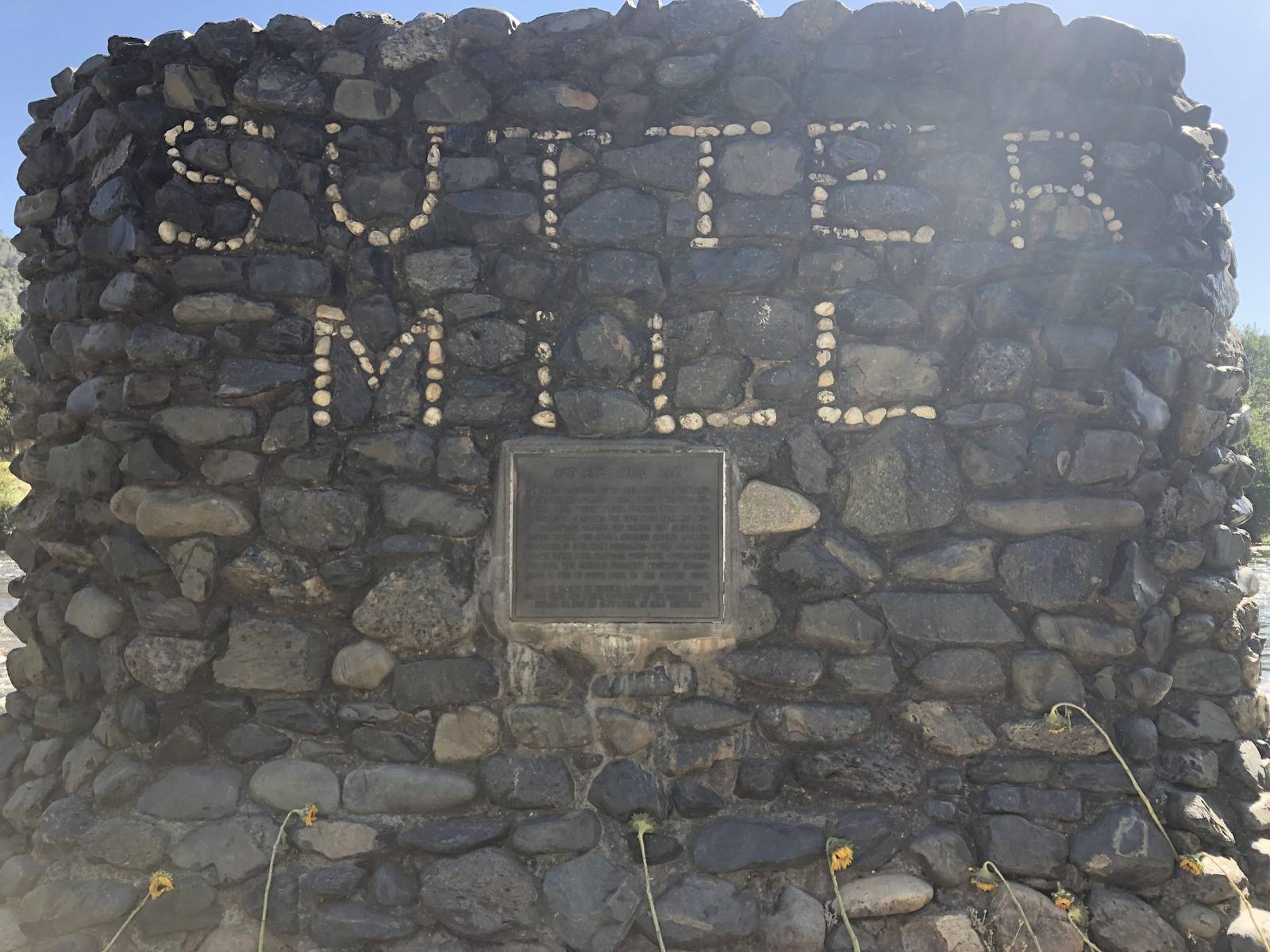
The park holds a full-scale working replica of Sutter's Mill near the discovery site, more than twenty historic buildings, a museum, and the pioneer cemetery. One of the quieter exhibits is the best: the Gooch and Monroe families came to Coloma enslaved in 1849, were freed when California entered the Union as a free state the next year, farmed this ground for generations, and eventually sold part of it to the state. The land where the rush began was preserved by the descendants of people it did not free.

Visitor Info

Time Needed
Two to three hours for the mill, museum, and monument.
🎟
Admission
Day-use fee per vehicle; gold panning is available for a separate fee.
📅
Best Season
Spring and fall; summer in the foothills is hot but the river helps.
🛣️
Highway
CA-49

On the Map

Nearby

The closest stops worth working into your route

industrial29 mi away
Empire Mine State Historic Park
The oldest, deepest, richest hard-rock gold mine in California, with 367 miles of flooded tunnels underneath.
cultural32 mi away
Nevada City
Gaslamps, brick storefronts, and the Nisenan who are still fighting to be recognized on their own ground.
cultural37 mi away
Sacramento
The Gold Rush river port that became the state capital, and jacked itself ten feet into the air to stop drowning.
industrial39 mi away
Malakoff Diggins State Historic Park
A canyon washed out of a mountain by water cannon, and the lawsuit that ended hydraulic mining.
natural44 mi away
Emerald Bay State Park
A glacial fjord on Tahoe's west shore with the lake's only island and a Scandinavian house at the water.
historical46 mi away
Donner Summit Tunnels
Granite bored by hand at fourteen inches a day, by Chinese crews the country spent a century forgetting.