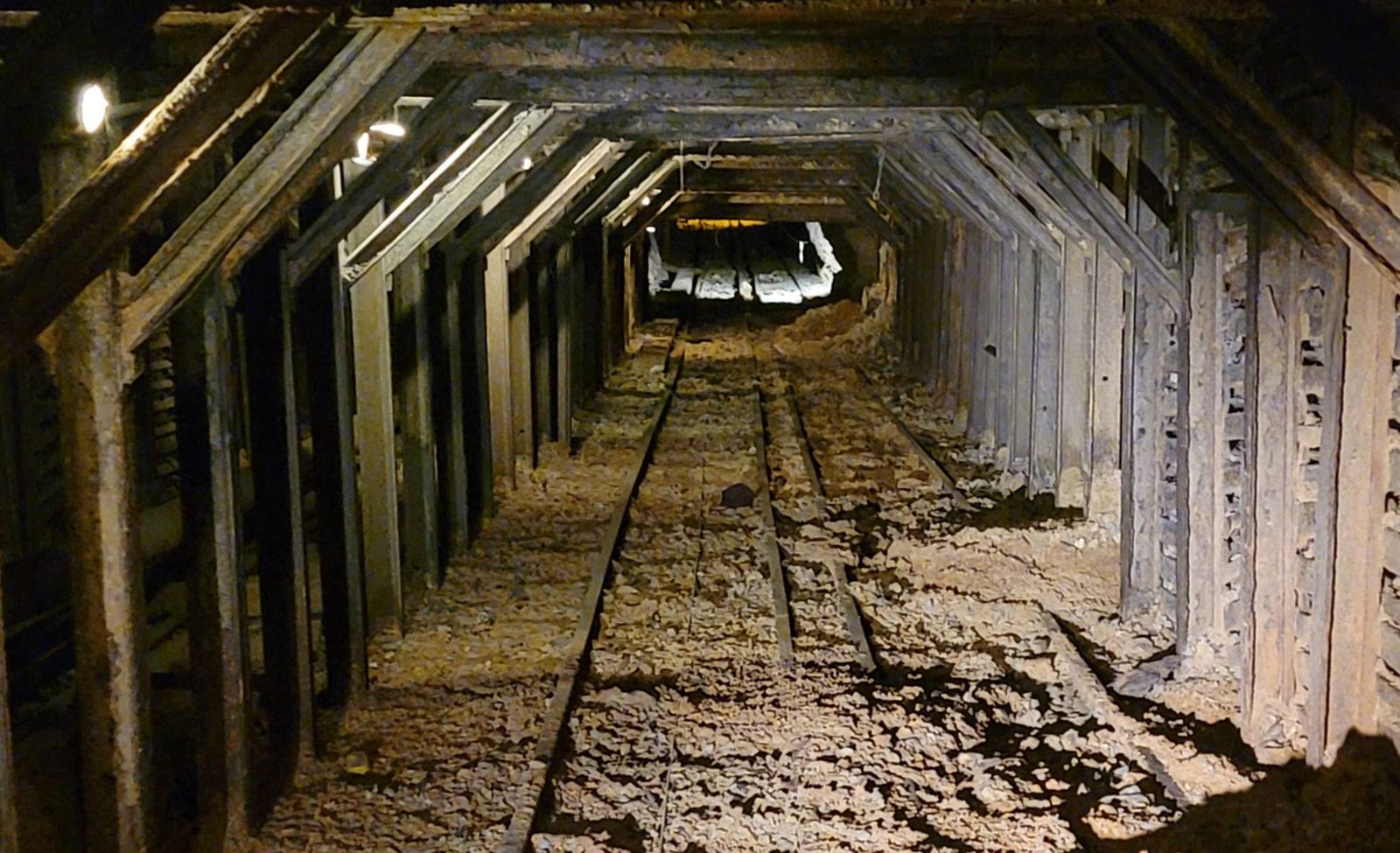
 Vikidim / CC BY-SA 4.0 via Wikimedia Commons
The Story
Placer gold ran out fast. What kept Grass Valley alive for a century was quartz, and the Empire went after it harder than anywhere else in California. From 1850 to 1956 the mine produced something like 5.8 million ounces of gold out of 367 miles of underground workings, following the veins down an incline that reached 11,007 feet before the last shift came up.
The men who made it possible were largely Cornish, recruited out of the failing tin mines of England for skills nobody else had: pumping water out of deep ground, timbering, and drilling hard rock. Grass Valley still carries their mark, down to the pasties sold in town.
The park keeps the head frame, the machine shops, the owners' cottage and gardens, and the mine yard. The best thing in it is the Secret Room: a scale model of five square miles of underground workings, kept behind blacked-out windows for decades because the map of where the gold ran was the company's most valuable possession.
The shafts are flooded now and will stay that way. California State Parks says plainly on its own signage that this is Nisenan land and that the tribal families have not recovered from the near-genocide of the Gold Rush. Nevada City is four miles north.
Visitor Info
On the Map
A story featuring this place
Go deeper into the history and character of this stop
Nearby
The closest stops worth working into your route
Historical markers nearby
Roadside plaques and monuments within a short detour