Reno–Tahoe & the Comstock
Nevada's western edge — Lake Tahoe's east shore, the silver boomtown of Virginia City, and the capital at Carson City, where the Sierra meets the sagebrush.
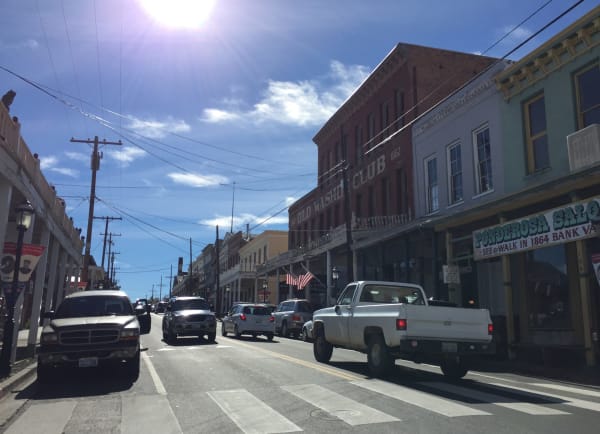
Nevada has older ground and emptier ground, but none that was organized so completely around a single idea. In 1859, prospectors working the slope of Mount Davidson kept cursing a heavy blue-gray clay that fouled their rockers—until an assay came back nearly solid silver. That was the Comstock Lode, the first great silver strike in the country, a two-and-a-half-mile body of ore that would give up close to four hundred million dollars and, almost in passing, a state. Virginia City rose on top of it within a year. A failed prospector named Sam Clemens took the name Mark Twain there in 1863, reporting for the Territorial Enterprise. The Great Fire of 1875 leveled three-quarters of the town, and the town simply rebuilt—most of the brick on C Street today dates from the months after.
The lode could not stand alone, and the country around it is the proof. Silver had to be milled near water, so the ore came down the canyon through Devil's Gate to the stamp mills along the Carson River at Silver City, Dayton, and Empire. It had to be timbered, and the forests of Lake Tahoe paid: Duane Bliss's Carson and Tahoe Lumber and Fluming Company alone pulled some seven hundred fifty million board feet off the basin, floating it down miles of V-flume and railing it over Spooner Summit, while a rival combine to the north lifted cordwood over the crest on the Great Incline, a cabled tramway climbing more than a thousand feet of the Sierra's east face. It had to be coined, so the government raised a mint at Carson City and struck the coins stamped with the distinctive CC mintmark on the spot. And it had to be tied together, which the Virginia and Truckee Railroad did, threading bullion down and timber up through every valley here.
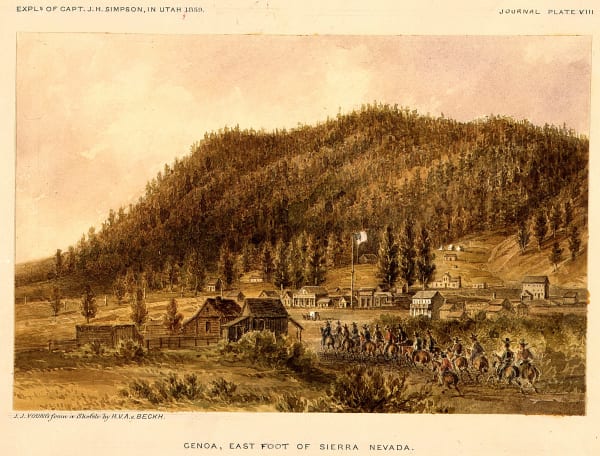
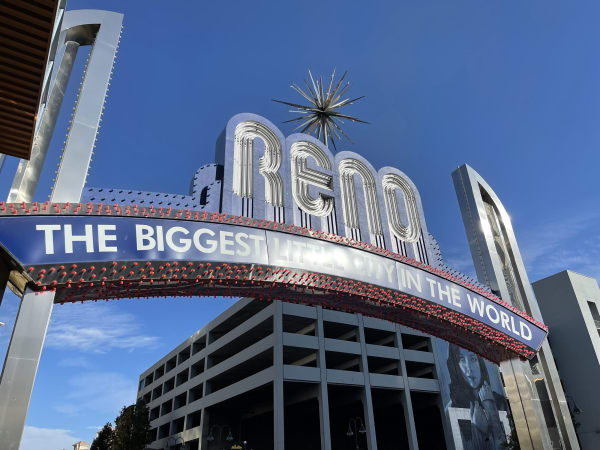
The wealth grew towns that outlived it. Reno began as a toll bridge over the Truckee and became a railroad hub, then a divorce capital, then the self-styled Biggest Little City; Sparks the Southern Pacific built on purpose, freighting whole houses across the desert to fill it. South in the Carson Valley, the ranches around Genoa—Nevada's oldest town—and Gardnerville and Minden fed the boom hay and beef, and kept feeding the next ones at Bodie, Tonopah, and Goldfield long after the Comstock went quiet. Mining made the headlines; the ranches made the difference.
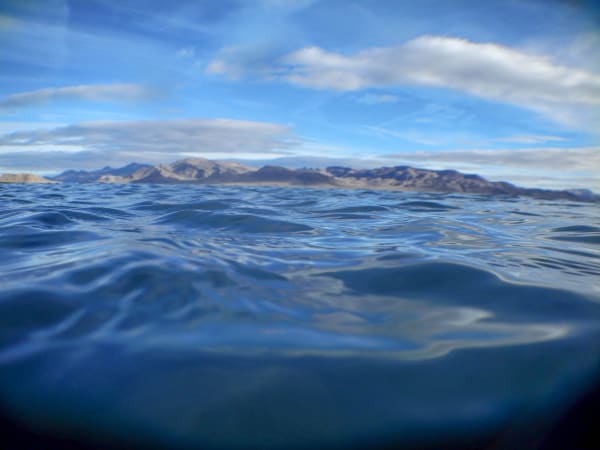
None of it was free, and the oldest residents paid most. The Wašiw—the Washoe—had wintered at Lake Tahoe and gathered pine nuts in these valleys for thousands of years before the mills took the timber and the water; their children were sent to the Stewart Indian School to be stripped of their language, and the granite of Cave Rock, sacred to them, was dynamited for a highway tunnel. North at Pyramid Lake—Koqyoqe Panunadu to the Numu, the Northern Paiute—the people fought and won two battles in 1860 to hold their world, then watched upstream diversion choke the lake that had fed them for millennia. The silver bought a great deal and cost a great deal, and an honest map of this region carries both.
What's here now is a compact circuit of the whole story: up the Geiger Grade to Virginia City, down the canyon to Carson City and the Mint, out to Genoa and the valley ranches, up to Tahoe's stripped-and-recovered shore, and back along the river the Paiute still hold. One strike, and the shape it left behind.
What to See in Reno–Tahoe & the Comstock
11 places across the region, grouped by what they are.
Natural Areas

Towns & Gateways
Industry & Mining
Scenic Drives through Reno–Tahoe & the Comstock
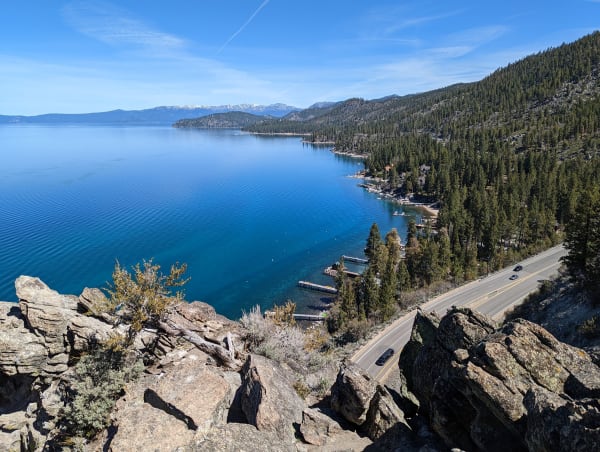
NV-28 — The Tahoe East Shore
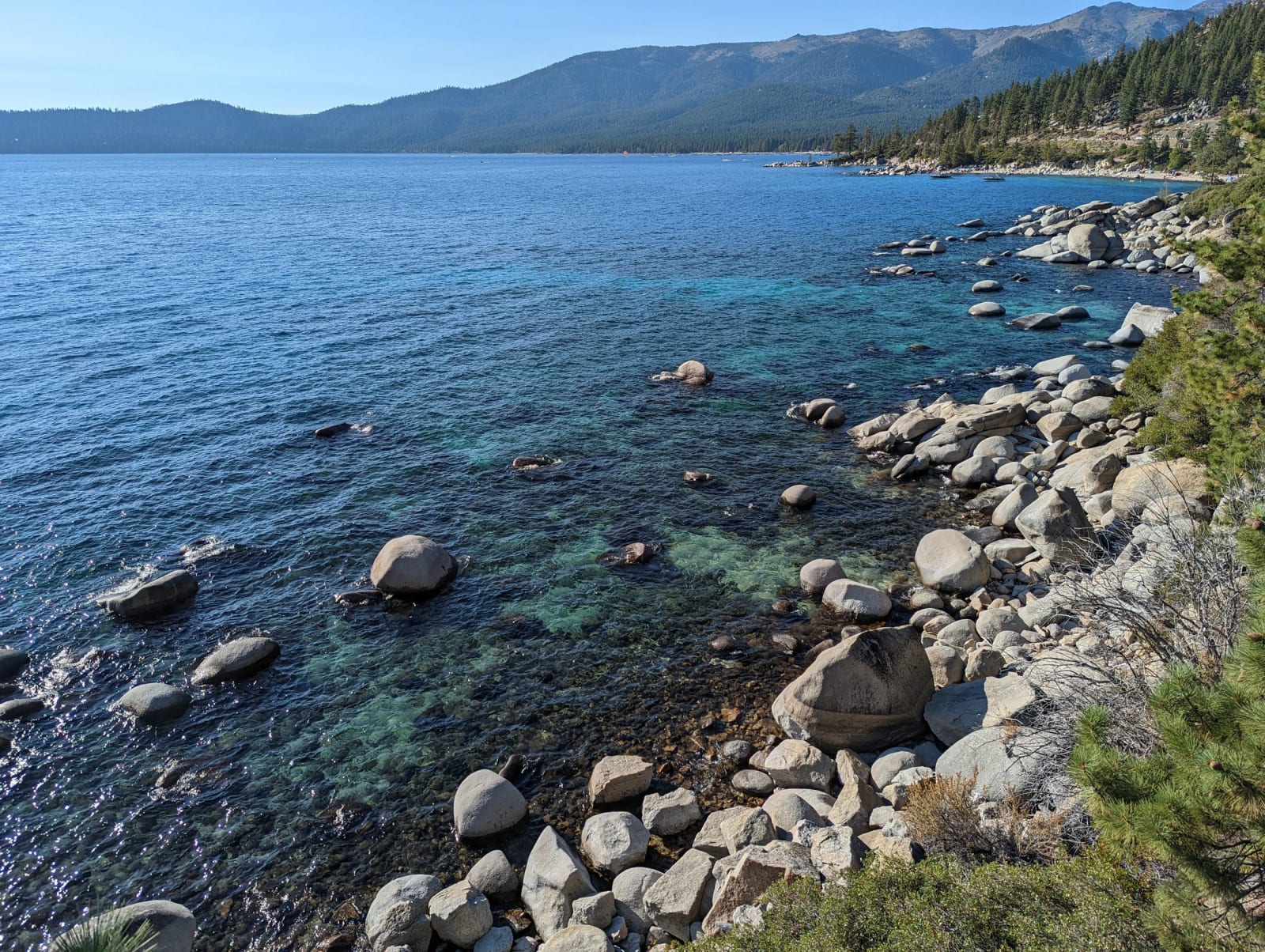
The short, blue drive down Lake Tahoe's Nevada side — thirteen miles of granite coves and clear water on the shore the Comstock cut for timber and tapped for water, then sold back as scenery.
Old Highway 40: The Donner Pass Crossing
Forty-six miles over the pass the interstate misses — the Wašišiw summit and its petroglyphs, the tunnels Chinese crews cut by hand, the lake where the Donner Party wintered, and the 1926 arch bridge above it, then down the Truckee to Reno.
The Comstock Loop
The compact circuit the silver built — Reno up the Geiger Grade to Virginia City, down to Carson City and the lake the Comstock logged, then home through Nevada's oldest town.
Stories from Reno–Tahoe & the Comstock
The Remaking Ground
This northwest corner of Nevada is where people came to become someone else — a failed miner who walked into Virginia City's Territorial Enterprise and walked out Mark Twain, the tens of thousands who took Reno's six-week cure and threw a wedding ring off the bridge, a played-out silver town that survives by performing its own myth, and, four miles from the capitol, the Wašiw, Numu, and Newe children the government tried to remake by force at Stewart — whose descendants took the school back.
The Hard Half
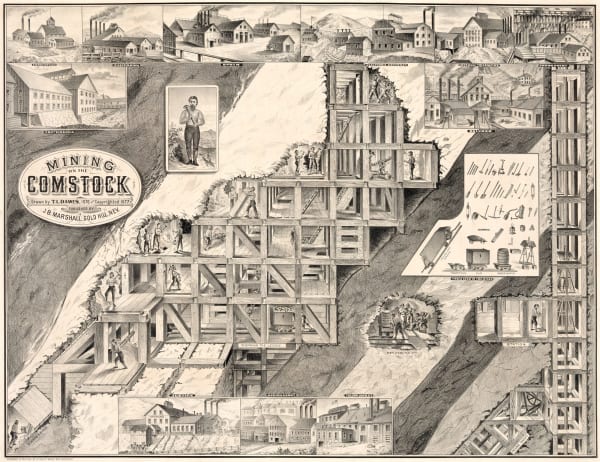
The Comstock's wealth is the famous half of the story; how the silver was actually won — in scalding, caving, three-thousand-foot dark — is the hard half, and it made hard-rock mining modern.
The Lake That Won't Freeze
The largest alpine lake in North America sits through every winter without freezing — a mile of stored summer heat turning the whole lake over, oxygenating its depths and keeping the shore open for wintering bald eagles — while an opossum shrimp loosed in the 1960s quietly unravels the water's clarity and, on the southeastern shore, the Washoe hold De'ek Wadapush, a sacred rock the last century tried to drill and climb straight through.
The Bluest Water in the Driest State
The driest state in the country holds the eastern third of the largest alpine lake in North America — a mile-deep fault block still dropping between two rising ranges, its shore once stripped bare to timber the Comstock, its clarity fading and its four-foot native trout, gone since the 1930s, only now being carried home.
Reno–Tahoe & the Comstock rewards the unhurried. Pick a base, fan out, and let the country between the headline stops surprise you.
← Explore more of Open Road Guide