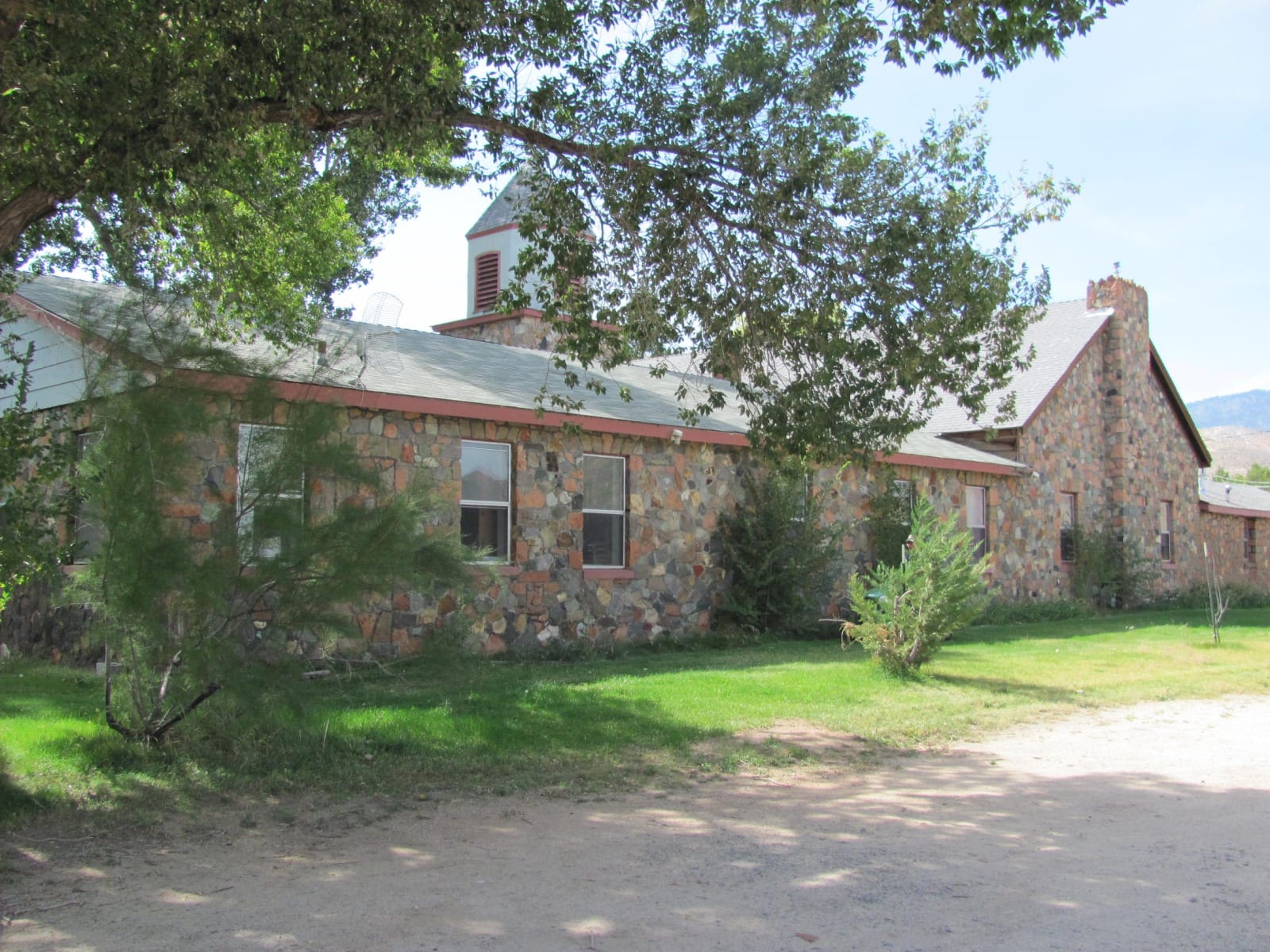
 Barbmathers / CC BY-SA 3.0
The Story
A few minutes south of the Carson City mint and capitol stands a campus of handsome stone buildings that exist for a terrible reason. From 1890 to 1980, the Stewart Indian School was the federal government's boarding school for the Native children of the Great Basin—and for most of that span its purpose was to take those children from their families and erase the cultures they were born into.
It opened in December 1890 with thirty-seven students—Wašiw, Northern Paiute, and Western Shoshone children—three teachers, and three buildings, on Washoe land just outside the capital. It was the only off-reservation Indian boarding school in Nevada, named for William Stewart, the senator who secured its funding. Schools like it across the country shared a blunt doctrine, captured in the era's notorious slogan: "kill the Indian, save the man." Children as young as six or seven, many of whom spoke only their own language, were taken—sometimes by families who saw no better option, sometimes by force, loaded into wagons or the back of a truck without their parents knowing where they had gone—and delivered into an English-only world where their languages were punished, their hair was cut, and their ceremonies were forbidden. The school even had its own platform on the Virginia & Truckee line, the same railroad that hauled the Comstock's silver, used to bring in supplies and to carry children to and from the families they had been taken from.
They built the place themselves. The sixty-odd stone buildings on these hundred and ten acres were laid by Native student apprentices, taught the craft by Hopi master masons, out of colored stone quarried from the Carson River. The campus is genuinely beautiful, and it was raised by the hands of the children it was meant to remake—forced labor that produced real art.
The story does not stay in one place, and the people who lived it do not tell it simply. After the Indian Reorganization Act of 1934 turned federal policy toward self-determination, Stewart softened; in its later decades it became a high school that some Native students chose, and many alumni carry mixed memories—of loneliness and strict discipline, but also of friendships, sports, and a community of young people from many nations thrown together. By the time it closed in 1980, some thirty thousand students had passed through, eventually from more than two hundred tribal nations. The museum here does not flatten that into either a horror story or a fond reunion; it holds both, because both are true, and because the families who lived it insist on the whole of it.
What's here now is a place built to erase a culture, reclaimed by the descendants of the children it tried to unmake—an attempt at eradication carried out, as the center's director puts it, not with a rifle but with a pencil. The Stewart Indian School Cultural Center and Museum, opened in 2020 in the old administration building, was created with the Nevada Indian Commission and tells the school's history in the recorded voices of its own alumni—oral histories you sit and listen to rather than read off a wall. A free guide-by-cell audio tour leads through the stone campus, stories keyed to the buildings the students built. There is a gallery of contemporary Great Basin Native art, a research library where families trace relatives who attended, and work with elders to record the Paiute, Shoshone, and Washoe languages the school once tried to beat out of children. Each September a National Day of Remembrance honors the children of the boarding-school era.
It belongs in this region's story because it is the same story, told to its end. The silver that built Carson City's mint and Virginia City's mansions came out of land taken from the Numu and the Wašiw, and the state the silver made ran this school a short drive from its capitol, for ninety years, to finish the taking by other means. To stand on the stone campus the students built is to see the full shape of what the Comstock cost—and, in the alumni voices now filling those buildings, the fact that the people it targeted are still here, telling it themselves.
Visitor Info
On the Map
Stories featuring this place
Go deeper into the history and character of this stop
Nearby
The closest stops worth working into your route
Historical markers nearby
Roadside plaques and monuments within a short detour