The Story
Moab is the town that refused to die quietly. In the 1950s it was a uranium boomtown, flooded with prospectors and government money chasing Cold War nuclear ambitions. When the uranium market collapsed, the town nearly collapsed with it. The population drained, businesses shuttered, and Moab settled into the kind of slow decline that has swallowed hundreds of small Western towns. Then mountain bikers discovered the slickrock. Then rock climbers discovered the towers. Then Jeep enthusiasts discovered the trails. And Moab reinvented itself as the adventure capital of the American Southwest, a transformation so complete that the town now draws over three million visitors a year to a community of roughly 5,500 permanent residents.
The setting makes the reinvention possible. Moab sits in a valley along the Colorado River, flanked by red sandstone cliffs on every side, with Arches National Park five minutes to the north and Canyonlands National Park thirty minutes to the west. To the south, US-191 passes the sandstone home carved into a cliff at Hole N the Rock and, farther along toward Monticello, the roadside span of Wilson Arch. The La Sal Mountains, snow-capped well into June, rise to over 12,000 feet to the southeast, providing a visual counterpoint to the desert floor and a temperature refuge when summer pushes triple digits. The geographic concentration of world-class landscapes within a short drive of a single small town is essentially unmatched anywhere in the country.
The Slickrock Bike Trail put Moab on the mountain biking map in the 1980s and it remains the ride that defines the sport for many people. The 10.5-mile loop crosses a rolling landscape of petrified sand dunes — Navajo Sandstone worn smooth by wind and time — where the friction between rubber and rock is so high that riders can climb grades that would be impossible on dirt. The trail is marked by painted dashes on the rock surface, and following them requires constant attention as the route rises and falls across domes, ledges, and bowls with the Colorado River canyon visible below and the La Sal Mountains above. It is not a beginner ride — the exposure, the technical terrain, and the desert heat have humbled many experienced riders — but it is the ride that most mountain bikers put on their lifetime list.
The Jeep trails are equally legendary. Hell's Revenge, Fins and Things, Poison Spider Mesa, and the Moab Rim are four-wheel-drive routes that climb sandstone ledges, traverse narrow fins, and descend grades steep enough to make passengers reconsider their life choices. The annual Easter Jeep Safari draws thousands of off-road enthusiasts from across the country for a week of organized trail runs, and the town fills with vehicles ranging from bone-stock Jeep Wranglers to custom-built rock crawlers that cost more than most houses.
River rafting on the Colorado adds a water dimension to the adventure portfolio. Half-day float trips through the calm water near town are family-friendly and scenic. Full-day and multi-day trips through Westwater Canyon or Cataract Canyon deliver serious whitewater — Class III and IV rapids that drench everyone in the boat and provide the kind of adrenaline that desert landscapes are not usually associated with. The river is also popular for stand-up paddleboarding, kayaking, and simply floating in an inner tube with a cooler, which is the Moab version of a lazy afternoon.
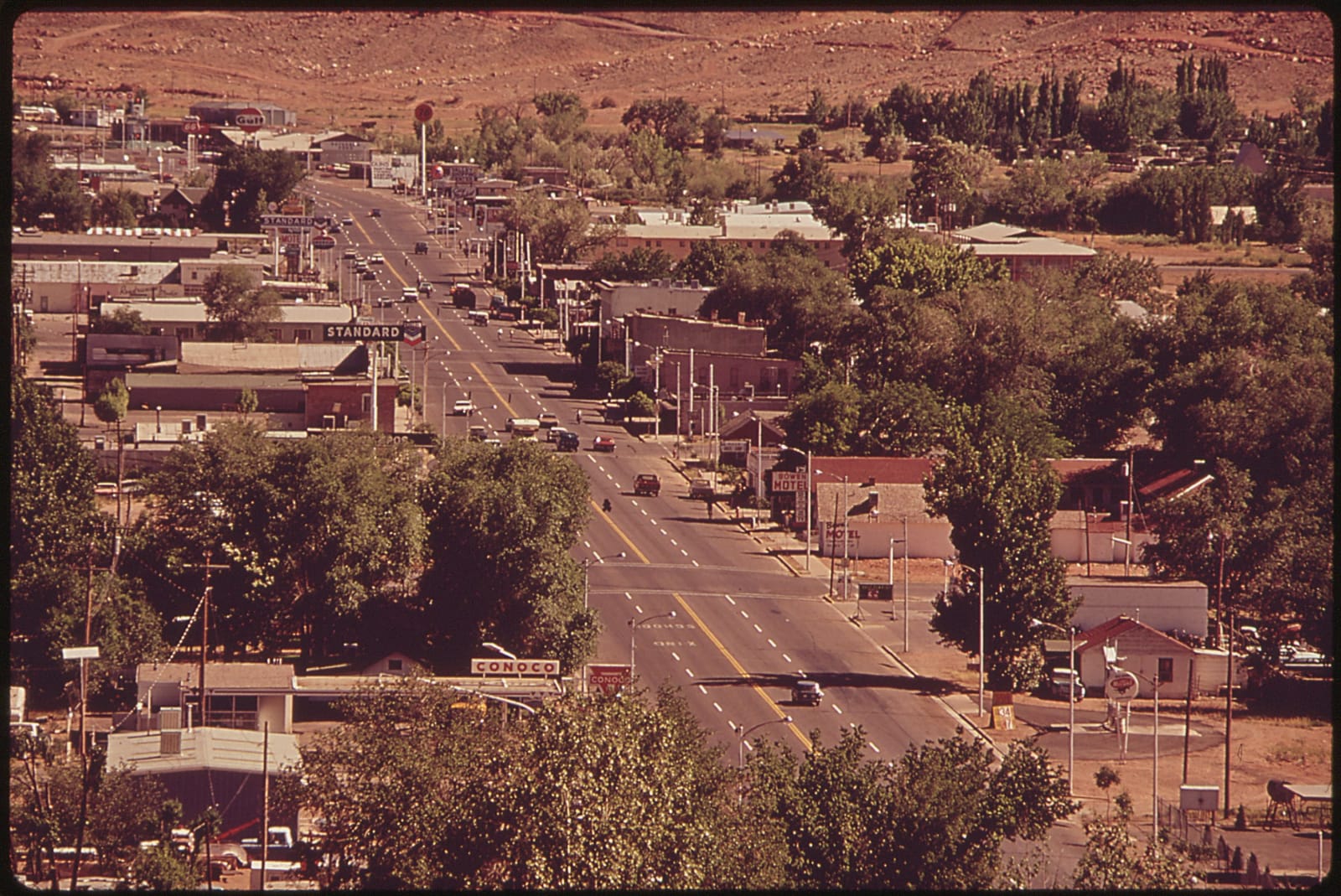
The town itself has the slightly chaotic energy of a place that grew too fast for its infrastructure. Main Street is a strip of gear shops, restaurants, breweries, and hotels that caters to the outdoor recreation crowd with varying degrees of sophistication. The food scene has improved dramatically in recent years — several restaurants now serve genuinely excellent meals — but Moab is still fundamentally a town where people eat to fuel their next adventure rather than as an end in itself. The brewery scene is strong, anchored by Moab Brewery and several newer operations, and a cold beer on a restaurant patio after a day on the trails is one of the simple pleasures that keeps people coming back.
The challenges of Moab's success are real and visible. Housing costs have skyrocketed, pushing service workers into long commutes from neighboring towns. Water resources in the desert are finite, and the demands of a growing tourist economy strain them further. Traffic on the two-lane highway through town can back up for miles on peak weekends, and the national parks have implemented reservation systems partly in response to the volume of visitors flowing through Moab. The town is having an ongoing conversation about carrying capacity — how many visitors can this small desert community absorb before the experience degrades for everyone, residents and tourists alike.
Despite these pressures, Moab remains magnetic. The landscapes surrounding it are genuinely extraordinary — not just good-for-Utah extraordinary but best-in-the-world extraordinary. The Colorado River, the red rock canyons, the slickrock trails, the snow-capped mountains visible from the desert floor — the combination is unique, and no amount of traffic or tourist infrastructure can diminish the physical reality of the place. Moab earned its reputation by sitting in the middle of something spectacular and building a culture around experiencing it. That formula still works, even as the town wrestles with what success looks like when three million people a year show up to share it.
Visitor Info
On the Map
A story featuring this place
Go deeper into the history and character of this stop
Nearby
The closest stops worth working into your route
Historical markers nearby
Roadside plaques and monuments within a short detour