 David Hiser, U.S. Environmental Protection Agency / public domain via Wikimedia Commons
The Story
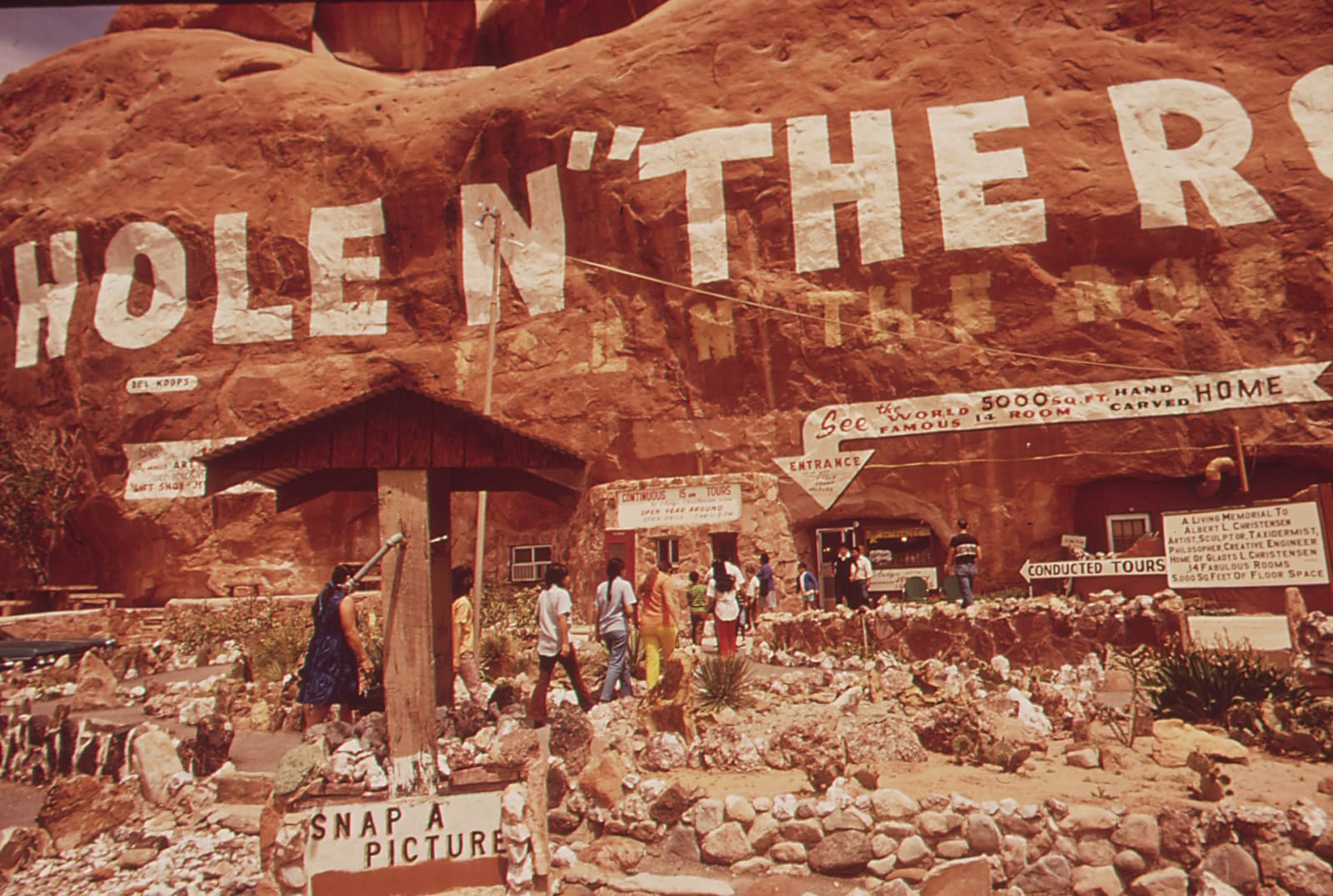
Hole N the Rock is the kind of place that could only exist in the American West — part folk art, part engineering marvel, part roadside curiosity, and entirely the product of one man's stubborn refusal to live in a normal house. Albert Christensen spent 12 years hand-drilling and blasting a 5,000-square-foot home inside a massive sandstone boulder along US-191 south of Moab. Fourteen rooms. A fireplace with a 65-foot chimney drilled through solid rock. A bathtub carved into the sandstone. A kitchen, bedrooms, a living room with picture windows looking out across the desert. He built a home inside a rock because he wanted to, and because nobody told him he could not.
Albert and his wife Gladys moved to this spot in the 1940s, initially living in a small structure built against the base of the rock while Albert began the slow process of excavation. His tools were a hand drill, dynamite, and patience measured in years. He drilled blast holes by hand, set small charges, cleared the rubble, and repeated the process — room by room, wall by wall — until the interior of the boulder had been hollowed into a livable space. The work was dangerous, painstaking, and entirely self-taught. Albert was not a miner or an engineer. He was a man with a vision and a drill.
The result is genuinely impressive. The rooms are large and surprisingly comfortable, with smooth walls, level floors, and enough ceiling height to move through without ducking. The sandstone provides natural insulation — cool in summer and warm in winter — and the windows Albert cut into the rock face flood the interior with natural light. The fireplace, carved into the rock with its chimney running straight up through 65 feet of sandstone to the surface above, is a piece of amateur engineering that professional builders would hesitate to attempt. It works perfectly.
Gladys contributed her own creative energy to the project. She was a painter and taxidermist, and the home became a gallery for her work — portraits of Franklin Roosevelt and other figures painted directly onto the sandstone walls, alongside mounted animals and decorative touches that give the interior a cluttered, personal warmth. The paintings are folk art in the truest sense — untrained, earnest, and deeply individual. They are part of what makes Hole N the Rock feel like a home rather than a novelty. Someone lived here. Someone painted on these walls. Someone cooked in this kitchen and slept in these bedrooms and looked out these windows at the same desert view you see today.
Albert died in 1957 before completing all of his plans for the home, and Gladys continued living there until her death in 1974. The property has been operated as a tourist attraction since the 1950s, and guided tours take visitors through the rooms while telling the story of the Christensens and their extraordinary project. The tour is short — about 15 minutes — and the guides deliver the history with the cheerful, well-rehearsed enthusiasm that is the universal language of American roadside attractions.
Outside the rock home, the property has accumulated the eclectic collection of stuff that roadside attractions tend to gather over the decades — a small zoo with exotic animals, a trading post selling souvenirs and Native American jewelry, painted sculptures, vintage signs, and a large collection of objects that defy easy categorization. The overall effect is cluttered, colorful, and charming in the way that only places untouched by corporate branding can be. Hole N the Rock is not polished. It is not curated. It is a family project that grew into a business that grew into a landmark, and every layer of that growth is visible.
The attraction sits along the main highway between Moab and the Needles District of Canyonlands, making it an easy stop on the way to or from the national parks. The giant sign carved into the rock face is visible from a considerable distance, and the parking lot accommodates everything from motorcycles to RVs. Admission is modest, and the whole visit — tour, gift shop, and zoo — takes about an hour.
Hole N the Rock belongs to a category of American landmarks that is slowly disappearing — the independently owned, family-operated roadside attraction that exists because one person had an idea and spent a lifetime building it. These places are being replaced by chain restaurants and corporate rest stops, and each one that closes takes a piece of the road trip experience with it. Albert Christensen did not build his rock home to become a tourist attraction. He built it because he wanted to live inside a rock. The fact that people have been paying to see it for over 70 years is a testament to the enduring appeal of a simple, crazy, magnificent idea executed with nothing but determination and dynamite.
Visitor Info
On the Map
Nearby
The closest stops worth working into your route
Historical markers nearby
Roadside plaques and monuments within a short detour