The Story
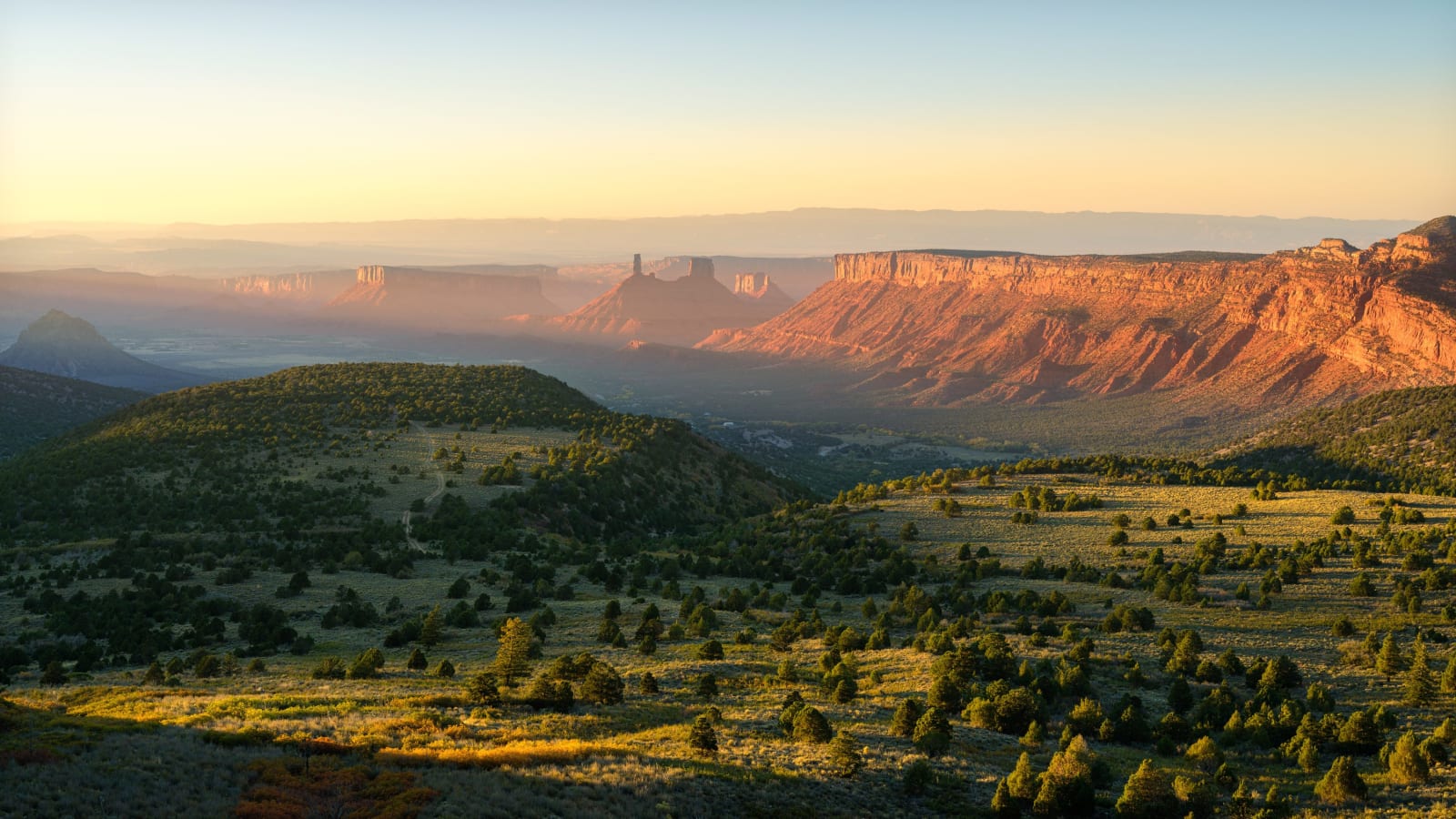
Castle Valley is a place that looks like it was designed by a committee of cinematographers, and in a sense it was — the valley has appeared in so many car commercials, adventure films, and magazine covers that its visual identity has been shaped as much by cameras as by geology. But the cameras came because the landscape was already there, and what was already there is extraordinary: a broad desert valley flanked by towering red rock formations, dominated by the 400-foot freestanding spire of Castleton Tower, with the snow-capped La Sal Mountains rising behind everything like a painted backdrop that someone forgot to take down after the shoot.
Castleton Tower is the visual anchor of the valley and one of the most famous rock climbing destinations in America. The tower is a freestanding pillar of Wingate Sandstone — a single block of rock roughly 400 feet tall and barely 100 feet wide at its summit — separated from the main cliff face by erosion that has eaten away the softer rock on all sides. The first ascent was completed in 1961 by Layton Kor and Huntley Ingalls, and the Kor-Ingalls route remains one of the classic desert tower climbs in the American West. Modern climbers have established routes on every face, ranging from moderate crack climbs to desperate overhanging faces, and on any given spring or fall weekend several rope teams can be seen working their way up the tower's walls.
You do not need to be a climber to appreciate Castleton Tower. The formation is visible from the Castle Valley road, and several pullouts offer unobstructed views of the tower against the La Sal Mountains. The visual composition is so perfect — vertical red rock against horizontal white snow — that it has become one of the defining images of the Moab area. Photographers work the valley in every season, and each one produces a different version of the same impossible scene: autumn aspens golden on the mountain slopes behind the red tower, winter snow dusting the summit, spring light catching the Wingate walls at sunrise.
The Priest and Nuns, a row of dark pinnacles on the cliff rim east of Castleton Tower, add to the skyline with a Gothic drama that justifies their name. The formations are narrower and more numerous than Castleton, standing in a line along the cliff edge like figures in a procession. Together with Castleton Tower, they create a skyline that is one of the most recognizable in the Colorado Plateau.
Castle Valley itself is a residential community — a small, unincorporated collection of homes and ranches spread across the valley floor. The community has resisted commercial development with a determination that reflects the values of its residents, many of whom chose this location specifically for its beauty and remoteness. There are no hotels, no gas stations, no restaurants in Castle Valley. The nearest services are in Moab, about 15 miles to the southwest via the La Sal Mountain Loop Road or Highway 128 along the Colorado River.
The La Sal Mountain Loop Road, which climbs from Castle Valley into the La Sal Mountains, is one of the most scenic drives in the Moab area and one of the least traveled. The road gains over 4,000 feet of elevation, passing through desert scrub, pinyon-juniper woodland, aspen forest, and spruce-fir forest in rapid succession. The temperature drops noticeably with each thousand feet of elevation, and in summer the mountain meadows and aspen groves offer a cool refuge from the desert heat below. In autumn, the aspens turn gold against the dark conifers, and the views back down to Castle Valley and the red rock desert create one of the most striking elevation-to-desert contrasts in the state.
The valley is accessed from Highway 128, the Colorado River Road, via the Castle Valley turnoff about 15 miles northeast of Moab. The drive from the river corridor into the valley is a transition from one landscape to another — the narrow, cliff-walled river canyon opens suddenly into a broad valley of sage and grass, and Castleton Tower appears ahead like an exclamation point announcing that you have arrived somewhere significant.
Castle Valley occupies an interesting position in the Moab ecosystem. It is close enough to town to be accessible but far enough to feel separate. It is dramatic enough to attract international attention but quiet enough that the residents can still hear coyotes at night. It is a landscape that has been photographed millions of times and still manages to surprise people who see it in person for the first time, because no photograph can capture the scale of Castleton Tower against the mountains, the silence of the valley floor at dawn, or the way the light moves across the cliff faces like a slow hand painting them from gold to crimson to shadow over the course of an afternoon.
Visitor Info
On the Map
A story featuring this place
Go deeper into the history and character of this stop
Nearby
The closest stops worth working into your route
Historical markers nearby
Roadside plaques and monuments within a short detour