 Kimon Berlin / CC BY-SA 2.0
The Story
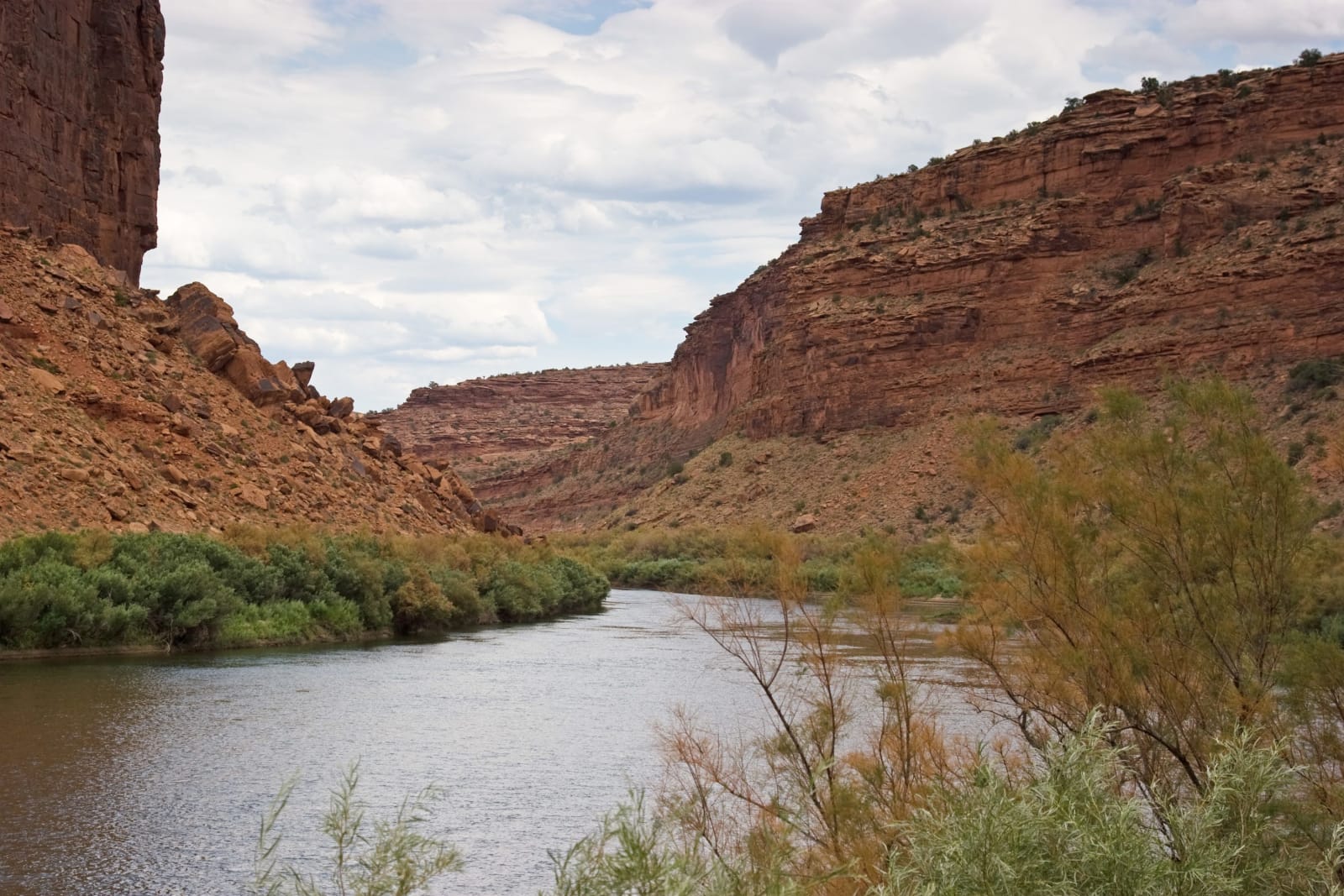
Big Bend is the spot on UT-128 where the Colorado stops running straight and swings through a wide, lazy loop beneath cliffs that climb several hundred feet on either side, and the Bureau of Land Management turned that meander into the most-used cluster of riverside campgrounds on the whole drive. Sites A and B sit right on the water, there is a sandy beach for wading and picnicking, and the place fills up fast in spring and fall — close enough to Moab, about a half hour back down the canyon, to be convenient, and far enough out to feel like the desert.
For most people the draw is the river. This is a put-in and take-out for the Moab Daily, the gentle stretch of the Colorado that drifts past in a few hours with a handful of small rapids, suitable for rafts, kayaks, and tubes alike, which is why the parking area fills with shuttle vans and dripping wetsuits by midafternoon. The beach makes it easy to get in the water, but the current here is deceptive: the BLM is blunt about the dangerous undercurrents, and a life jacket is not optional once you are past your ankles.
Across the highway from the campsites is the Big Bend Bouldering Area, a field of fallen sandstone blocks that climbers have been working since the early days of the sport in Moab. Some of the problems were established by serious names and are stiff for their grade, but the area is forgiving enough that families show up with crash pads and kids, and the short walk from the road makes it one of the easiest places in the region to watch climbing up close — just take care crossing UT-128 to reach it. There is no water at any of the sites, so fill your jugs in Moab first and plan on vault toilets and little else. It works best as a place to stop, get your feet wet, and crane your neck at the canyon walls for an hour before continuing toward Fisher Towers and the river's quieter upper reaches.
Visitor Info
On the Map
Nearby
The closest stops worth working into your route
Historical markers nearby
Roadside plaques and monuments within a short detour