The Story
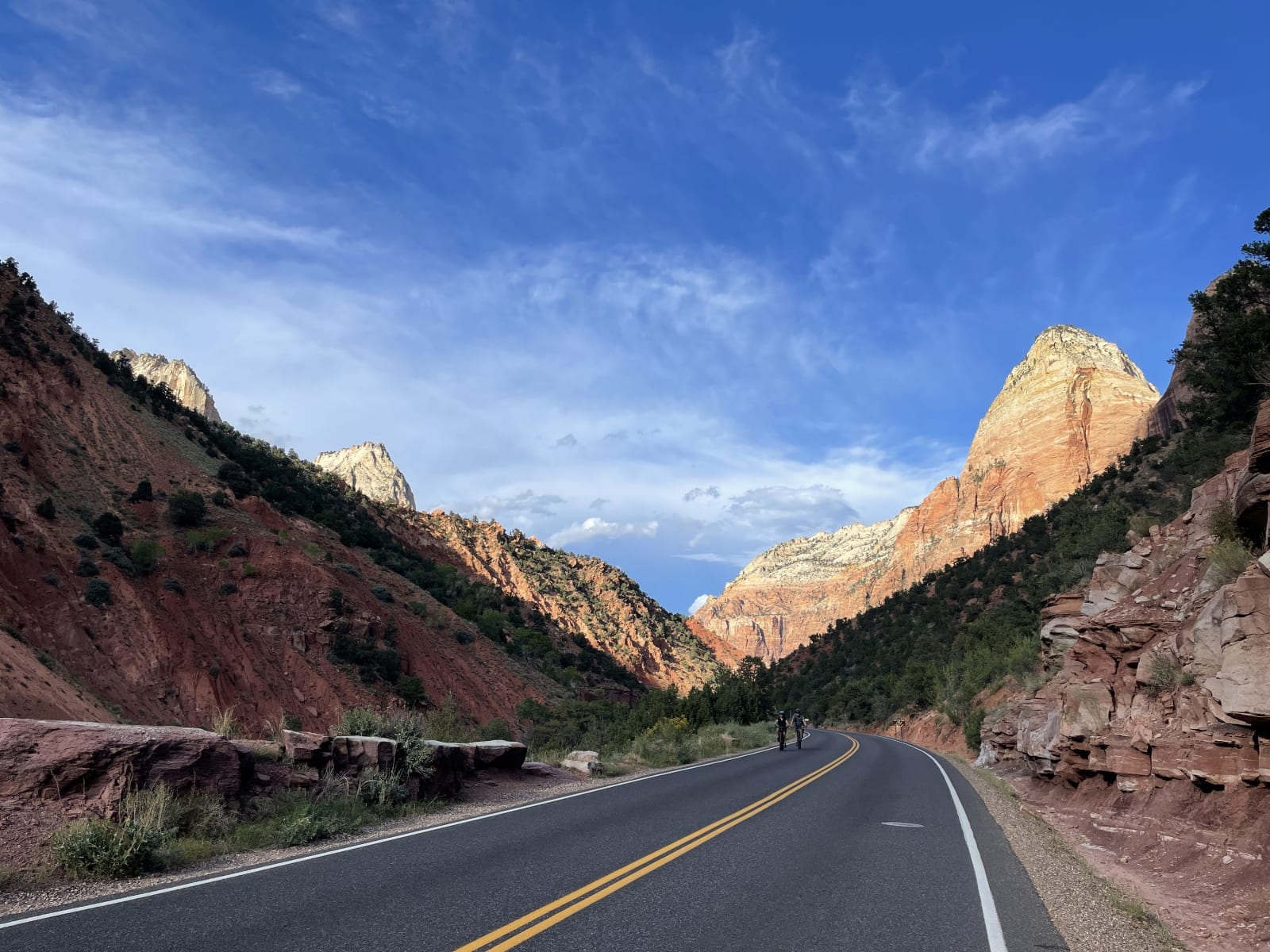
Zion has a way of making you feel small in the best possible sense. The canyon walls rise 2,000 feet above the Virgin River, layered in cream, salmon, and deep vermillion, and they do not care that you are there. They were old before humans walked this continent, and they will be standing long after the last tourist goes home. That indifference is part of what makes the place so profoundly beautiful.
The park protects 229 square miles of canyon country in southwestern Utah, but the heart of it — Zion Canyon — is a narrow, winding corridor carved over millions of years by the North Fork of the Virgin River. The river is still cutting. Every rainstorm sends chocolate-brown water surging through the canyon, carrying sand, gravel, and boulders that grind the canyon a little deeper. The process is slow by human standards — roughly one inch per thousand years — but the result is one of the deepest and most colorful slot canyons in the American West.
The Narrows is the experience that defines Zion for many visitors. The canyon walls close in until they are only 20 feet apart, towering a thousand feet overhead, and the only trail is the river itself. You wade upstream through knee- to waist-deep water, feeling the current push against your legs, watching the light shift as the sun moves across the narrow band of sky above. It is consistently ranked among the top hikes in the world, and for good reason — there is nothing else quite like walking through the inside of the Earth.
Angels Landing is the other signature experience, and it is not for everyone. The trail climbs 1,488 feet in 2.5 miles, finishing with a half-mile ridge walk along a knife-edge spine with 1,000-foot drops on both sides. Chains bolted into the rock are the only handhold. A permit is now required due to overwhelming demand, and the National Park Service does not sugarcoat the danger — this is a trail where people have died. But the summit view, looking straight down into the Big Bend of the Virgin River with the entire canyon spread below, is one of the most dramatic panoramas in any national park.
Beyond the famous hikes, Zion rewards wandering. The Emerald Pools trail leads to a series of waterfalls cascading over hanging gardens of fern and moss. Canyon Overlook, a short trail near the east entrance, offers a sunset view that rivals Angels Landing with a fraction of the effort. Kolob Canyons, the quiet northwestern section of the park that most visitors skip entirely, contains some of the tallest sheer cliffs in the world and one of the largest freestanding arches — Kolob Arch, spanning 287 feet.
The geology is a layer cake of time. The lowest exposed rocks, the Kaibab Limestone, are about 270 million years old. The towering cliffs that define the canyon are Navajo Sandstone — ancient sand dunes turned to stone roughly 180 million years ago. Cross-bedding patterns in the sandstone record the direction of Jurassic winds, frozen in rock. The red color comes from iron oxide — rust, essentially — staining the sand grains.
Zion is also one of the most biologically diverse parks in Utah. The elevation ranges from 3,600 feet at the canyon floor to nearly 9,000 feet on the plateau above, creating a stack of ecosystems from desert scrub to ponderosa pine forest. Mule deer browse the canyon bottom. Peregrine falcons nest on the cliffs. California condors — one of the rarest birds on Earth — have been spotted soaring above the canyon in recent years.
The park runs a shuttle system through the main canyon from early spring through late fall, which eliminates car traffic and gives the canyon a quieter, more contemplative feel. Sit on the shuttle with the windows open, watch the walls change color as you move deeper into the canyon, and let the scale of the place settle in. Zion does not rush.
Visitor Info
On the Map
A story featuring this place
Go deeper into the history and character of this stop
Nearby
The closest stops worth working into your route
Historical markers nearby
Roadside plaques and monuments within a short detour