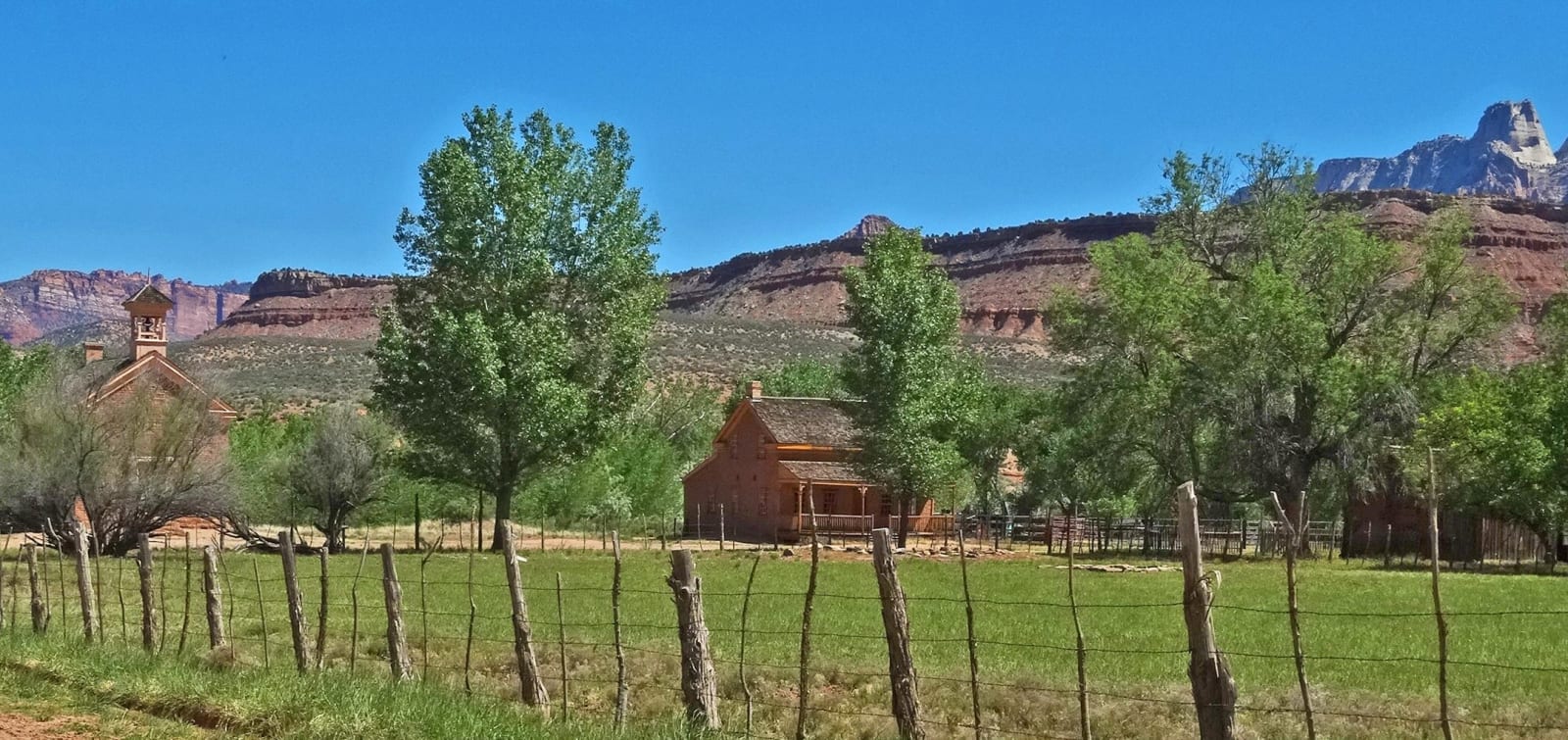
 inkknife_2000 / CC BY-SA 2.0
The Story
Grafton is the most photogenic ghost town in the American West, and it earned that reputation honestly. The abandoned buildings sit in a meadow along the Virgin River with the towering red cliffs of Zion National Park rising directly behind them — a backdrop so perfectly composed that Hollywood has used it repeatedly. The bicycle scene from Butch Cassidy and the Sundance Kid, where Paul Newman rides Katherine Ross on the handlebars through a sunlit field, was filmed here. The buildings you see in that scene are the same buildings standing today, barely changed by the half century since the cameras left.
Grafton was settled in 1859 by Mormon pioneers sent south by Brigham Young to establish cotton-growing communities along the Virgin River. The location seemed promising — fertile bottomland, reliable water, and a mild climate by Utah standards. But the river that made the site attractive also made it dangerous. In January 1862, the Great Flood — a catastrophic series of storms that devastated settlements across the Southwest — destroyed the original town site. The settlers rebuilt on higher ground a mile upstream, and the town you see today dates from that relocation.
Life in Grafton was never easy. The Virgin River flooded repeatedly, washing out crops and irrigation ditches. Conflicts with Southern Paiute people created tension in the early years. Malaria — carried by mosquitoes breeding in the river bottoms — sickened residents regularly. The soil was alkaline and difficult to farm. And the town was remote, connected to the outside world by rough wagon roads that became impassable in bad weather. Families came and went, and the population never exceeded about 100 people.
By the early 1900s, the combination of floods, isolation, and limited farmland had taken its toll. Families began leaving for larger towns with better prospects. The last permanent residents departed in 1945, and Grafton slowly settled into the quiet decay that defines it today.
What remains is remarkably well preserved, thanks to the dry desert air and the efforts of the Grafton Heritage Partnership Project, which has stabilized and maintained the surviving structures. The Russell-Alonzo Hardy house, a two-story adobe and frame building, still stands with its walls and roof largely intact. The one-room schoolhouse and church — a single building that served both purposes — sits nearby, its wooden walls weathered to a silvery gray. A small cemetery on the hill above town contains graves dating from the 1860s, including those of settlers killed in conflicts with indigenous people. The headstones are simple, the inscriptions weathered but legible, and the view from the cemetery across the valley to the Zion cliffs is heartbreaking in its beauty.
The contrast is what makes Grafton so affecting. The landscape is stunning — red rock towers, green cottonwood trees, the silver thread of the Virgin River — and the buildings are modest, worn, and empty. The people who built them came to this extraordinary place, worked desperately hard to make it home, and ultimately lost. The land was too difficult. The river was too unpredictable. The isolation was too deep. Grafton is a monument to effort and failure in equal measure, and walking through the empty rooms you feel both the ambition and the exhaustion of the people who lived here.
The town is accessible via a short drive from the small community of Rockville, just outside Zion's south entrance. The road is paved for most of the way, turning to graded dirt for the last mile. There is a small parking area and interpretive signs explaining the buildings and their history. The site is open to the public and free to visit, though the buildings are fragile and visitors are asked to look but not enter.
Timing matters for photography. In late afternoon, the sun drops behind the western cliffs and the Zion towers to the east catch the golden light, turning deep orange and red above the gray and brown buildings. The shadows lengthen across the meadow, the cottonwoods glow yellow in autumn, and the silence is complete. No traffic noise. No voices. Just wind through empty windows and the distant sound of the river that built this town and broke it.
Grafton is a five-minute detour from the road to Zion, and most visitors to the national park drive right past it without knowing it exists. That is a loss. Ghost towns are scattered across the West by the hundreds, but very few of them sit in a setting this magnificent, with a story this human, preserved this well. Grafton deserves the stop. The pioneers who tried to make a life here deserve to be remembered.
Visitor Info
On the Map
A story featuring this place
Go deeper into the history and character of this stop
Nearby
The closest stops worth working into your route
Historical markers nearby
Roadside plaques and monuments within a short detour