The Story
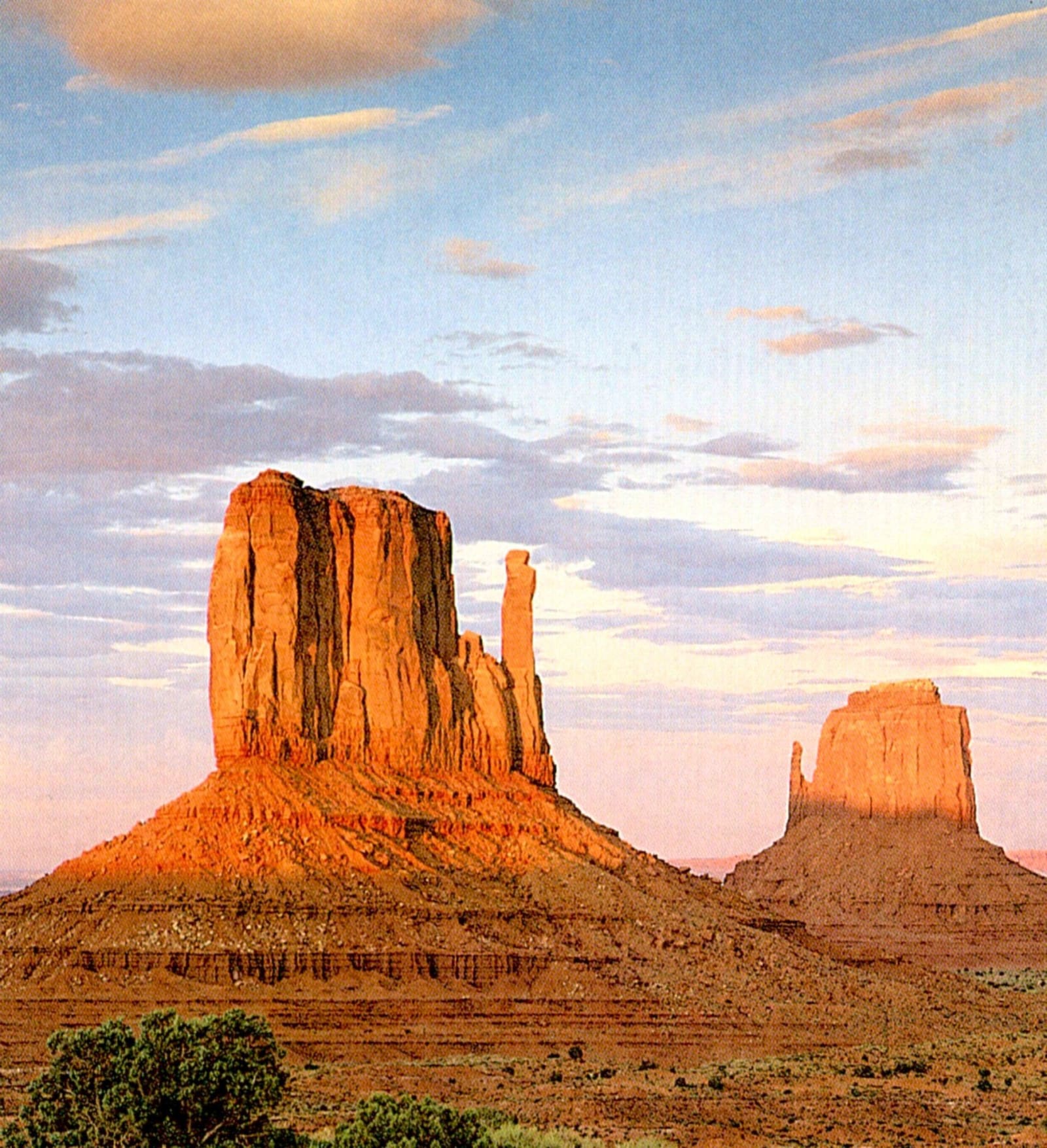
You have seen Monument Valley before you ever visit it. The towering sandstone buttes — West Mitten, East Mitten, Merrick Butte — have appeared in so many films, advertisements, and photographs that they function as visual shorthand for the American West itself. John Ford shot nine films here. Forrest Gump stopped running here. The Marlboro Man rode through here. When someone anywhere in the world pictures the Western frontier, this is usually what they see.
But photographs and films do not prepare you for the real thing. The valley floor sits at roughly 5,500 feet elevation, and the buttes and mesas rise another 1,000 feet above that, standing alone in open desert with nothing behind them but sky. The scale is almost impossible to process from a distance. It is only when you drive the 17-mile unpaved loop road through the valley floor — passing directly beneath formations that dwarf everything you have ever stood next to — that the true dimensions register. These are not scenic overlooks. These are geological monuments, remnants of a vast plateau that has been eroding for 50 million years, leaving behind only the hardest, most resistant towers of de Chelly Sandstone.
Monument Valley is not a national park. It is a Navajo Tribal Park, managed by the Navajo Nation, and that distinction matters. The land is sacred, and the Navajo people have lived here for generations. Guided tours led by Navajo operators take visitors to restricted areas — hidden arches, ancient ruins, petroglyphs, and sacred sites — that are not accessible on the self-drive loop. These tours are more than sightseeing. A good Navajo guide will share stories about the formations, explain their cultural significance, and offer a perspective on the landscape that no brochure or film can replicate.
The geology is a study in differential erosion. The valley sits within the Colorado Plateau, and the formations are carved from layers of Permian-age sandstone, siltstone, and shale deposited roughly 275 million years ago. The buttes are capped by harder Organ Rock Shale and de Chelly Sandstone, which resist erosion more effectively than the softer Cutler Formation beneath. As the surrounding plateau eroded away, the harder-capped sections remained standing, gradually narrowing from mesas to buttes to pinnacles. The Totem Pole, a 450-foot spire barely wider than a person at its base, represents one of the final stages of this process — a monument on borrowed time.
Sunrise and sunset are the prime viewing hours, and for good reason. The iron oxide in the sandstone responds to low-angle light with an intensity that shifts from pale gold to deep crimson over the course of an hour. At dawn, the Mittens glow against a sky that fades from indigo to pink. At sunset, the buttes turn blood red and throw shadows that stretch across the valley floor for miles. Photographers set up tripods in the dark and wait, because the light show is never quite the same twice.
The park has a campground with direct views of the buttes — falling asleep with the Mittens silhouetted against a star-filled sky is an experience that stays with you permanently. The Navajo Nation observes Daylight Saving Time, which the rest of Arizona does not, so check the clock when crossing the reservation boundary.
Beyond the main valley, the surrounding area offers additional wonders. Mystery Valley, accessible only by guided tour, contains dozens of natural arches and ancient Ancestral Puebloan ruins tucked into alcoves. Hunts Mesa provides an elevated perspective on the entire valley from the south, and overnight camping trips there are among the most sought-after experiences in the Southwest.
Monument Valley is a place that earns its reputation. The scale is real. The silence is real. The light is extraordinary. And the Navajo presence — welcoming but clear that this is their home — adds a dimension of cultural depth that elevates a visit from tourism to something closer to pilgrimage.
Visitor Info
On the Map
Stories featuring this place
Go deeper into the history and character of this stop
Nearby
The closest stops worth working into your route
Historical markers nearby
Roadside plaques and monuments within a short detour