 Moabdave / CC BY-SA 3.0
The Story
The town of Thistle does not exist anymore. In April 1983, a massive landslide — triggered by an unusually wet winter followed by rapid spring snowmelt — broke loose from a mountainside in Spanish Fork Canyon and buried the town, dammed the Spanish Fork River, destroyed a major railroad line, and closed US-6, one of the most important east-west highways in Utah. At the time, it was the most expensive landslide in United States history, causing over $200 million in damage. Today, the ruins are visible from the highway — a drowned landscape of dead trees, collapsed structures, and a reshaped canyon that serves as one of the most vivid reminders in the American West that the ground beneath your feet is not as permanent as it looks.
Thistle was a small railroad town at the confluence of Thistle Creek and the Spanish Fork River, home to a few hundred people who lived and worked along the Denver and Rio Grande Western Railroad line that connected Salt Lake City to the coal mines and communities of Carbon County. The town had a depot, a general store, homes, and the modest infrastructure of a community that existed primarily to service the railroad. It was not famous. It was not particularly scenic. It was a working town in a narrow canyon, doing what working towns do.
The winter of 1982-1983 was extraordinarily wet. Snowpack in the mountains above Thistle reached record levels, and when spring arrived the melt was rapid and sustained. The water saturated a hillside of ancient lake-bed sediments — fine-grained clay and silt deposited thousands of years ago when a glacial lake filled the canyon — and the saturated mass began to move. Slowly at first, then with accelerating momentum, an estimated 21 million cubic yards of earth slid downhill, crossing the canyon floor and damming the river.
The dam created by the landslide was roughly 220 feet high and over 1,000 feet wide. Behind it, water began to rise, flooding the town of Thistle and backing up the river for miles. The railroad tracks were buried. US-6 was severed. And the growing lake threatened downstream communities if the natural dam were to fail catastrophically, releasing a wall of water down Spanish Fork Canyon into the populated Utah Valley below.
The emergency response was massive and urgent. The Army Corps of Engineers and the Bureau of Reclamation drilled a drainage tunnel through the bedrock adjacent to the landslide to lower the lake level and prevent an uncontrolled breach. A new highway alignment was blasted through the canyon wall above the slide area, and the railroad was eventually rerouted through a new tunnel. The cost of these engineering responses, combined with the property damage and economic disruption, pushed the total bill past $200 million — a figure that made Thistle a case study in landslide risk management that is still cited in geology textbooks.
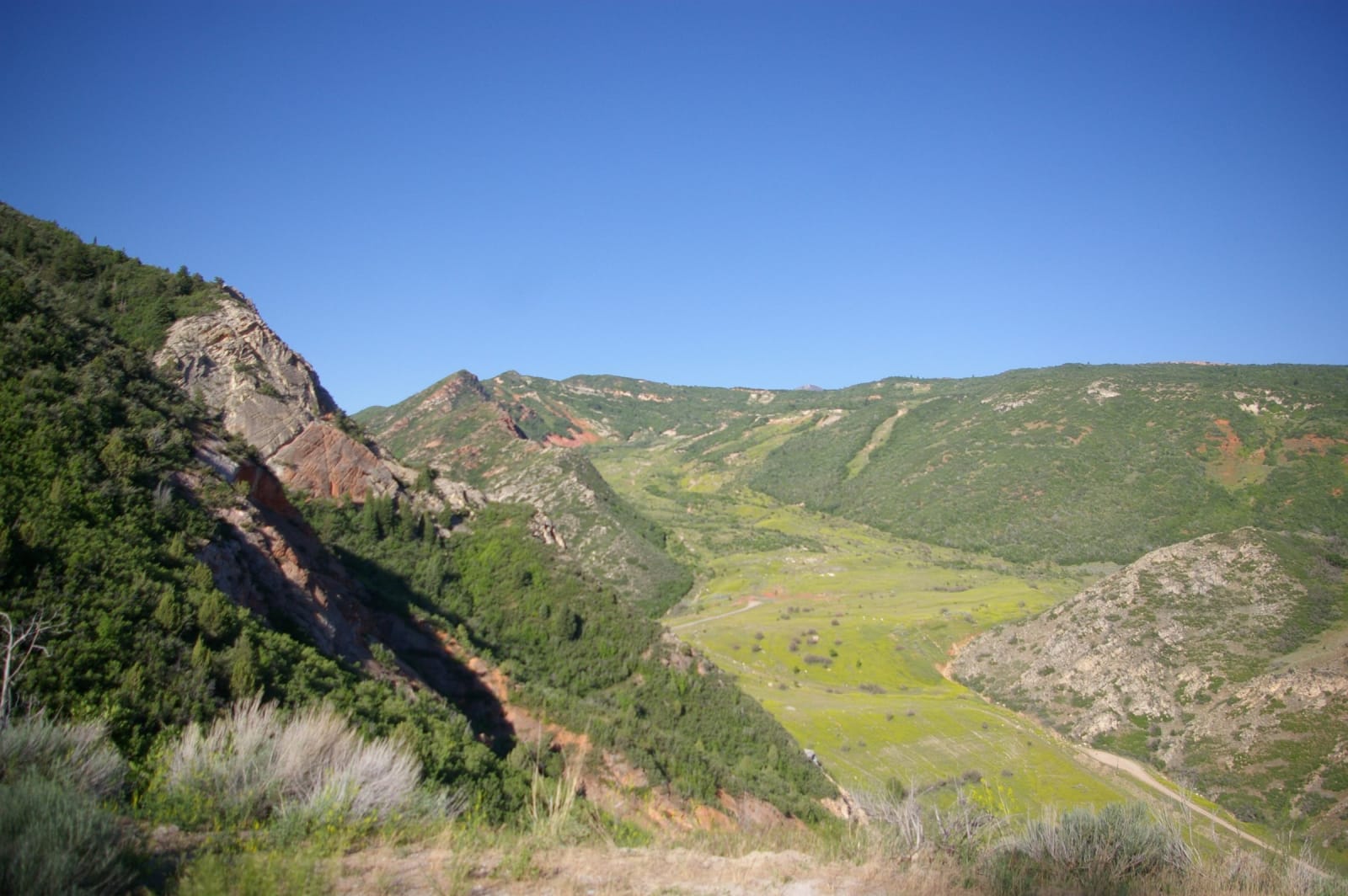
What remains today is visible from the new highway alignment that passes above the slide area. The landslide dam is still in place — a massive, irregular mound of earth and debris blocking the canyon floor. Behind it, the remnants of the lake have shrunk to a marsh and pond, surrounded by the skeletal trunks of trees that were drowned when the water rose. The ruins of a few structures are visible in the debris field, though most of the town is buried beneath the slide material or submerged in the remaining water. Interpretive signs along the highway explain what happened, but the visual evidence speaks for itself — a canyon that was rearranged in a matter of weeks by a hillside that decided to move.
The geology of the slide is well understood. The canyon sits in an area where ancient lake sediments — deposited during the Pleistocene when glacial lakes filled many of Utah's mountain valleys — are exposed on steep slopes. These sediments are inherently unstable when saturated, and the combination of steep terrain, weak materials, and excessive moisture created the conditions for failure. Similar conditions exist at other locations throughout the Wasatch Range, and the Thistle slide has been instrumental in shaping Utah's approach to landslide hazard mapping and building regulation.
The site is easy to visit — it is directly visible from US-6 between Spanish Fork and Soldier Summit, about 60 miles southeast of Salt Lake City. There is no formal park or visitor center, but pullouts along the highway offer views of the slide area and the remaining lake. The experience takes only a few minutes, but it delivers a geological lesson that stays with you — the reminder that mountains are not static, that the ground can move, and that a town can disappear in a spring that is too wet for the hills to hold.
Thistle is a ghost town in the most literal sense. It was not abandoned because the mines ran out or the railroad moved on. It was buried. The mountain came down, the river rose, and a community that had existed for decades vanished beneath mud and water in a few weeks. The ruins visible from the highway are not picturesque. They are sobering — a reminder that geology operates on its own schedule, indifferent to the plans of the people living on its surface.
Visitor Info
On the Map
Nearby
The closest stops worth working into your route
Historical markers nearby
Roadside plaques and monuments within a short detour