The Story
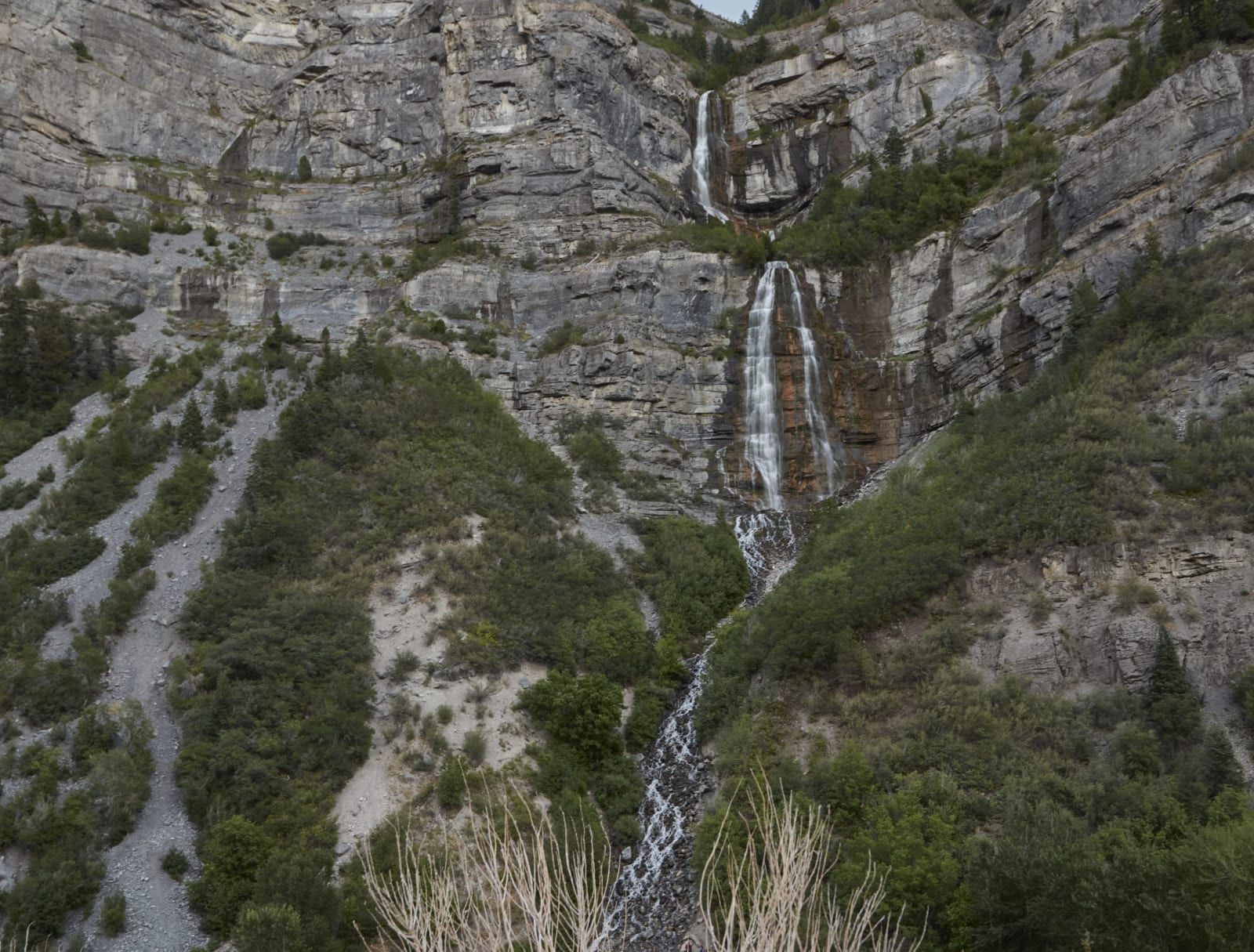
Bridal Veil Falls drops 607 feet in two cascading tiers down a sheer cliff face in Provo Canyon, and you can see it from your car. That combination of dramatic height and effortless accessibility makes it one of the most visited natural features along the Wasatch Front — a waterfall spectacular enough to stop traffic, positioned close enough to the highway that stopping traffic is exactly what it does. The pullout at the base fills with cars from spring through fall, and the short walk to the viewing area takes less than five minutes, delivering a payoff that most waterfalls require hours of hiking to provide.
The falls emerge from the cliff face at roughly 7,000 feet elevation, fed by snowmelt and springs that gather on the plateau above. The upper tier drops in a thin, spreading veil — the bridal veil that gives the falls their name — before collecting on a rocky ledge and plunging again in a heavier, more concentrated flow to the pool below. The total height makes Bridal Veil Falls one of the tallest waterfalls in Utah, and the vertical exposure of the cliff face means you see the full drop from the base, your neck craned back, the water appearing to fall from the sky itself.
The flow varies dramatically with the season. In May and June, when the mountain snowpack is melting at full speed, the falls run heavy and loud, throwing mist across the viewing area and filling the canyon with the sound of moving water. By late August the flow diminishes to a thinner stream, still beautiful but quieter, and by winter the falls partially freeze into a sculpture of blue and white ice that clings to the cliff face in formations that change daily with the temperature. Each season offers a different version of the same waterfall, and locals who drive Provo Canyon regularly develop a habit of checking the falls the way other people check the weather — a quick glance to see what the water is doing today.
The falls once had an aerial tramway — a gondola ride that carried passengers from the canyon floor to the top of the falls, where a restaurant and observation deck offered views across the canyon and the Utah Valley below. The tramway was built in 1961 and operated for decades as one of the most popular tourist attractions in the state. Then, in the winter of 1996, an avalanche swept down the mountainside and destroyed the upper terminal. The tramway was never rebuilt, and the ruins of the infrastructure — concrete footings, cable anchors, fragments of the loading platform — are still visible on the cliff face, adding a layer of melancholy to the landscape. The falls outlasted the human attempt to improve upon them, which is usually how these things go.
Provo Canyon is a narrow, steep-walled corridor carved by the Provo River through the Wasatch Range, connecting Utah Valley to Heber Valley. Highway 189 runs through the canyon, and the traffic is constant — commuters, tourists, ski traffic heading to Sundance or Deer Valley, and commercial vehicles all share the two-lane road. The waterfall pullout sits right along this corridor, making it one of the most convenient natural attractions in the state. You do not need to plan for Bridal Veil Falls. You just need to be driving through Provo Canyon and have the self-control to pull over.
The area at the base of the falls includes a paved path, a small park with picnic tables, and access to the Provo River, which runs cold and clear through the canyon and supports a healthy population of brown and rainbow trout. Fly fishermen work the pools and riffles within sight of the falls, and the combination of waterfall mist, canyon walls, and the sound of the river creates an atmosphere that feels far more remote than the proximity to Provo and Orem would suggest.
In winter, the frozen falls attract ice climbers who ascend the ice formations using crampons and ice axes. The climbs are technical and serious — the ice varies in quality and thickness, and the routes can be several hundred feet long — but the visual spectacle of climbers ascending a frozen waterfall is impressive from the ground even if you have no intention of joining them.
The canyon itself has a rich history beyond the waterfall. The Provo River was a critical water source for the Ute people who lived in Utah Valley for centuries before European contact. The Timpanogos band of the Ute fished the river, hunted in the surrounding mountains, and used the canyon as a travel route between the valleys. The canyon later became a railroad corridor, then a highway corridor, and now serves as one of the primary arteries connecting the Wasatch Front to the Wasatch Back communities of Heber, Midway, and Park City.
Bridal Veil Falls does not require a hike, a permit, a reservation, or a plan. It requires only that you look up. The water has been falling from this cliff for thousands of years, through seasons and centuries, outlasting tramways and roads and the civilizations that built them. It will be falling long after the highway is rerouted and the pullout is reclaimed by the canyon. Some things endure because they are simple, and a river falling off a cliff is about as simple as nature gets.
Visitor Info
On the Map
A story featuring this place
Go deeper into the history and character of this stop
Nearby
The closest stops worth working into your route
Historical markers nearby
Roadside plaques and monuments within a short detour