 National Park Service / public domain via Wikimedia Commons
The Story
In 1831, the story went, four Nimiipuu traveled to St. Louis in search of the book of Heaven and teachers to explain it. The American Board of Commissioners for Foreign Missions answered by sending Henry and Eliza Spalding west with Marcus and Narcissa Whitman in 1836. The Whitmans stopped near Walla Walla. The Spaldings went on to the Lapwai Valley, whose name is said to come from the Nimiipuu word for the flutter of butterflies' wings, and in 1838 moved their mission down to the mouth of Lapwai Creek, where it meets the Clearwater.
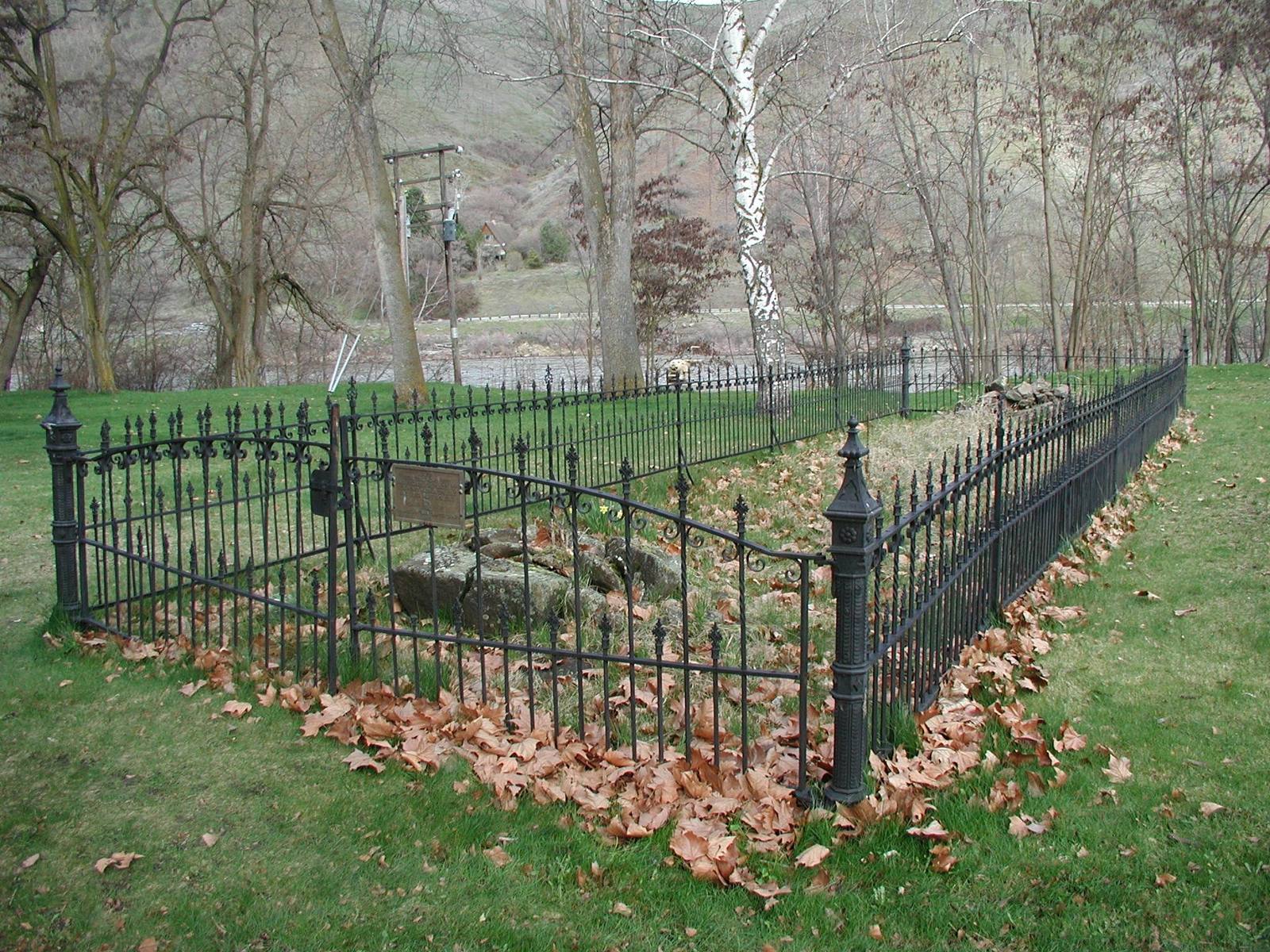
They brought mills, a school, and the conviction that the Nimiipuu had to settle in one place to become Christian. In 1839 the first printing press in the Pacific Northwest arrived here, sent from Honolulu, and the mission used it to print the first books in the Nez Perce language, spelled out in an alphabet the missionaries devised. After Cayuse men killed the Whitmans in 1847, the Spaldings fled. The mission buildings did not survive; an iron fence the Daughters of the American Revolution put up in 1935 marks the foundations of their house.
Something else did survive. Soon after he arrived, Spalding began trading for Nimiipuu clothing, tools and horse gear, and the park's museum collection traces its beginnings to those trades. The museum stands in the visitor center of Nez Perce National Historical Park, on the hill above the old mission ground, and tells the story of the Nimiipuu across all thirty-eight of the park's sites. Below it along the creek are the site of the first Indian agency, a Nez Perce cemetery where the Spaldings are buried, and Watson's Store, a general store that served the Nimiipuu for decades.
Visitor Info
On the Map
Nearby
The closest stops worth working into your route
Historical markers nearby
Roadside plaques and monuments within a short detour