 SounderBruce / CC BY-SA 4.0 via Wikimedia Commons
The Story
James Davis was born in Sussex in 1815, dug wells in the East, and reached the Palouse with his wife Mary Ann and their children in the early 1870s, among the first to plow it. North of the butte he built a store and inn with a dance hall on the top floor, and it became one of the best-known stage stops in the region; he got his nickname as a trader willing to put cash up on the counter. When the railroads ended the coach trade he turned to the butte, bought it, built a wagon road to the top, and spent some $10,000 on a hotel there.
It opened on July 4, 1888, guests lining the porch and the roof terrace, with a glass observatory and a telescope on top. Hundreds came each season and it still never paid, and the hard times of the 1890s thinned the crowds further. Mary Ann died in 1894. Davis died in the empty hotel on June 22, 1896, at eighty-one. A son kept it open a few more years and had closed it by about 1902, and on March 15, 1911, it burned to the ground, in a fire said to have been started by teenagers smoking.
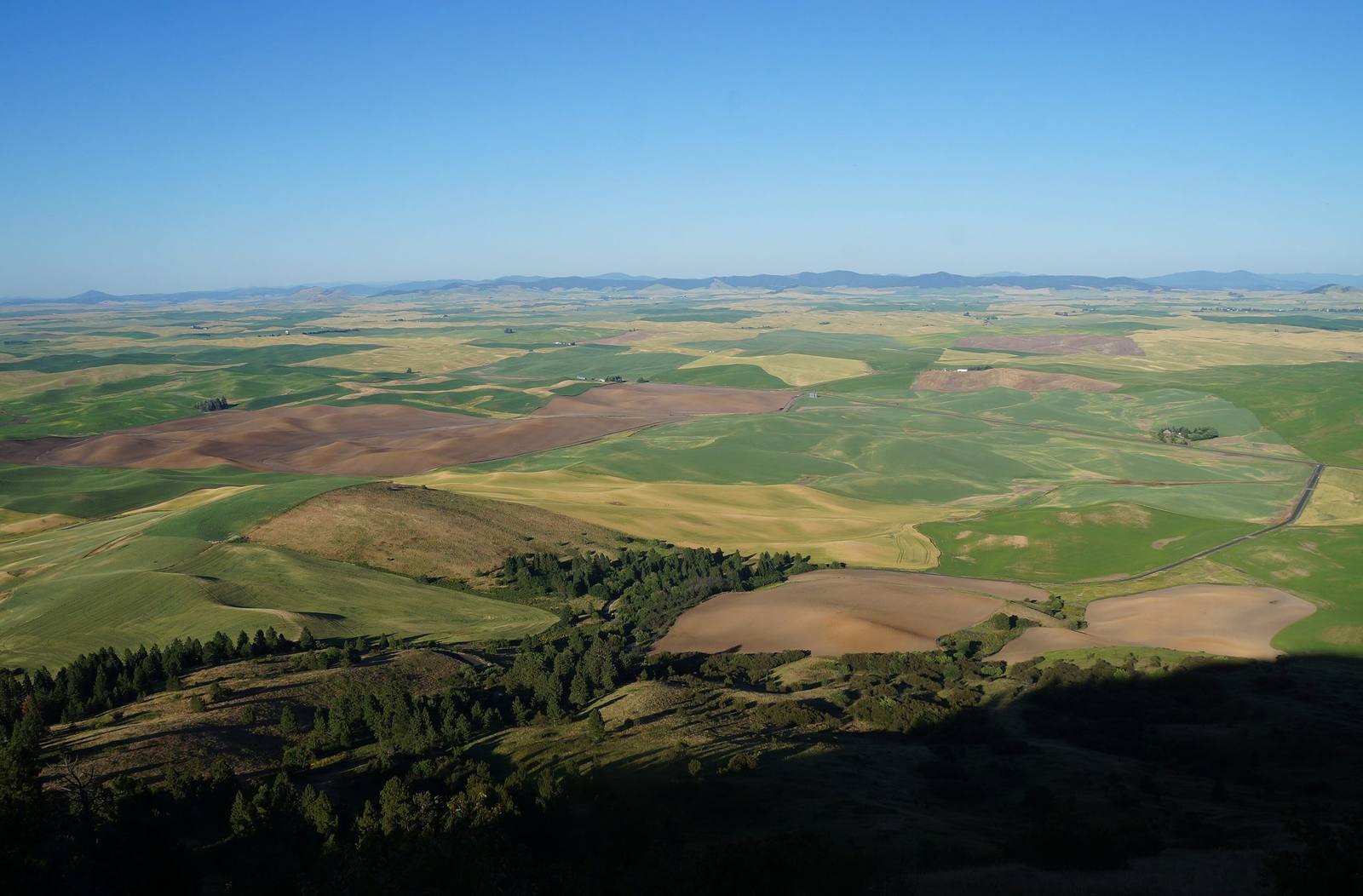
Nothing of it is left on top. A narrow paved road winds around the butte to a parking area on the 3,612-foot summit, which has been a state park since 1946 and, with Kamiak Butte near Pullman, a National Natural Landmark since 1965. The view takes in the whole sweep of the wheat hills, and the low light at either end of the day draws photographers.
Visitor Info
On the Map
Nearby
The closest stops worth working into your route
Historical markers nearby
Roadside plaques and monuments within a short detour