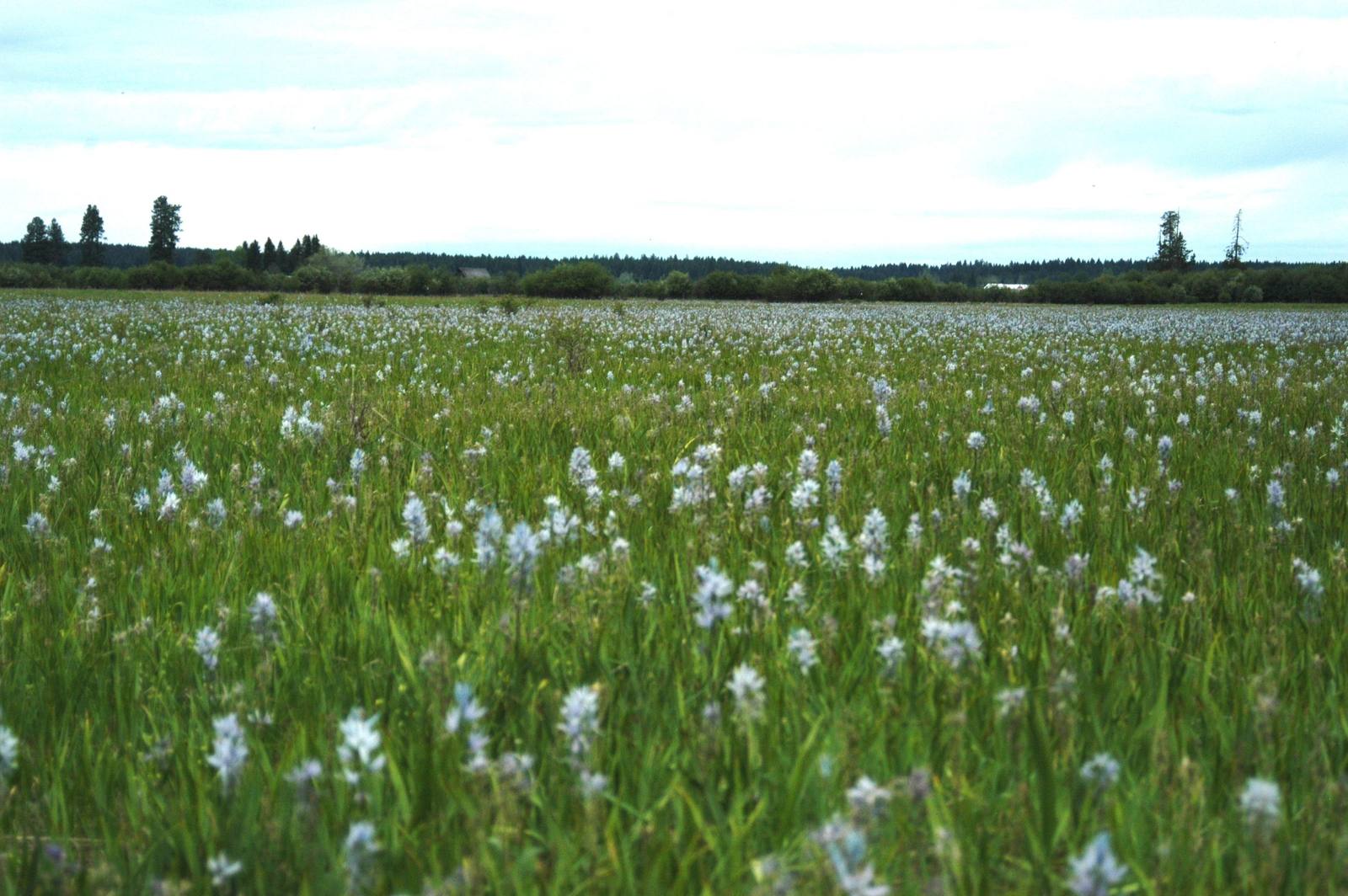
 National Park Service / public domain via Wikimedia Commons
The Story
Camas grows here. Each spring the low ground on the prairie turns blue with its flowers, and each late summer Nimiipuu families came up to dig the bulbs, bake them in earthen pits and make them into bread and cakes to carry through the winter. That is what they were doing on September 20, 1805, when William Clark and a small party of hunters came down off the Lolo Trail after ten days in the Bitterroots, starving.
The first people they met were three boys. The adults, the Nimiipuu remember, were less sure what to make of the strangers, bearded and pale with a Black man among them, and some talked of killing them. An old woman named Watkuweis, who had once been captured and carried far to the east, where white traders treated her kindly before she found her way home, told them to do these people no harm. The Nimiipuu fed them dried salmon, berries and camas bread, which Patrick Gass thought tasted like pumpkin bread. The men ate so much of it that nearly all of them fell sick, and when they kept asking for more, the Nimiipuu began asking to be paid.
The headman Twisted Hair drew them a map of the rivers to the west, and his people kept the expedition's horses through the winter while it went down the Columbia; the Corps camped on this prairie again in June 1806 before recrossing the mountains. "We knew where we were," the Nimiipuu elder Otis Halfmoon has said of the meeting. "We discovered Lewis and Clark."
The prairie is wheat land now, around the small town of Weippe, but camas still grows in the low ground, and the Nez Perce Tribe's knowledge guides how the park manages it.
Visitor Info
On the Map
Nearby
The closest stops worth working into your route
Historical markers nearby
Roadside plaques and monuments within a short detour