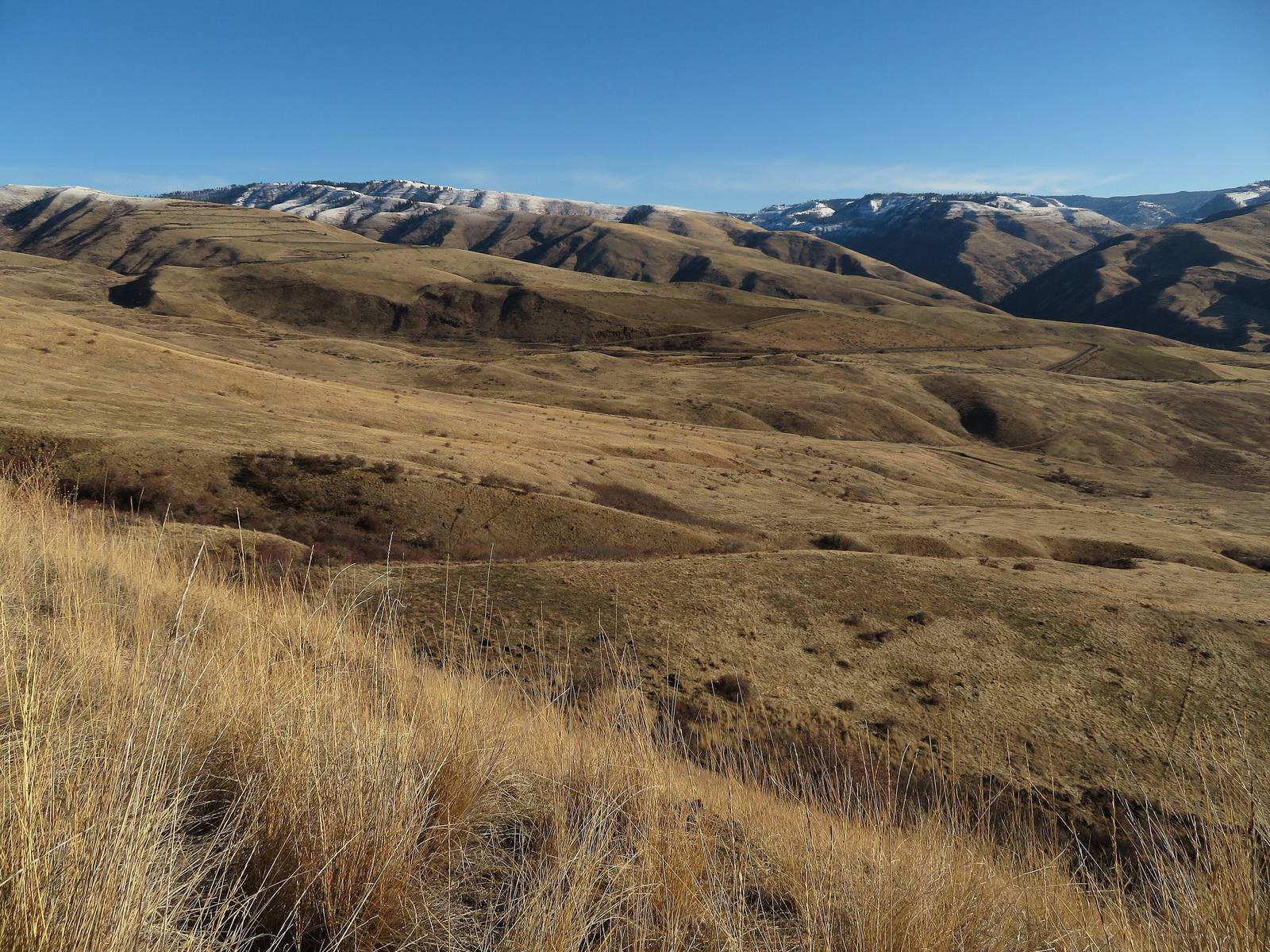
 Ken Lund / CC BY-SA 2.0 via Wikimedia Commons
The Story
The Nimiipuu call this place Lahmotta. In June 1877 non-treaty bands, among them those of Joseph and White Bird, were camped here on their way to the reservation they had been ordered onto, when a few young men rode out and killed settlers along the Salmon River in revenge for the murder of one warrior's father. The chiefs knew the Army would come. They stayed at Lahmotta and decided to try for peace, and to fight only if they had to.
Before dawn on Sunday, June 17, Captain David Perry brought 106 soldiers of the First Cavalry and eleven civilian volunteers down the wagon road into White Bird Canyon. The Nimiipuu sent six men forward under a white flag, with orders not to fire unless fired upon. A shot came from the soldiers' side — most accounts name the volunteer Arthur Chapman — and the fight began. In the first minute a Nimiipuu marksman, Otstotpoo, Fire Body, killed the trumpeter, and with him the only way Perry had to pass orders down the line. Some seventy warriors, hidden in the high grass along the ridges, rolled up the soldiers' line, and within minutes the troops were running back up the hill.
By mid-morning thirty-four soldiers were dead. No Nimiipuu were killed; two or three were wounded. It was the Army's heaviest loss of the war, and it made the war certain. Over the next four months the bands fought their way more than a thousand miles toward Canada, and Joseph's people never went home to the Wallowa.
An interpretive shelter on US-95 looks down on the whole battlefield. A walking trail from the old highway crosses the ground itself, one of the thirty-eight sites of Nez Perce National Historical Park.
Visitor Info
On the Map
Nearby
The closest stops worth working into your route
Historical markers nearby
Roadside plaques and monuments within a short detour