 National Park Service / public domain via Wikimedia Commons
The Story
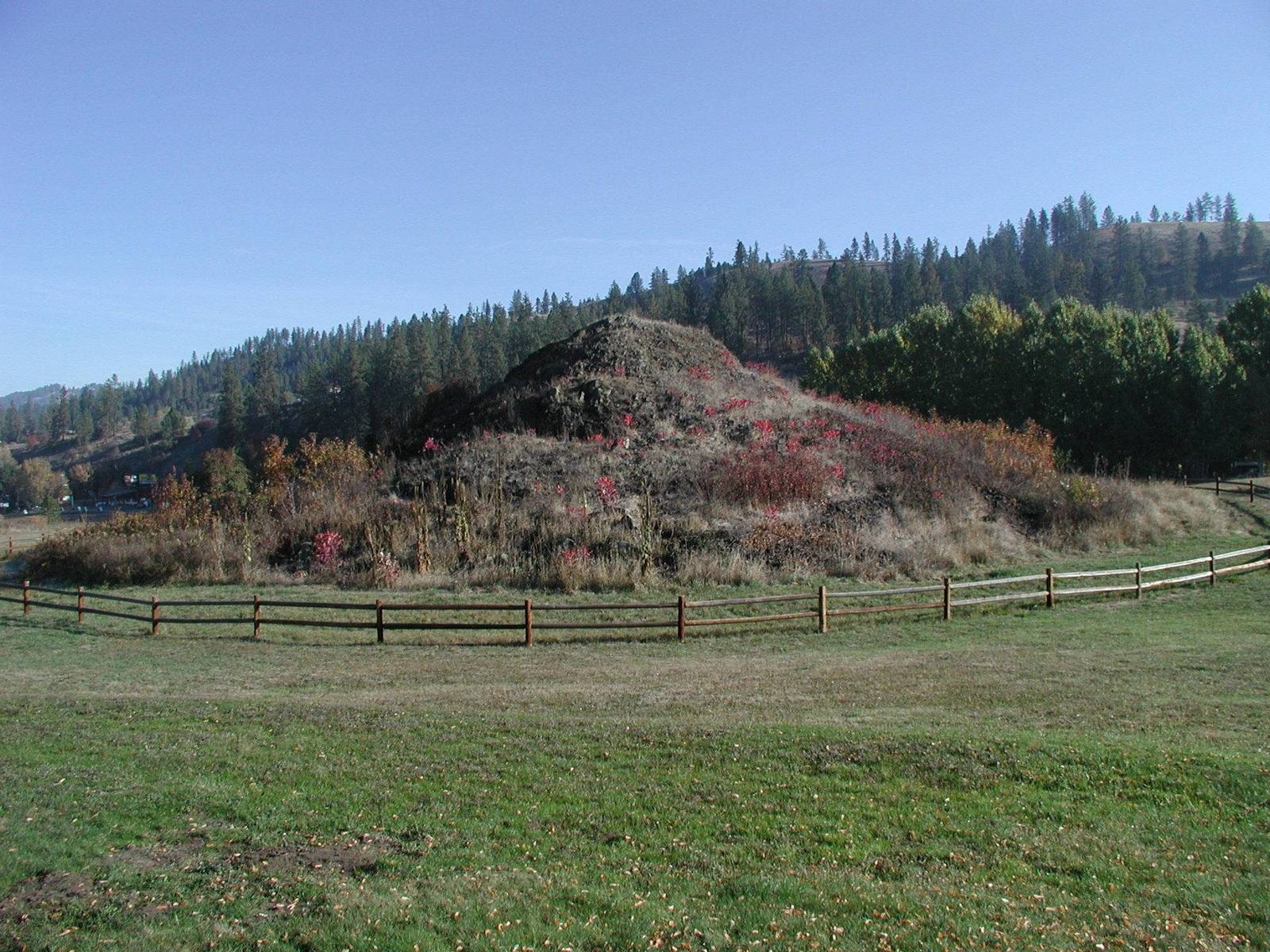
For the Nimiipuu, the story of the people begins here, at a mound of rock on the bank of the Clearwater called timʼné•pe, the Heart of the Monster.
In the account the Nez Perce tell, a monster had swallowed nearly every living thing. Iceye'ye, Coyote, painted himself with clay so the monster could not see him in the grass, packed five stone knives, pitch and a fire kit, and let himself be breathed in. Inside he built a fire and cut at the heart, breaking one knife after another, until he tore it loose with his hands and the people walked out. He carved the body and sent its pieces toward the sunrise and the sunset, the warm and the cold, and where each fell a people began: the Coeur d'Alene, the Flathead, the Crow and others. When Fox asked what was left for this place, Coyote washed the blood from his hands and sprinkled it over the valley, and from those drops came the Nimiipuu.
The heart is the landmark, and the river beside it was a crossing for thousands of years. On July 13, 1877, the day after the fighting on the Clearwater, the non-treaty bands forded here with their families and horses while soldiers came down the far hills, and turned east toward the Lolo Trail.
It is one of the thirty-eight sites of Nez Perce National Historical Park, about two miles upriver from the Kamiah bridge on US-12. A shelter by the parking area plays part of the story in nimipuutímt and in English, and a short path leads to the heart itself, where a half-circle of seats faces it and another recording tells the rest. There is no fee. The park asks visitors to treat the site with the respect they would give any sacred place.
Visitor Info
On the Map
Nearby
The closest stops worth working into your route
Historical markers nearby
Roadside plaques and monuments within a short detour