 Tricia Simpson / CC BY-SA 3.0
The Story
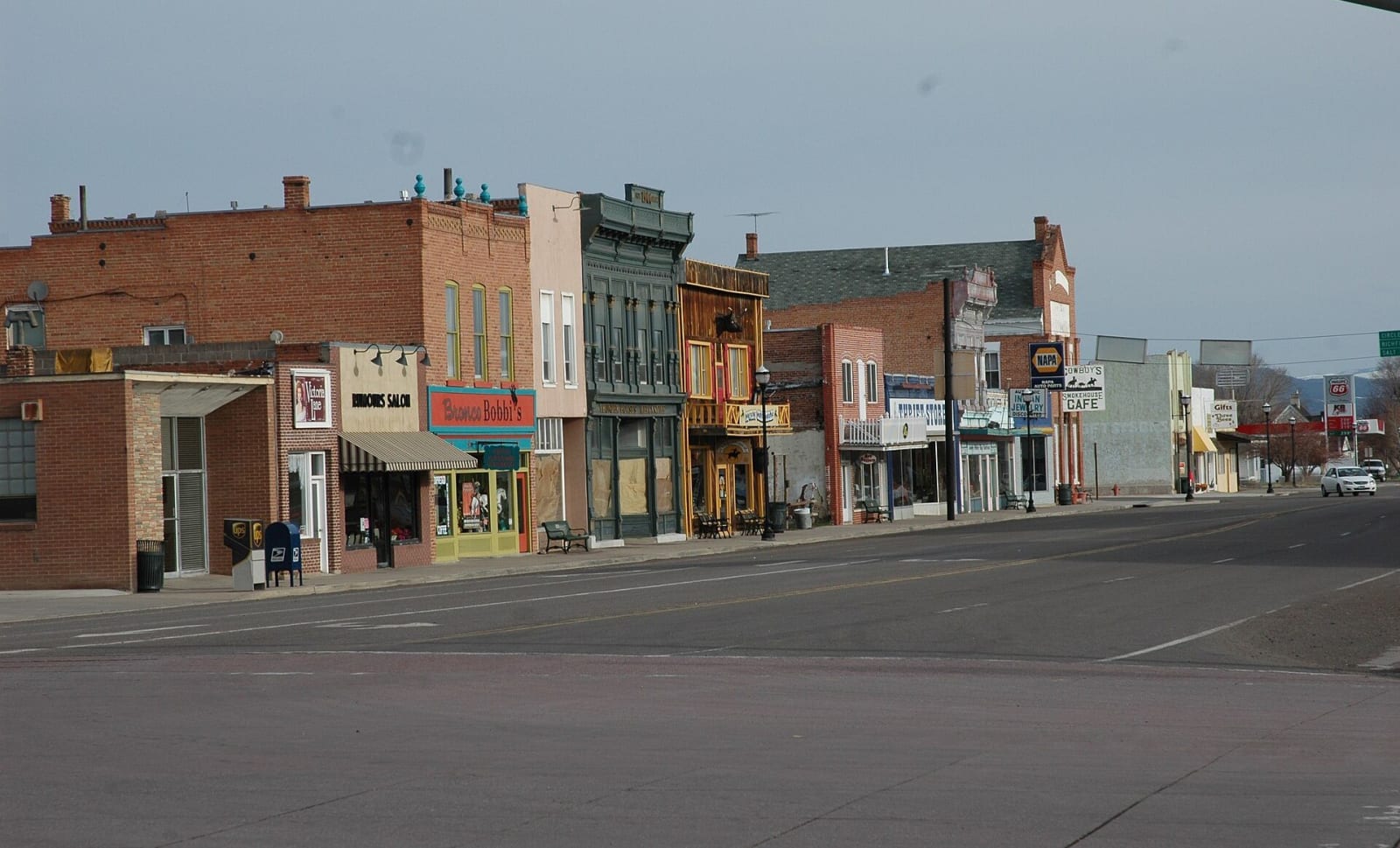
Panguitch is the town that time treated gently. While other small Utah communities were reshaped by highways, strip malls, and the homogenizing forces of late-twentieth-century development, Panguitch held on to its original Main Street with a grip that has produced one of the best-preserved collections of pioneer-era commercial architecture in the state. The brick buildings lining the main road date from the 1890s and early 1900s, and enough of them survive in their original form that the entire downtown has been designated a National Historic District. Walking the sidewalks feels less like visiting a museum than like arriving in a town that simply never got around to tearing itself down.
The town was settled in 1864 by Mormon pioneers who chose the site for its position in a broad, well-watered valley at the headwaters of the Sevier River. The name comes from a Paiute word meaning "big fish," a reference to the trout that once filled the river and the nearby Panguitch Lake. The valley sits at roughly 6,600 feet elevation, which gives it cold winters, short growing seasons, and the kind of climate that produces hardy people and modest expectations. The pioneers who built these brick buildings were not wealthy. They were practical, and the architecture reflects that practicality — solid construction, functional design, and an understated dignity that comes from building with care even when resources are limited.
The brick is the defining material. Unlike many Western towns of the era, which were built of wood and subsequently burned, Panguitch's commercial district was built in brick — locally manufactured from clay deposits in the surrounding valley. The brick construction survived the fires that destroyed so many contemporary towns, and the result is a streetscape that has remained largely intact for over a century. The facades show the decorative touches that were fashionable in late-Victorian commercial architecture — corbelled cornices, arched window headers, recessed doorways — executed with the restrained skill of frontier masons who understood the vocabulary of their craft.
Panguitch serves as the primary gateway to Bryce Canyon National Park, which sits about 25 miles to the southeast via Highway 12. The town's economy depends significantly on this proximity, and the motels, restaurants, and services along the main road cater to the steady flow of park visitors. The lodging options tend toward the affordable and unpretentious — family-owned motels and small inns rather than chain hotels — and the dining is similarly straightforward. The prices are noticeably lower than in Bryce Canyon itself or in the more developed gateway towns elsewhere in southern Utah.
The Panguitch Social Hall, built in 1908, is one of the finest examples of pioneer-era civic architecture in rural Utah. The two-story brick building served as the community's gathering place for dances, theatrical performances, meetings, and social events, and its survival reflects the value that small Utah communities placed on communal space. The building has been restored and continues to host community events, maintaining its original function in a way that feels like a quiet victory over the forces that have closed similar halls in towns across the West.
Panguitch Lake, about 16 miles southwest of town, is a popular fishing and recreation destination that draws anglers pursuing rainbow and brown trout in a mountain setting ringed by conifer forest and volcanic formations. The lake sits at 8,200 feet elevation, significantly higher and cooler than the town, and in summer it provides a welcome escape from the heat of the lower valleys. Ice fishing in winter draws a hardy contingent of locals and visitors who drill holes in the frozen surface and wait in the cold with the patient determination that ice fishing demands.
The town hosts several annual events that draw visitors beyond the Bryce Canyon crowd. The Quilt Walk Festival, held each June, commemorates a legendary episode from the town's early history — during a particularly harsh winter in 1864, a group of settlers reportedly laid quilts on the deep snow to create a path to a neighboring community for supplies. Whether the story is precisely true is debated, but the festival has become a beloved tradition featuring quilt shows, pioneer demonstrations, and community meals that celebrate the resilience and ingenuity of the town's founders.
Panguitch is not a town that demands your attention. It does not have dramatic scenery or headline attractions. What it has is authenticity — a Main Street that looks the way it looked a century ago, a community that maintains its pioneer heritage without turning it into a theme park, and a quiet, unhurried character that provides a grounding counterpoint to the geological spectacle waiting at Bryce Canyon. The national park will give you hoodoos and starlight and the vastness of deep time. Panguitch will give you a brick sidewalk, a home-cooked meal, and the company of a town that has been here since 1864 and plans to be here for a good while longer.
Visitor Info
On the Map
A story featuring this place
Go deeper into the history and character of this stop
Nearby
The closest stops worth working into your route
Historical markers nearby
Roadside plaques and monuments within a short detour