The Story
Mossy Cave Trail is Bryce Canyon's best-kept secret, and the secret is this: you can experience genuine Bryce Canyon hoodoos, a waterfall, and a moss-draped cave without paying the park entrance fee. The trailhead sits along Highway 12 just east of the Highway 63 junction, outside the fee boundary of the national park, and the short half-mile trail delivers a concentration of geological and hydrological wonders that many of the longer, more famous trails inside the park cannot match.
The trail follows Water Canyon Creek upstream through a narrow corridor of orange and white hoodoos to two destinations: a small but photogenic waterfall on the left fork and the mossy cave itself on the right. The total distance is barely a mile round trip, with minimal elevation gain, making it one of the most accessible hikes in the Bryce Canyon area. Families with small children, visitors with limited mobility, and anyone who wants a quick but satisfying geological experience will find Mossy Cave perfectly calibrated to deliver maximum reward for minimum effort.
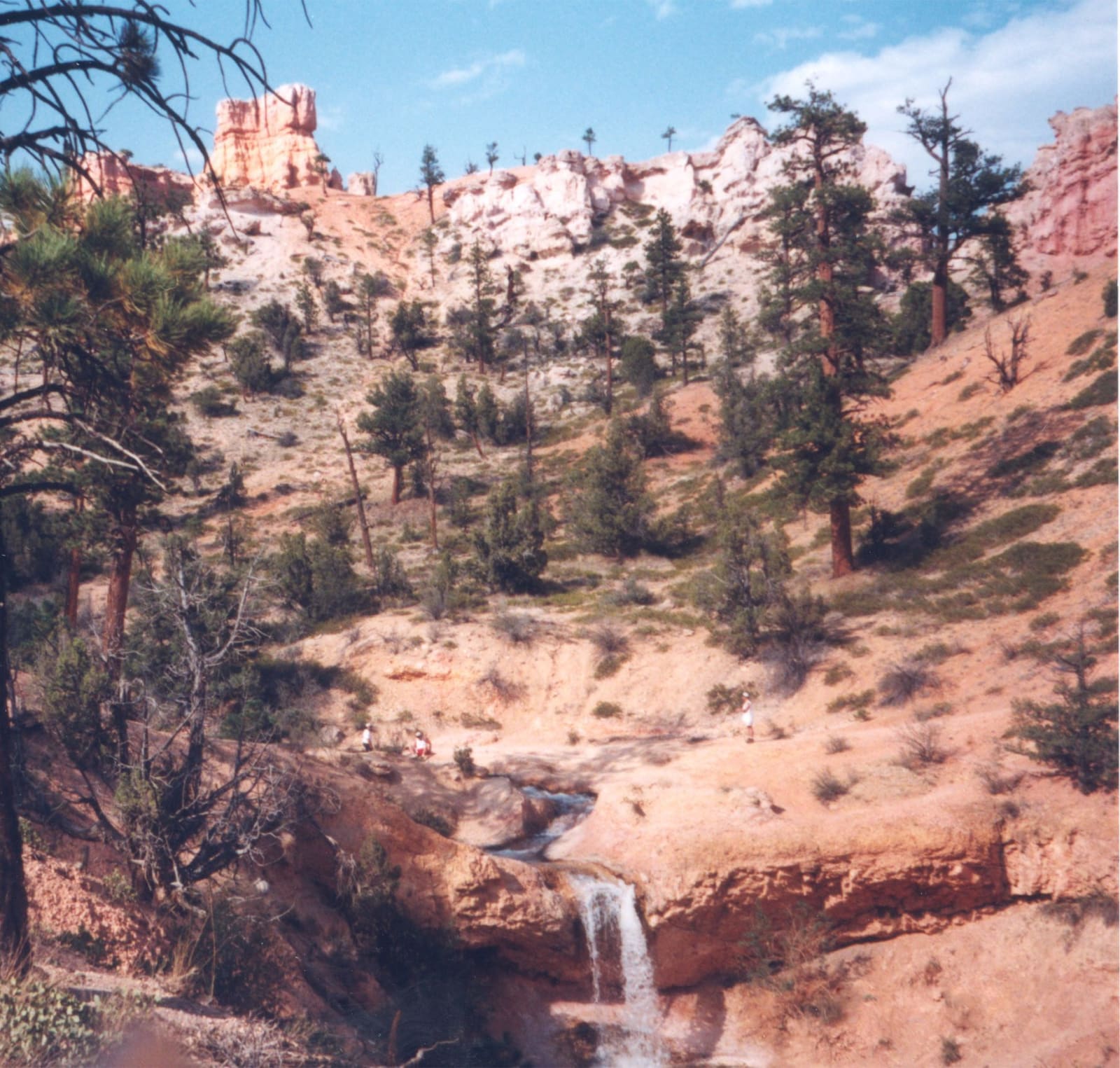
The waterfall is the first surprise. Water Canyon Creek drops over a ledge of Claron Formation limestone in a curtain of water that varies from a robust cascade in spring snowmelt to a delicate trickle by late summer. The pool at the base is small but inviting on a hot day, and the sound of falling water in the otherwise silent canyon creates an acoustic intimacy that larger waterfalls lack. The creek itself is an unexpected presence in this arid landscape — a ribbon of clear water running through a canyon of dry, eroded rock — and its existence requires explanation.
The explanation is one of the most interesting stories in the park. Water Canyon Creek is not entirely natural. In the 1890s, Mormon pioneers from the town of Tropic — just east of the park — hand-dug an irrigation canal from the East Fork of the Sevier River through the plateau to bring water to their fields. The canal, known as the Tropic Ditch, diverted water across the divide and into Water Canyon, where it had never flowed before. The water found the canyon's natural drainage and began running downstream, creating a creek where none had previously existed. The waterfall, the mossy cave, and the lush vegetation along the creek are all products of this pioneer-era water diversion — a landscape feature created by human engineering and maintained by natural processes for over a century.
The mossy cave is the second surprise. A short spur trail climbs to a shallow alcove in the canyon wall where groundwater seeps through the porous limestone and drips from the ceiling, feeding a thick carpet of moss, ferns, and other moisture-loving plants that cling to the rock in vivid green. The contrast between the dry, sunbaked hoodoos outside and the cool, damp, green interior of the cave is jarring and delightful — a miniature oasis tucked into the side of a desert canyon. In winter, the seeping water freezes into formations of blue and white ice that transform the cave into a crystalline grotto.
The hoodoos along the trail are classic Bryce Canyon formations — tall, thin pillars of Claron Formation limestone capped with harder layers that protect the softer rock beneath from erosion. The colors range from pale cream to deep orange, and the formations crowd the trail on both sides, creating a corridor of sculpted rock that is intimate and engaging. The proximity of the hoodoos — you can nearly touch them from the trail — gives the experience a different quality than the panoramic views from the amphitheater overlooks inside the park. Here you are among the hoodoos rather than above them, and the change in perspective reveals details of texture, color, and erosion pattern that the rim viewpoints cannot provide.
The trail is open year-round, and each season offers a different version of the experience. Spring brings the heaviest water flow and the most dramatic waterfall. Summer is warm and dry, with the creek reduced to a gentle flow but the hoodoos blazing in the midday sun. Autumn brings cooler temperatures and golden cottonwoods along the creek. Winter transforms the waterfall and the mossy cave into ice formations that draw photographers from across the region — the combination of blue ice, orange rock, and white snow is a color palette that no other trail in the park can offer.
The trailhead parking lot is small and can fill quickly during peak season, but the turnover is rapid — most visitors complete the hike in 30 to 45 minutes. There are no facilities at the trailhead beyond a vault toilet and an interpretive sign. The trail surface is uneven in places, with some rocky sections near the cave, but the overall difficulty is minimal.
Mossy Cave Trail is the hike that Bryce Canyon regulars mention in quiet voices, not because it is a secret — it appears in every guidebook — but because its position outside the fee boundary and its modest length cause many visitors to dismiss it in favor of the grander trails inside the park. That dismissal is a mistake. The trail delivers a waterfall, a cave, and a canyon full of hoodoos in half a mile, tells a story about pioneer ingenuity that connects the human and natural history of the region, and asks nothing in return but half an hour of your time. That is a bargain by any standard.
Visitor Info
On the Map
Nearby
The closest stops worth working into your route
Historical markers nearby
Roadside plaques and monuments within a short detour