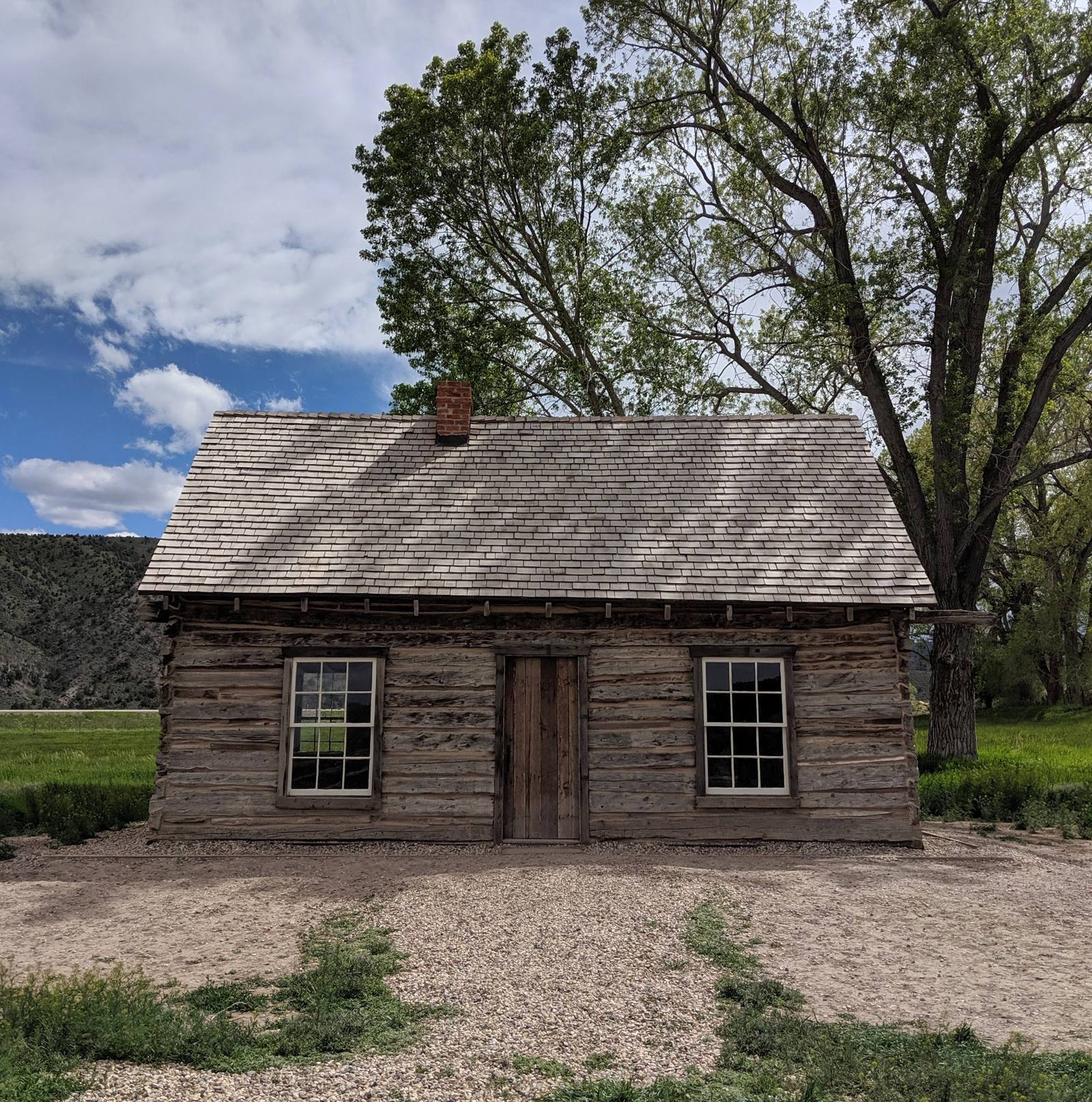
 Derrellwilliams / CC BY-SA 4.0
The Story
Robert LeRoy Parker was born in Beaver on April 13, 1866, the oldest of thirteen children of Mormon emigrant parents. In 1879 the Parkers moved their growing household to a small ranch on the Sevier River south of Circleville, and it was here — in a modest log cabin that still stands beside US-89 — that the boy who would become Butch Cassidy spent his teenage years.
The cabin years explain a surprising amount of what came after. Working as a teenage ranch hand, Parker fell in with a small-time cattle rustler named Mike Cassidy, who taught him horses, guns, and a flexible attitude toward other people's livestock — and whose surname Parker eventually took as his own. The "Butch" came later, from a stint as a butcher's apprentice in Rock Springs, Wyoming. By 1889 he had robbed his first bank, in Telluride, Colorado, and the quiet teenager from the Sevier Valley was on his way to leading the Wild Bunch, the most successful train-and-bank-robbing outfit of the closing frontier.
For more than a century the family cabin slumped beside the highway, tilting off its footings while travelers pulled over to look. In 2016 the Utah Legislature put $138,000 into saving it: the building was taken apart, restored log by log, and reassembled on a proper foundation, and the site was rededicated in September 2017 with a parking area, restrooms, and interpretive kiosks. You can walk the grounds beneath the cottonwoods, study the furnished interior through clear panels just inside the cabin door, and take in the same ranchland-and-Tushar-Mountains view a restless teenager studied in the 1880s.
The stop is free, the grounds are always open, and half an hour covers it — a small, genuine piece of the Old West sitting in plain sight on the road between Panguitch and the I-70 country, two and a half miles south of Circleville.
Visitor Info
On the Map
Nearby
The closest stops worth working into your route
Historical markers nearby
Roadside plaques and monuments within a short detour