The Story
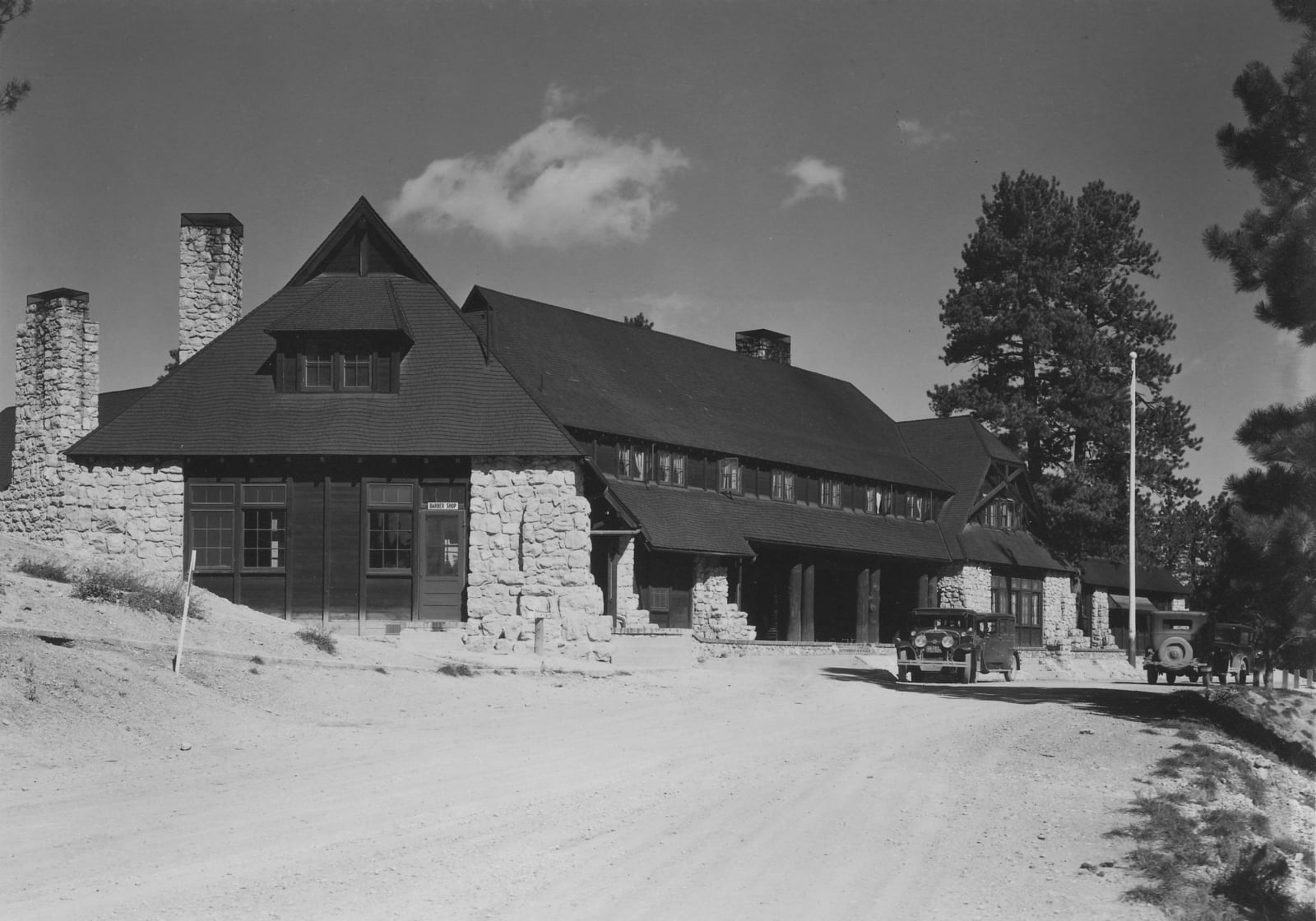
Bryce Canyon Lodge is the building that proves the National Park Service got it right at least once. Built in 1925 by the Union Pacific Railroad as part of a grand plan to lure tourists to the national parks of southern Utah by train, the lodge sits on the rim of the Bryce Canyon amphitheater, a few hundred yards from the edge of the largest collection of hoodoos on Earth. It is a National Historic Landmark, one of the few remaining grand park lodges still operating in its original form, and sleeping there — in a room built from local materials a century ago, with the canyon a short walk from your door — is one of the finest overnight experiences in the national park system.
The architecture is rustic elegance in the tradition of the great park lodges — heavy timber framing, local stone, and a design that embraces the landscape rather than competing with it. The main lodge building houses the lobby, dining room, and a massive stone fireplace that serves as the social center on cold evenings. The lobby is paneled in wood, furnished with period-appropriate pieces, and lit by fixtures that cast the warm, amber glow of a building designed before fluorescent lighting ruined everything. The dining room offers views of the surrounding forest, and the food — while operating within the constraints of a national park concessionaire — is better than it needs to be and occasionally genuinely good.
The guest accommodations include rooms in the main lodge, duplex cabins, and individual cabins scattered among the ponderosa pines. The cabins are the premium experience — small, private structures with their own porches, stone fireplaces, and the particular silence that comes from sleeping in a freestanding building surrounded by forest rather than sharing walls with other guests. The cabins were built from the same local materials as the main lodge, and they have been maintained with enough care that the original character is intact despite a century of use.
The lodge was constructed entirely from local materials — the stone quarried from nearby, the timber harvested from surrounding forests — and the construction reflects the craft standards of the 1920s, when buildings were designed to last and the phrase "built to code" meant something more ambitious than it does today. The Union Pacific Railroad invested heavily in the park lodge system as a strategy to fill its trains — the idea was that tourists would ride the railroad to Cedar City or other regional depots and then take motor coaches to the parks, spending nights in company-built lodges along the way. The strategy worked, and the lodges it produced — Bryce Canyon Lodge, Zion Lodge, Grand Canyon Lodge — became architectural landmarks that have outlasted the railroad's passenger service by decades.
The location is the lodge's greatest asset. The rim of the Bryce Canyon amphitheater is a short walk from the front door, and guests can watch the sunrise paint the hoodoos from viewpoints that are a five-minute stroll from their rooms. The Navajo Loop and Queen's Garden trailheads are nearby, and the combination of a day spent hiking among the hoodoos and an evening spent in front of the lodge fireplace creates a rhythm that defines the classic national park experience. The absence of televisions in the cabins — a deliberate choice that some guests initially resist and subsequently appreciate — reinforces the sense that you are here for the landscape, not for the amenities.
The lodge operates seasonally, typically from April through October, and reservations are competitive. Rooms book up months in advance, especially for peak summer weekends, and securing a cabin requires planning that borders on military precision. The effort is worth it. Staying inside the park eliminates the drive from Tropic or Panguitch, provides access to the rim at sunrise and sunset when the light is best, and creates a continuity of experience — park to lodge, lodge to park — that day-tripping cannot replicate.
The dining room serves breakfast, lunch, and dinner, and the quality has improved in recent years as the concessionaire has invested in sourcing better ingredients and hiring more capable kitchen staff. The menu is American lodge cuisine — steaks, trout, seasonal vegetables, hearty breakfasts — prepared with enough competence that the food complements rather than detracts from the experience. Dinner reservations are recommended, especially at the height of summer, and the window tables overlooking the forest are the most requested seats in the house.
The National Park Service and the lodge concessionaire have navigated the tension between preservation and comfort with reasonable success. Modern amenities — plumbing, electricity, climate control — have been integrated without destroying the historical character of the buildings. The WiFi works, grudgingly. The coffee is decent. And the fireplace in the lobby still draws guests every evening, just as it did when the first visitors arrived by motor coach from the railroad depot nearly a century ago.
Bryce Canyon Lodge is not the most luxurious place you will ever sleep. The cabins are small. The walls are thin. The plumbing reflects its era. But it is among the most meaningful places you will ever sleep — a building constructed from the land it sits on, designed to serve the landscape it overlooks, and maintained for a century by people who understood that some buildings are worth keeping. The hoodoos outside your window are 50 million years old. The lodge is 100 years old. Both are still standing, and both are worth the visit.
Visitor Info
On the Map
Nearby
The closest stops worth working into your route
Historical markers nearby
Roadside plaques and monuments within a short detour