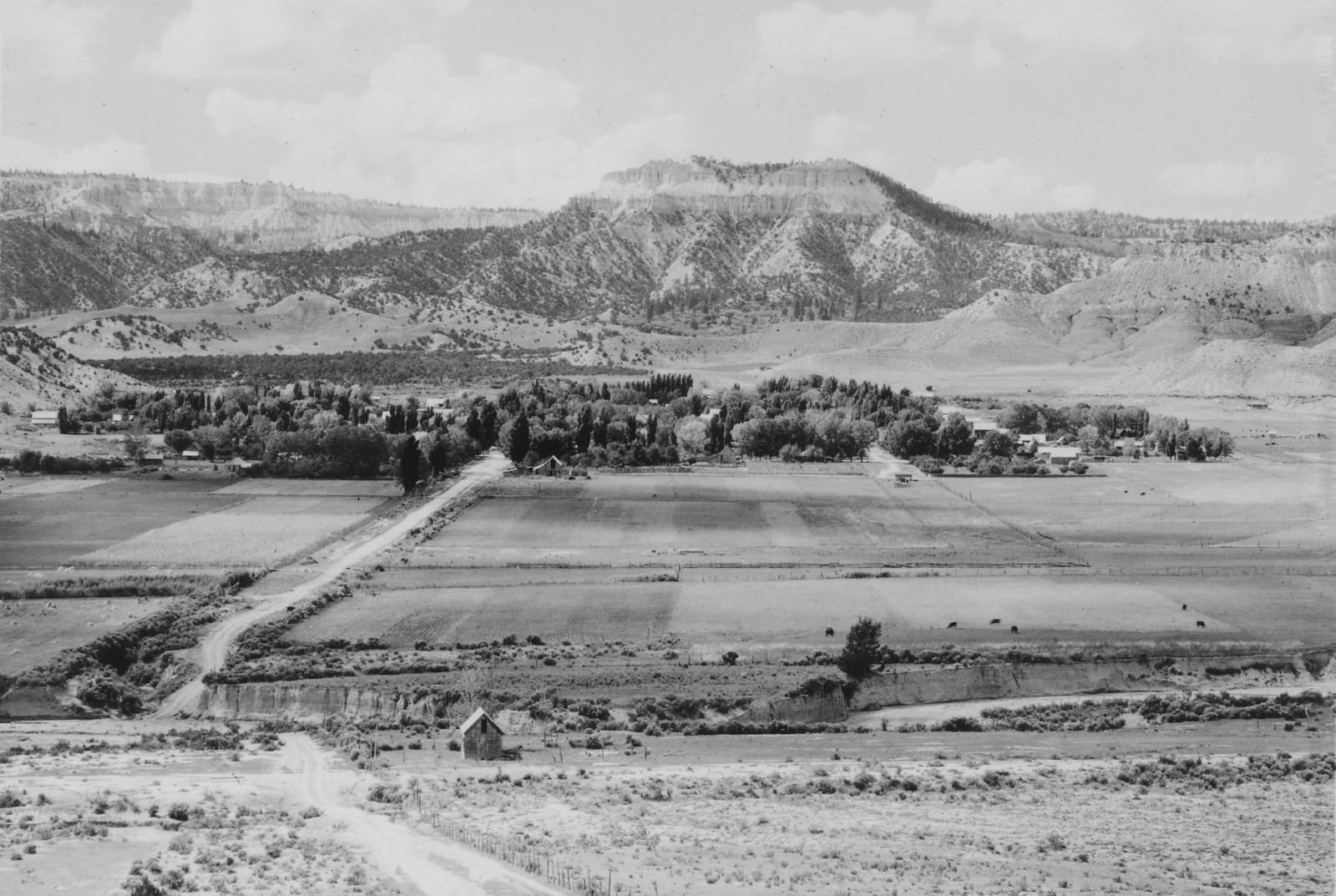
The Story
Tropic is the town in the shadow of Bryce Canyon that most visitors drive through without stopping, and the town has made a quiet peace with that arrangement. The main road passes a few motels, a gas station, a handful of restaurants, and a grocery store, and then you are through — on to Bryce Canyon four miles up the road, or south toward Kodachrome Basin and the Grand Staircase. But Tropic has a story of its own, and if you slow down long enough to hear it, the town adds a human dimension to the geological spectacle on the plateau above.
Tropic was founded in 1891 by Mormon pioneers who arrived in a valley that had reliable sunlight, decent soil, and one critical deficiency — no water. The nearest substantial water source was the East Fork of the Sevier River, on the other side of the Paunsaugunt Plateau, miles away and separated from the valley by a formidable ridge of rock and forest. The pioneers did what pioneers in this part of Utah consistently did when faced with an obstacle between them and survival: they dug through it. A hand-dug canal — the Tropic Ditch — was carved through the plateau to divert water from the Sevier watershed into the Tropic valley, and the water that flows through it today still irrigates the fields and orchards that make the town viable.
The ditch is an extraordinary piece of pioneer engineering, constructed with hand tools, black powder, and the kind of stubborn determination that characterized the settlement of southern Utah. The canal runs for several miles through terrain that includes solid rock, steep grades, and dense forest, and the fact that it was completed at all — by a small community with limited resources and no engineering expertise — speaks to a level of collective effort that is difficult to imagine in a modern context. The water from the ditch also feeds Water Canyon Creek on the east side of the plateau, which created the waterfall and mossy cave at the Mossy Cave Trail in Bryce Canyon — a landscape feature that exists solely because pioneers needed irrigation water and were willing to move a river to get it.
The town today is small — population roughly 500 — and its economy is built on a combination of ranching, tourism services, and the stubborn self-sufficiency that defines rural Utah communities. The motels and restaurants along the main road cater to Bryce Canyon visitors, offering accommodations and meals at prices significantly lower than the lodges inside the park. The quality varies, as it does in any small town built around tourist overflow, but several establishments have developed loyal followings among repeat visitors who appreciate the value and the genuine small-town hospitality.
The Bryce Pioneer Village, a small museum on the main road, preserves a collection of pioneer-era buildings and artifacts that document the early settlement of the area. The buildings include a log cabin, a blacksmith shop, and other structures relocated from homesteads in the surrounding valleys. The museum is modest and personal in a way that larger institutions cannot be — you feel the individual families in the worn wood and hand-forged iron, and the scale of the buildings reminds you how small and isolated these communities were.
Tropic's setting, while overshadowed by the Bryce Canyon amphitheaters just up the road, is genuinely beautiful in its own right. The town sits in a valley oriented north-south, flanked by low red and pink cliffs that catch the sunset light and glow with a warmth that the pine-forested plateau above does not offer. The agricultural fields — still irrigated by the Tropic Ditch — spread across the valley floor in patterns that reflect the original homestead boundaries, and in summer the green of the irrigated land contrasts sharply with the dry sagebrush on the surrounding hillsides.
The elevation is roughly 6,300 feet — about 1,500 feet lower than the Bryce Canyon rim — which gives Tropic a noticeably warmer and drier climate than the park. Summer days that are pleasant at Bryce can be hot in Tropic, and winter days that are bitter on the plateau are merely cold in town. This elevation difference also means that Tropic's growing season is longer, which is partly why the pioneers were able to establish agriculture here at all.
Tropic is not trying to compete with Bryce Canyon for your attention. It does not have hoodoos or amphitheaters or dark-sky astronomy programs. What it has is the story of people who looked at a waterless valley and decided to bring the water to it, who dug a canal through a mountain with hand tools, and who built a community that has survived for over 130 years in a landscape that offered beauty in abundance and convenience not at all. That story is worth a stop, even if the hoodoos are calling from four miles up the road.
Visitor Info
On the Map
Nearby
The closest stops worth working into your route
Historical markers nearby
Roadside plaques and monuments within a short detour