 Bill Golladay / CC BY-SA 4.0
The Story
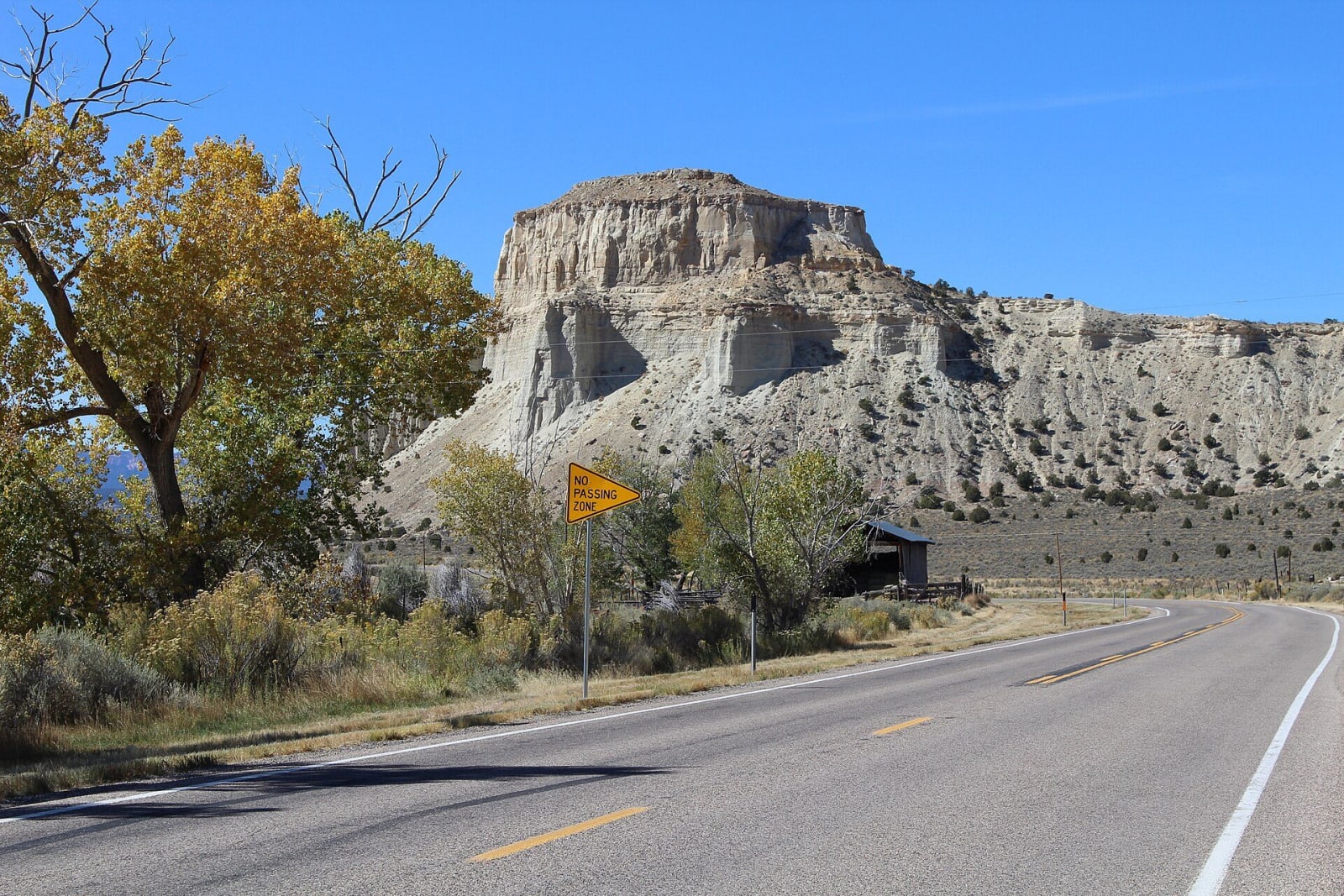
Henrieville is the town you drive through between Cannonville and Escalante on Highway 12, and most people drive through it in about 45 seconds. The population is under 250. The buildings are sparse. The landscape — dry hills and sagebrush flanking the Paria River valley — is beautiful in the understated way of high desert country that does not demand attention but rewards it if offered. Henrieville is one of the last truly quiet stops before the highway enters the Grand Staircase wilderness, and its quietness is its defining characteristic.
The town was settled in the 1870s by Mormon pioneers who established small farms and ranches along the Paria River and its tributaries. The agricultural heritage persists — hay fields and pastures line the valley floor, irrigated by the same ditch systems the pioneers built — and the community has the self-contained quality of a place that has always been too small and too remote to depend on anyone else. There are no tourist services to speak of — no restaurants, no gas stations, no hotels — and the town's relationship to the tourism that flows through it on Highway 12 is one of tolerant coexistence rather than active participation.
Henrieville's value to travelers is contextual rather than transactional. It sits between Kodachrome Basin State Park to the southwest and the Escalante backcountry to the east, and its presence on the highway — a cluster of houses, a fence line, a mailbox — provides a human-scale reference point in a landscape that can feel overwhelmingly vast and empty. The town reminds you that people live here, that this landscape is not just scenery but home, and that the quiet you experience as a visitor is the permanent condition for the families who wake up here every morning.
The drive through Henrieville is also the point where Highway 12 begins to climb toward the Escalante country, and the landscape transitions from the relatively gentle terrain of the upper Paria valley to the more dramatic slickrock and canyon country ahead. The town is a threshold — the last settlement before the road gets serious — and passing through it at 45 seconds is fine, but glancing at the houses and the fields and the dry hills as you pass is a way of acknowledging that this landscape supports not just geology and tourism but actual human lives.
Visitor Info
On the Map
Nearby
The closest stops worth working into your route
Historical markers nearby
Roadside plaques and monuments within a short detour