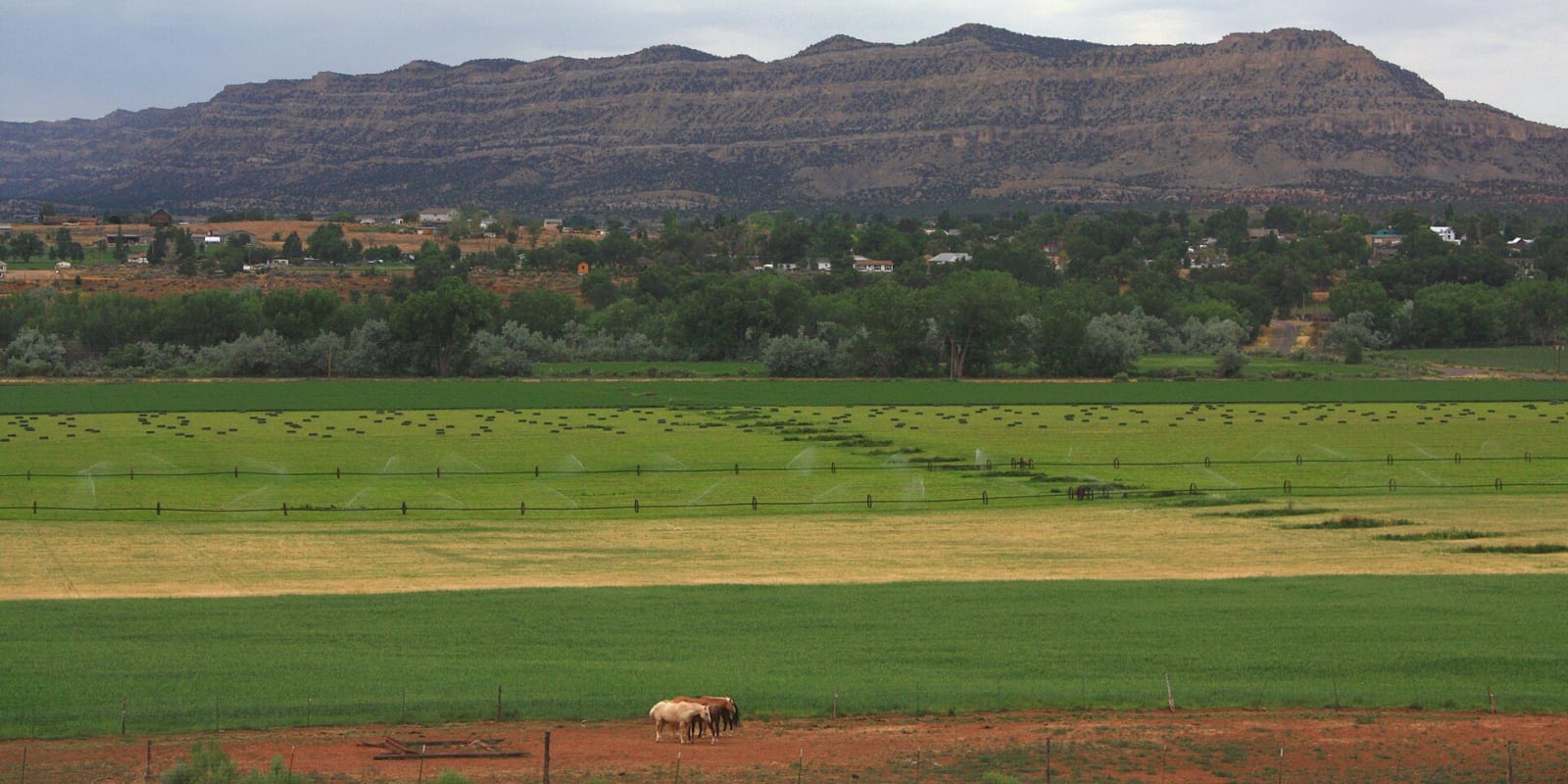
 Brian W. Schaller / FAL
The Story
Escalante sat at one end of the last mule-mail route in America — the pack trains carried mail over the mountains to neighboring Boulder until 1939 — and the spirit of that remoteness persists. This is a community of roughly 800 people perched on the edge of one of the largest and least-explored wilderness areas in the lower 48 states, and the combination of tiny town and vast backcountry gives Escalante a character that no other gateway community in Utah quite matches. It is not polished like Moab. It is not bustling like Springdale. It is quiet, self-reliant, and slightly suspicious of anyone who thinks wilderness needs amenities.
The town sits at roughly 5,800 feet elevation on Highway 12, at the point where the road descends from the forested heights of Boulder Mountain into the red rock canyon country of the Grand Staircase-Escalante National Monument. The monument surrounds the town on nearly every side — 1.87 million acres of slot canyons, sandstone domes, petrified forests, and desert wilderness that received national monument designation in 1996. The designation was controversial locally — many residents saw it as federal overreach that restricted grazing, mining, and other traditional land uses — and the tension between conservation and local economy continues to shape the community's identity.
What is not controversial is the landscape. The Escalante River and its tributaries have carved a canyon system of extraordinary beauty and complexity into the Navajo and Wingate Sandstone of the region. Slot canyons like Spooky Gulch, Peek-a-boo Gulch, and Zebra Canyon twist through the rock in passages so narrow that you turn sideways to pass through them, their walls sculpted into flowing curves by centuries of flash floods. Wider canyons like Coyote Gulch and the Escalante River itself offer multi-day backpacking routes past natural bridges, arches, cliff dwellings, and waterfalls hidden in a landscape that looks barren from above but reveals extraordinary richness at ground level.
The Escalante Interagency Visitor Center, run jointly by the Bureau of Land Management and the U.S. Forest Service, is the essential first stop for anyone heading into the backcountry. Rangers issue permits, provide current trail and water conditions, and offer the kind of specific, practical advice that can mean the difference between a great trip and a dangerous one. Flash flood risk in the slot canyons is real and sometimes fatal — the narrow passages that make these canyons beautiful also make them deadly when a thunderstorm drops rain on the watershed miles upstream, sending walls of water through corridors where there is no escape. The rangers do not sugarcoat this risk, and they should not.
The town itself offers the basic services that backcountry travelers need — gas, groceries, a few restaurants, several motels and campgrounds, and outfitters that rent canyoneering gear. The restaurant scene is modest but includes a few genuine surprises, most notably the Escalante Outfitters, which serves wood-fired pizza and local microbrews in a casual setting that draws hikers, climbers, and road trippers from across the region. The vibe is unpretentious and functional — people come to Escalante to access the wilderness, not to be seen in a resort town.
The Petrified Forest State Park, just west of town, offers an easy introduction to the region's geology. A short trail climbs through badlands of colorful Morrison Formation mudstone past chunks of petrified wood — stone logs from trees that grew here during the Jurassic period, 150 million years ago. The wood has been replaced molecule by molecule with silica, preserving the grain, knots, and growth rings in exquisite detail. Some pieces are small enough to hold in your hand. Others are tree-trunk-sized logs lying on the hillside like fallen columns. The reservoir below the petrified forest offers swimming, kayaking, and fishing, making the park a rare combination of paleontology and recreation.
Highway 12, which passes through Escalante, is consistently ranked among the most scenic drives in America, and the stretch between Escalante and Boulder — crossing the Hogback, passing the Kiva Koffeehouse, descending through the slickrock — is the climactic section. Driving it in either direction with Escalante as your base puts you at the center of the action.
Escalante is not for everyone. The town is remote — the nearest city of any size is over two hours away. Cell service is limited. The backcountry is genuinely wild, with hazards that include flash floods, dehydration, exposure, and navigation challenges in terrain where trails are often unmarked. But for visitors who are prepared, who carry enough water and enough humility, the reward is access to a landscape that feels like a secret — a canyon system so vast and so intricate that lifelong explorers still find new passages, new arches, and new pools of clear water in corridors that may not have seen a human footprint in years.
The mule mail route is gone, but the remoteness it represented is not. Escalante is still at the edge of something enormous and largely unknown, and that edge is exactly where some travelers want to be.
Visitor Info
On the Map
Stories featuring this place
Go deeper into the history and character of this stop
Nearby
The closest stops worth working into your route
Historical markers nearby
Roadside plaques and monuments within a short detour