The Story
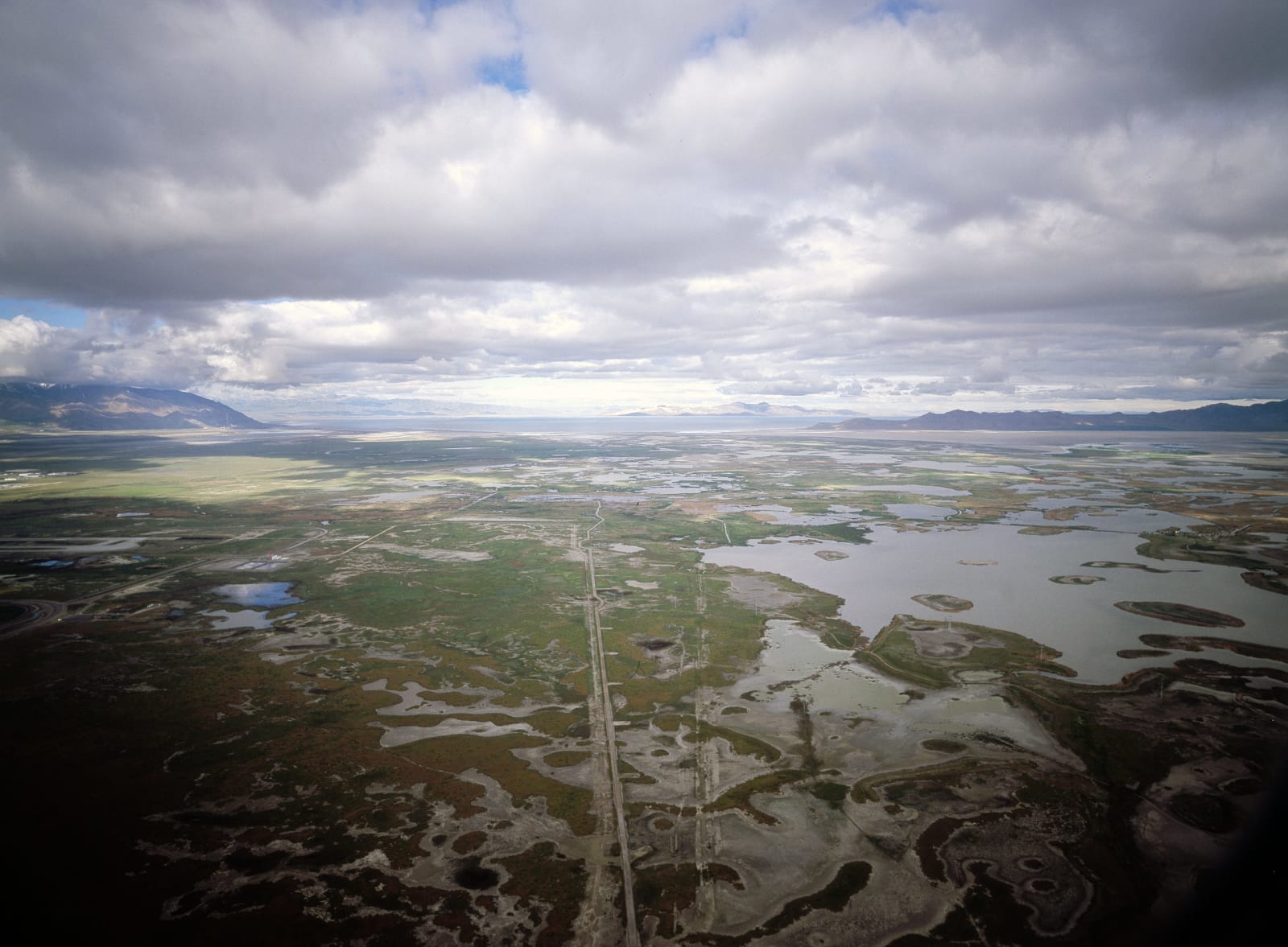
The Great Salt Lake is the kind of place that defies first impressions. It is not conventionally beautiful the way Zion or Bryce Canyon are beautiful. It is vast, flat, hazy, and often pungent. The water is too salty to support fish. The shoreline shifts by miles depending on the year. And yet, if you give it time — if you stay for a sunset, if you wade in and feel yourself float, if you watch a million shorebirds lift off the mudflats at once — the Great Salt Lake reveals itself as one of the most remarkable natural features on the continent.
It is the largest saltwater lake in the Western Hemisphere, stretching roughly 75 miles long and 35 miles wide at average water levels. But those dimensions are deceiving, because the lake is astonishingly shallow — its average depth is only about 14 feet, and large portions are less than five feet deep. This means that even modest changes in precipitation or river inflow can shift the shoreline by miles. The lake has no outlet. Water flows in from the Bear, Weber, and Jordan Rivers, and leaves only through evaporation, which concentrates the salts and minerals left behind.
The result is water that ranges from three to eight times saltier than the ocean, depending on the location and water level. The northern arm, cut off from fresh water inflow by a railroad causeway, is significantly saltier than the southern arm. In the hypersaline northern waters, the only life that thrives is halophilic bacteria and algae — microorganisms that tint the water shades of pink, red, and purple depending on the season and salinity. Seen from above, the contrast between the green southern arm and the rose-pink northern arm is one of the most striking aerial views in the American West.
Floating in the Great Salt Lake is a bucket-list experience that is exactly as strange as it sounds. The high salinity makes your body so buoyant that sinking is physically impossible. You bob on the surface like a cork, legs and arms floating upward whether you want them to or not. The sensation is disorienting at first — your brain insists you should be sinking — and then deeply relaxing. The mineral-rich water leaves your skin feeling smooth and slightly tingly, and the experience is often compared to floating in the Dead Sea. Rinse off thoroughly afterward, because the salt will crystallize on your skin and sting any cut or scratch you did not know you had.
The ecological significance of the lake is staggering and often overlooked. The brine shrimp and brine flies that thrive in the salty water form the base of a food web that supports between five and ten million migratory birds annually. Wilson's phalaropes, eared grebes, American avocets, and dozens of other species use the lake as a critical stopover on their migratory routes, feeding on the brine shrimp to build the fat reserves they need to continue their journeys. For many of these species, the Great Salt Lake is not optional — it is the single most important staging area on their flyway. Lose the lake, and you lose the birds.
That possibility has become uncomfortably real. The Great Salt Lake has been shrinking for years, driven by water diversions for agriculture and urban use, compounded by drought and climate change. At its lowest recent levels, the lake has lost roughly half its surface area compared to historical averages. As the water recedes, it exposes lakebed sediments laced with heavy metals — arsenic, mercury, and lead — deposited by a century of mining and industrial activity. Windstorms can lift these toxic dust particles into the air and carry them across the Wasatch Front, where over two million people live. The health, ecological, and economic consequences of a drying Great Salt Lake are a slow-moving crisis that Utah is only beginning to confront.
But on a calm evening, standing on the shore at Saltair or Antelope Island, none of that urgency is visible. What you see is water stretching to the horizon, turning gold and then pink as the sun drops behind the mountains on the western shore. The air smells of salt and minerals. Pelicans glide overhead. The silence is enormous. The Great Salt Lake is not a postcard landscape — it is too weird, too flat, too smelly for that. But it is profoundly, unmistakably alive, and it has been here for at least 12,000 years, a remnant of ancient Lake Bonneville slowly concentrating the minerals of an inland sea. It deserves your attention, and increasingly, it needs it.
Visitor Info
On the Map
Stories featuring this place
Go deeper into the history and character of this stop
Nearby
The closest stops worth working into your route
Historical markers nearby
Roadside plaques and monuments within a short detour