 Bruce McAllister, U.S. Environmental Protection Agency / public domain via Wikimedia Commons
The Story
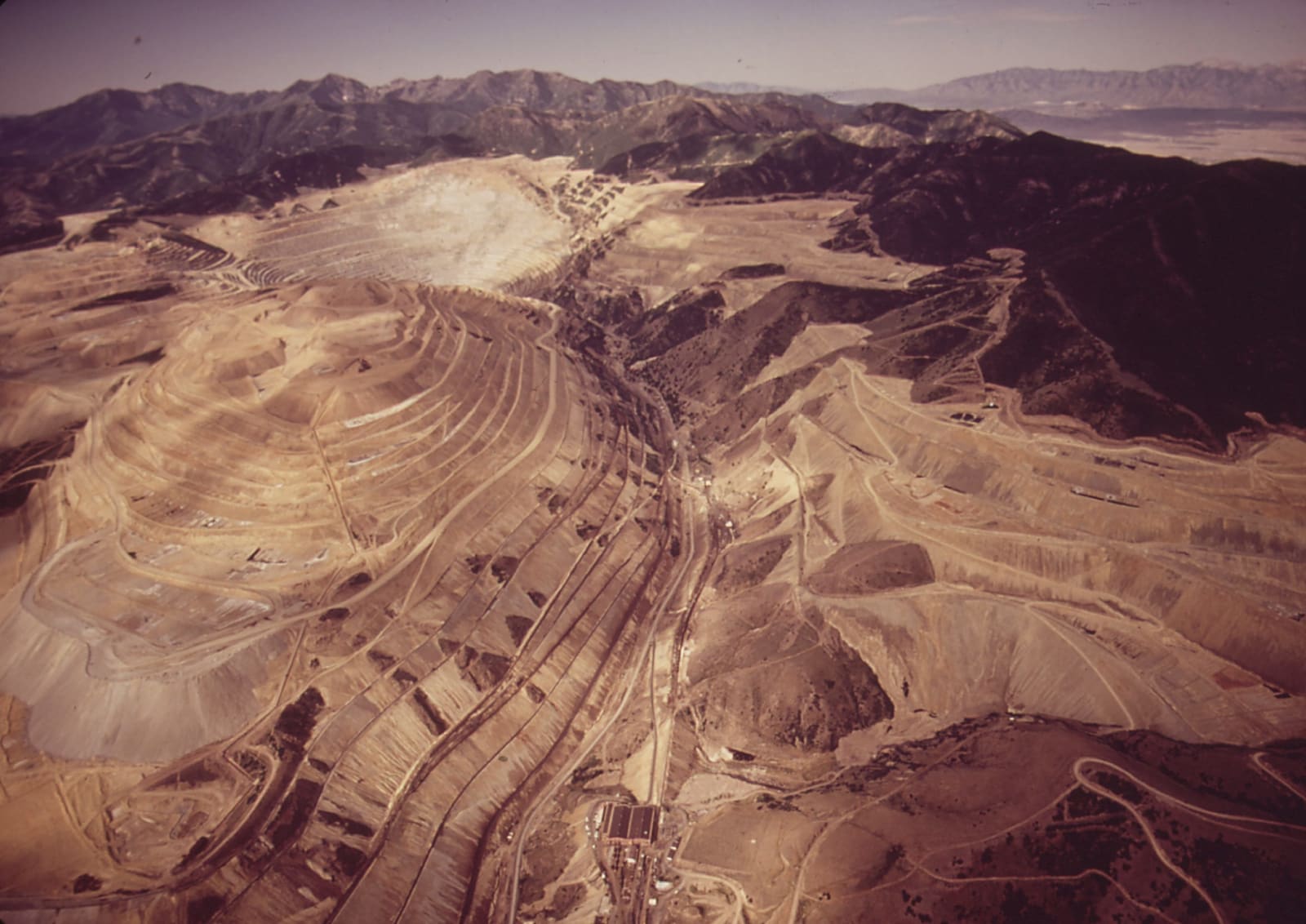
Bingham Canyon Mine is the largest man-made excavation on the planet, and seeing it for the first time produces a cognitive disruption that takes a moment to resolve. Your brain registers a canyon — 2.75 miles wide, half a mile deep — and begins searching for the river that carved it. There is no river. There are no geological forces at work here except human ones. This hole was dug by people, one blast and one truckload at a time, over the course of more than a century, and it is so large that it is visible from space. The scale is not impressive. It is incomprehensible.
The mine sits in the Oquirrh Mountains southwest of Salt Lake City, and it has been in continuous operation since 1906, making it one of the longest-operating mines in the world. In that time it has produced more copper than any other mine in history — over 19 million tons of the metal, along with significant quantities of gold, silver, and molybdenum. The copper from Bingham Canyon is in the wiring of buildings, the circuits of electronics, and the plumbing of homes across the country. If you are reading this on a device that uses electricity, there is a reasonable chance that some of the copper enabling that transaction was pulled from this hole in Utah.
The open-pit mining method is conceptually simple and operationally staggering. The ore body — a massive deposit of porphyry copper formed by volcanic activity roughly 37 million years ago — is buried beneath thousands of feet of overlying rock. To reach it, miners blast and remove the overburden layer by layer, working in a descending spiral of benches — the horizontal steps visible on the pit walls — that grow wider as the pit deepens. Each bench is roughly 50 feet high, and the trucks that haul the blasted rock out of the pit are among the largest vehicles on Earth — 400-ton capacity dump trucks with tires 12 feet tall, carrying loads that would fill a typical living room several times over.
The visitor center, operated by Rio Tinto Kennecott, sits on the rim of the pit and offers a viewing platform where you can look down into the excavation. The trucks moving along the benches far below look like toys, which is when the scale problem becomes acute — those toys are three stories tall, and the fact that they appear small means the pit is much, much larger than your visual system is prepared to process. Binoculars help. So does the interpretive display that identifies the working levels, the processing facilities, and the geological formations visible in the pit walls.
The environmental story of Bingham Canyon is as complex as its engineering. Open-pit copper mining generates enormous quantities of waste rock and tailings, and the Bingham Canyon operation has produced environmental challenges that are still being addressed. The tailings pond — a massive impoundment of processed ore waste — covers several square miles south of the mine and is one of the largest such structures in the world. Water quality, air quality, and habitat disruption in the surrounding Oquirrh Mountains are ongoing concerns, and Rio Tinto Kennecott has invested billions in remediation and pollution control. The tension between the economic value of the mine — it employs thousands of workers and contributes significantly to Utah's economy — and its environmental footprint is real, visible, and unresolved.
In April 2013, the mine experienced one of the largest landslides in North American history. Approximately 165 million tons of rock and debris slid from the northeastern wall of the pit to the bottom — a volume roughly twice the size of the 1980 Mount St. Helens landslide. Remarkably, no one was injured. The mine's monitoring systems detected the movement weeks in advance, and the affected area was evacuated before the collapse. The landslide was captured on video by the mine's cameras, and the footage — showing an entire mountainside peeling away and cascading into the pit in slow, terrible majesty — went viral. The event added a new chapter to the mine's history and demonstrated both the power of the geological forces at play and the value of the monitoring technology that saved lives.
The drive to the visitor center takes about 30 minutes from downtown Salt Lake City, heading southwest through the suburbs of the valley and climbing into the Oquirrh foothills. The road passes through the community of Copperton — a company town built by Kennecott to house mine workers — and the transition from suburban Salt Lake to industrial mining landscape happens with surprising speed. The visitor center charges an admission fee, and hours vary by season.
Bingham Canyon Mine is not a conventional tourist attraction. It is not beautiful in the way that Utah's natural landscapes are beautiful. It is not serene, or wild, or untouched. It is a hole — the biggest hole humans have ever dug — and standing on its rim you confront the full scale of what industrial civilization is willing to do to the Earth in pursuit of the materials it needs. Whether you find that confrontation sobering, impressive, or both depends on what you bring to the railing. But the hole itself is beyond debate. It is there, it is enormous, and it is not finished growing.
Visitor Info
On the Map
Nearby
The closest stops worth working into your route
Historical markers nearby
Roadside plaques and monuments within a short detour