County guide · Nevada
Clark County
12 places to stop and 28 historical markers in Clark County, Nevada.
Towns: Las Vegas (8), Boulder City (2), Overton (2)
Places to stop
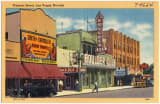
attraction · Las Vegas
Fremont Street
Glitter Gulch — the neon canyon where Las Vegas actually began
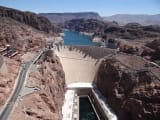
industrial · Boulder City
Hoover Dam
The 726-foot Depression-era colossus that tamed the Colorado and made Las Vegas possible
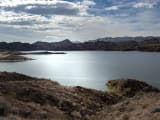
recreational · Boulder City
Lake Mead National Recreation Area
The largest reservoir in the country — and its most legible drought gauge

attraction · Las Vegas
Las Vegas Strip
Four and a quarter miles of engineered spectacle — the most famous street in America (and it isn't in Las Vegas)
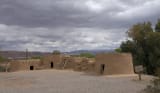
historical · Overton
Lost City Museum
The Ancestral Puebloan metropolis Lake Mead drowned — and the museum that saved what it could
natural · Las Vegas
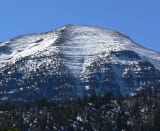
Mount Charleston & the Spring Mountains
A nearly 12,000-foot sky island 35 miles from the Strip — alpine forest above the Mojave
historical · Las Vegas
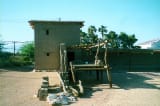
Old Las Vegas Mormon Fort State Historic Park
The 1855 adobe fort where Las Vegas began — a mile and a world away from the neon
geological · Las Vegas
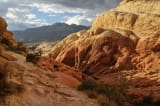
Red Rock Canyon National Conservation Area
The Mojave wilderness that begins where Las Vegas ends — striped sandstone cliffs and a 13-mile scenic loop
historical · Las Vegas
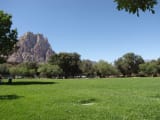
Spring Mountain Ranch State Park
A spring-fed green oasis under the red Wilson Cliffs — and a roll call of colorful owners
cultural · Las Vegas
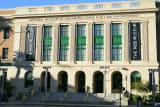
The Mob Museum
Organized crime, told in the downtown courtroom that first exposed it

cultural · Las Vegas
The Neon Museum
The Neon Boneyard — where the Strip''s discarded signs are rescued and lit again
geological · Overton
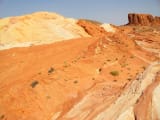
Valley of Fire State Park
Jurassic sand dunes turned to blazing red stone — Nevada's oldest and largest state park
Historical markers
Historical marker
Arrowhead Trail – Henderson
Before the numbered highways, roads had names, and this one had an arrowhead. The Arrowhead Trail took its name from the logo of the San Pedro, Los Angeles & Salt Lake…
Historical marker
Arrowhead Trail (1914- 1924)
Las Vegas promoters claimed they invented this road, and in a sense they did. The Arrowhead Trail was the first automobile highway to connect Los Angeles with Las Vegas…
Historical marker
Eldorado Canyon
Gold drew men to this canyon, and the river carried it out. Prospectors began digging here around 1859, forming the Colorado Mining District, and the three largest…
Historical marker
Goodsprings Mining District 1856-1957
This district held the greatest variety of minerals in Nevada. The ore went unworked until 1856, when Mormons opened the Potosí mine—perhaps the oldest underground mine…
Historical marker
Kyle (Kiel) Ranch
One of the valley's oldest ranches grew up around artesian springs. Conrad Kiel settled here in 1875—the spelling drifted to "Kyle" over the years—and his ranch became…
Historical marker
Las Vegas (The Meadows)
The name is a description that came true. Spanish-speaking travelers crossing this valley on the Old Spanish Trail found streams feeding meadows of grass in the desert…
Erected 2008
Las Vegas Mormon Fort (Nevada's Oldest Building)
Las Vegas began here, with adobe and a creek. On June 14, 1855, thirty-two Mormon missionaries sent by Brigham Young arrived at the springs and built a…
Historical marker
Moapa Valley
The Muddy River is a rare thing in this desert—a perennial stream—and it has drawn people for two thousand years.
Historical marker
Nevada's First State Park
Nevada's first state park is made of fire-colored stone. The red sandstone here, weathered into fantastic shapes over millions of years and carved with petroglyphs by…
Historical marker
Old Spanish Trail
Here the Old Spanish Trail crossed into Nevada. Coming down out of Utah and the corner of Arizona, the route followed the Virgin River into the state's eastern edge…
Historical marker
Old Spanish Trail
Everything on the Old Spanish Trail bent toward water, and in this valley the water was here.
Historical marker
Old Spanish Trail (Armijo's Route)
One man's gamble opened the route. On January 8, 1830, Santa Fe merchant Antonio Armijo led the first pack train across the Las Vegas Valley—roughly sixty men and a…
Historical marker
Old Spanish Trail (Mountain Springs Pass)
West of Las Vegas the trail had to climb, and it climbed here. Antonio Armijo found this pass in January 1830, and the springs just north of it gave excellent water and…
Historical marker
Old Spanish Trail (The Journey of the Dead Man)
The Spanish traders had a name for the fifty-five miles between Las Vegas and the Muddy River: the Jornada del Muerto, the journey of the dead man.
Historical marker
Original Home of "Pop" Squires (1865-1958)
Some towns are made by their boosters, and Charles Squires made Las Vegas. Known to everyone as "Pop," he arrived in the railroad town's earliest days and became its…
Historical marker
Potosí
Potosí is where Nevada mining began. In 1856, Mormon missionaries sent by Brigham Young to find lead opened a mine in the Spring Mountains, making this perhaps the…
Historical marker
Powell of the Colorado
When John Wesley Powell reached this country in 1869, it was the last blank space on the map.
Historical marker
Pueblo Grande De Nevada
Long before Las Vegas, a city stood here. For over a thousand years, from about 300 to 1150, Ancestral Puebloan and Basketmaker people lived along the Muddy River in…
Historical marker
Rafael Rivera
The valley was found by a man who wandered off looking for water. On Christmas Day 1829, while Antonio Armijo's party camped northeast of here, a scouting party rode…
Erected 2010
Searchlight
Searchlight was bigger than Las Vegas once. A prospector's gold strike around 1897 set off the boom, and the Quartette Mill became one of the camp's finest producers…
Historical marker
The Camel Corps
The U.S. Army once tried to conquer the desert with camels. In 1856 the War Department imported the animals as an experiment, betting they could cross the arid Southwest…
Historical marker
The Garcés Expedition
The first European to set foot in present Nevada came on foot, walking village to village.
Historical marker
The Last Spike
This is the spike that made Las Vegas. On January 30, 1905, near this spot south of the valley, workers drove the last spike completing the railroad between Salt Lake…
Historical marker
The Morelli House
This house heard the Rat Pack after hours. Antonio Morelli, orchestra conductor and music director of the Sands Hotel during its Rat Pack heyday, built this mid-century…
Historical marker
The Old Spanish Trail 1829-1850
This was a trade road, and trade ran both directions. From 1829 to about 1850, caravans carried New Mexican woolen goods west to California and returned to Santa Fe…
Historical marker
The Old Spanish Trail 1829-1850
Trails rarely die; they change names. When the pack-mule era of the Old Spanish Trail ended around 1850, the route did not vanish—it was widened for wagons and became…
Historical marker
Tule Springs
Ice Age Nevada is buried in this wash. When quarry workers turned up the bones of a Columbian mammoth at Tule Springs in 1933, they opened a window onto a wetter world…
Historical marker
Virgin Valley
The Virgin Valley was a corridor before it was a home. The Old Spanish Trail ran through here from 1829, and after it the Mormon Road carried wagons between Salt Lake…