The Story
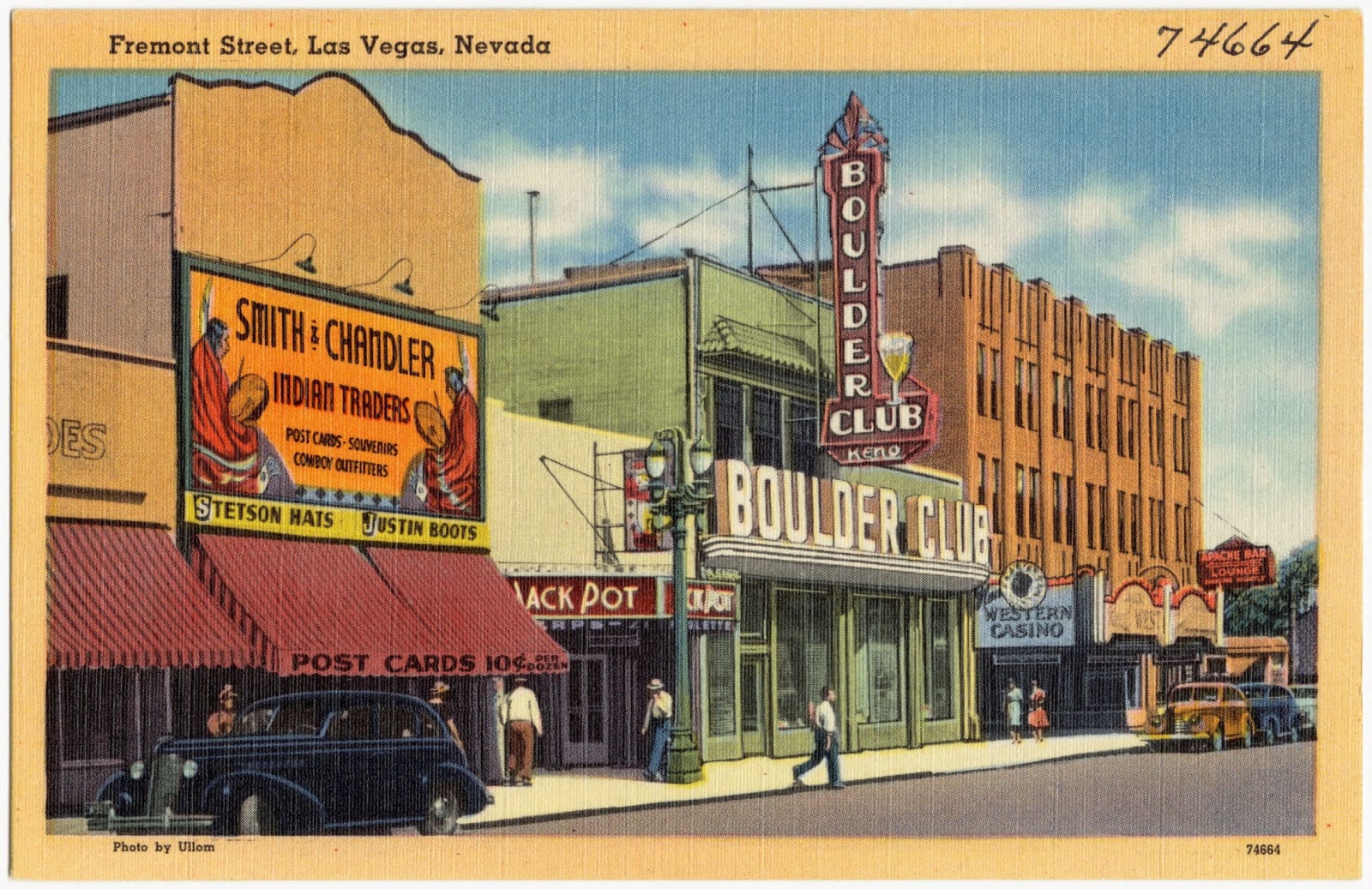
Four miles north of the Strip, downtown, runs the street where Las Vegas actually started. Fremont Street was the city's first address, its first paved road, the spine of the original casino district — and for decades it was simply what people pictured when they pictured Vegas: a tight canyon of neon so dense it earned the nickname Glitter Gulch. The Strip is bigger and newer, but Fremont is older and, in its battered way, more honest about where the city came from.
It began with the railroad. When the San Pedro, Los Angeles and Salt Lake line auctioned off a forty-block townsite in 1905, the lots fronting Fremont Street sold first, and the town grew straight out from the depot. The firsts piled up fast: the first hotel in 1906 (the Hotel Nevada, still standing as the Golden Gate, the oldest continuously running casino in town), the first telephone in 1907 — its number was simply "1" — the first paved street in 1925, the first traffic light, and the first neon sign before the decade was out. When Nevada re-legalized gambling in 1931, the same year thousands of workers arrived to build Hoover Dam, the Northern Club on Fremont took the first gaming license issued in the state.
By mid-century Glitter Gulch was a wall of light. The Pioneer Club, Binion's Horseshoe, the Golden Nugget, the El Cortez, and a dozen others competed to throw the tallest, brightest sign over the sidewalk, and the cumulative glow became the city's signature — the backdrop of a hundred movies, the cruising strip for Rat Pack-era Vegas, the place Sinatra and Sammy Davis Jr. drank between sets. Towering over all of it was Vegas Vic, a forty-foot neon cowboy who has waved and drawled "Howdy Podner" from the Pioneer Club since 1951.
Then the Strip won. By the early 1990s the resorts out on Las Vegas Boulevard held some eighty percent of the casino market, and downtown was fading. The casino owners pooled roughly seventy million dollars, closed the street to cars in 1994, and in 1995 unveiled the Fremont Street Experience — a barrel-vaulted canopy, four blocks long and ninety feet up, that turns the whole sky into a synchronized light-and-sound show. Today that canopy carries some forty-nine million LEDs and counts as the largest video screen on the planet; below it run free nightly concerts, costumed performers, and the SlotZilla zip line that launches riders the length of the mall.
It is gaudy and loud and a little desperate, and that is the point — Fremont Street has spent more than a century selling exactly this, and it does so now with the accumulated weight of being the original. A few blocks away the Neon Museum keeps the signs that didn't survive the remodels, which makes a downtown evening a kind of double feature: the living neon here, the rescued neon there, and between them most of the city's actual history.
Visitor Info
On the Map
A story featuring this place
Go deeper into the history and character of this stop
Nearby
The closest stops worth working into your route
Historical markers nearby
Roadside plaques and monuments within a short detour