The Story
Wind Cave is the kind of trail that earns its reputation through efficiency — maximum payoff for minimum distance. The hike is barely two miles round trip and gains about 1,000 feet of elevation, which means it is steep, which means you feel it in your legs, which means the moment you step through the cave opening and see Logan Canyon spread out below you through a triple-arched limestone window is exactly the reward your body was hoping for. The cave is not a cave in the traditional sense. It is a triple arch eroded into the cliff face — three openings in the limestone wall that frame panoramic views of the canyon like windows in a cathedral no one designed.
The trail begins at the Guinavah-Malibu campground in Logan Canyon, about 7 miles east of Logan on Highway 89. The path climbs steeply through a forest of maple and Douglas fir, switchbacking up the north-facing slope with the kind of relentless grade that discourages conversation and encourages deep breathing. The forest is dense and shaded, which is a mercy in summer when the canyon floor bakes in the heat, and the trail is well-maintained enough that the footing is reliable even on the steeper pitches.
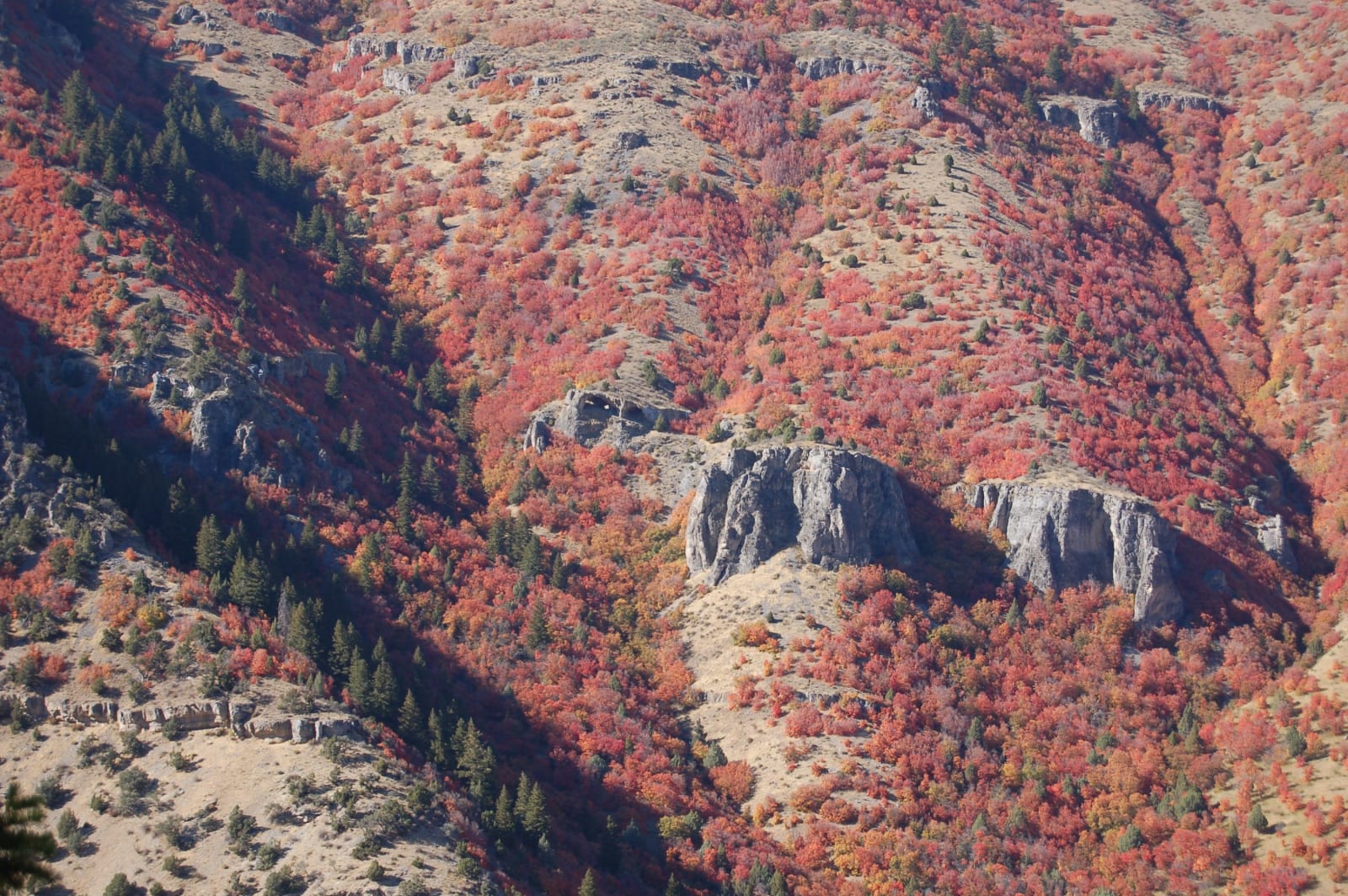
The cave appears above you about three-quarters of the way up, visible as a series of dark openings in the gray limestone cliff. The final approach traverses a rocky slope and scrambles over a short section of boulders before you step into the first opening. The temperature drops immediately. The wind — the cave's namesake — pushes through the arches with a steady, cooling force that feels intentional, as though the mountain designed this space specifically for hot hikers to sit and recover.
The view from inside the cave is the reason people come back. You are sitting inside the cliff face, roughly 800 feet above the canyon floor, looking out through natural stone arches at a panorama that stretches from the limestone walls of the canyon to the forested ridgeline above and the valley floor far below. The Logan River is a thin silver line threading through the green corridor of cottonwoods and willows at the bottom. Cars on Highway 89 move silently, too distant for their engines to register. Hawks and ravens ride the thermals at eye level, and the sense of elevation — of being inside the mountain looking out — creates a perspective on the canyon that the road cannot provide.
The geology is straightforward. The cave formed in the Lodgepole Limestone, a gray, fossil-bearing marine rock deposited in the Early Mississippian, roughly 350 million years ago, when this region lay beneath a shallow tropical sea near the equator. Water seeping through fractures in the limestone slowly dissolved the rock along planes of weakness, creating the openings that erosion and frost later widened into the triple arch configuration. The process is ongoing — the arches are imperceptibly larger today than they were a century ago, and imperceptibly smaller than they will be a century from now.
The cave is large enough to shelter a dozen hikers comfortably, and the flat rock floor makes a natural rest area. Bringing a lunch and eating it inside the cave, looking out through the arches at the canyon below, is one of the most satisfying picnic experiences in northern Utah. The acoustics amplify voices slightly, and the wind provides a constant, gentle background noise that is more soothing than silence.
In autumn, the view from Wind Cave takes on an additional dimension. The bigtooth maples that cover the lower canyon slopes turn their signature crimson, and from the elevation of the cave you can see the color change progressing up the canyon walls like a slow tide of red. The contrast between the gray limestone of the cave interior, the green conifers on the upper slopes, and the blazing red maples below creates a color palette that would look overwrought in a painting but is perfectly natural from this vantage point.
The trail is popular and well-known among Logan locals, which means weekend mornings can see a steady stream of hikers. Starting early or visiting on a weekday significantly improves the odds of having the cave to yourself. The trail is accessible from roughly May through November depending on snow conditions, and the steepness means it can be slippery when wet. Trekking poles are useful on the descent, when gravity and loose rock conspire to test your ankles.
Wind Cave is the trail that northern Utah recommends to visitors who have time for exactly one hike. It is short enough to fit into a half-day, dramatic enough to justify the drive, and satisfying enough to stand alongside hikes that take three times as long and gain twice the elevation. The mountain built a window into its own cliff face, and the trail takes you to it. That is the entire pitch, and it is enough.
Visitor Info
On the Map
A story featuring this place
Go deeper into the history and character of this stop
Nearby
The closest stops worth working into your route
Historical markers nearby
Roadside plaques and monuments within a short detour