 An Errant Knight / CC BY-SA 4.0
The Story
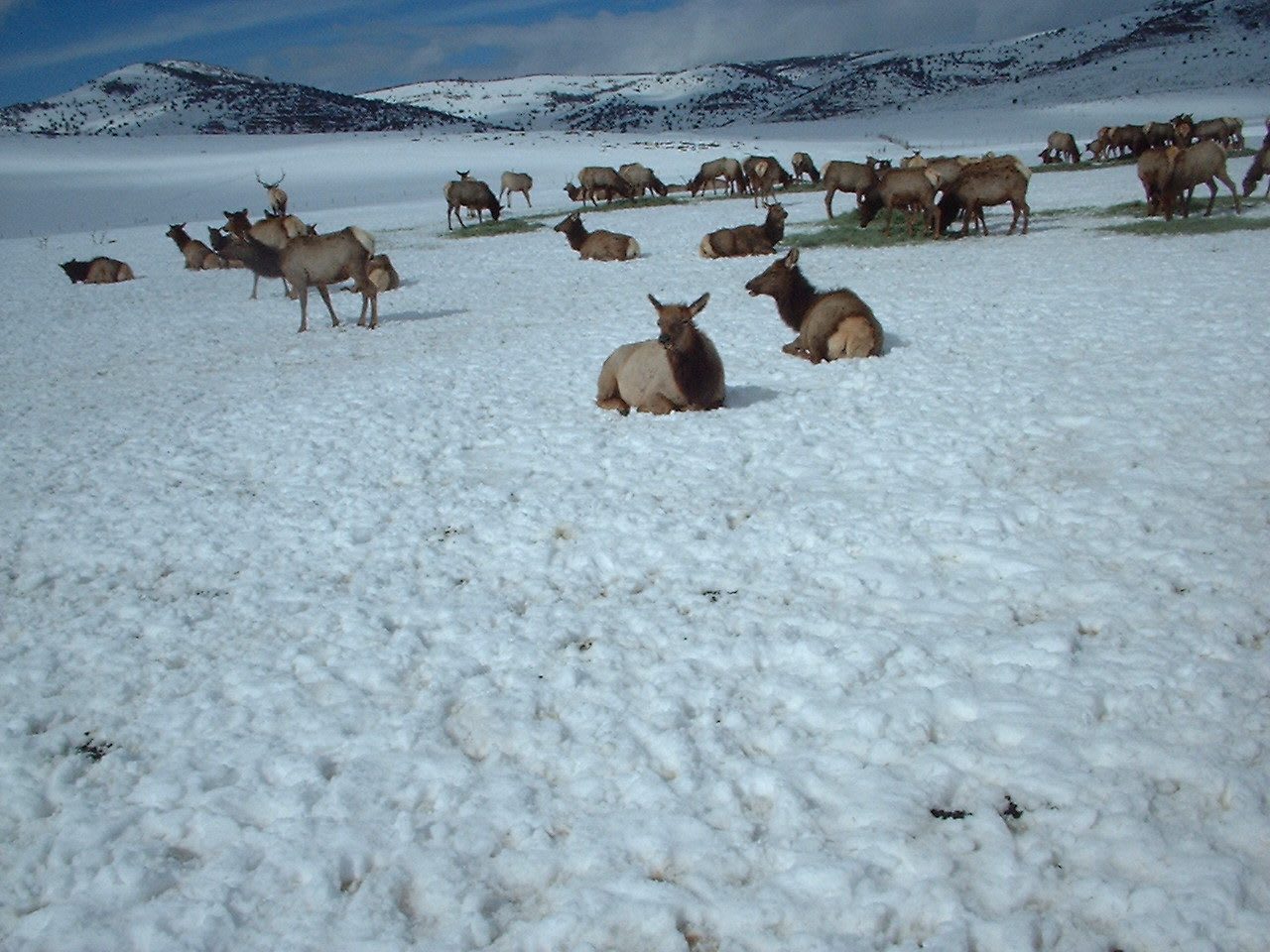
Hardware Ranch is the place where you ride a horse-drawn sleigh into the middle of a herd of 600 wild elk and the elk do not care. They stand twenty feet away, steam rising from their nostrils in the cold mountain air, antlers silhouetted against the snow-covered Wellsville Mountains, and they watch you with the calm disinterest of animals that have been doing this every winter for generations. It is one of the most intimate large-wildlife experiences in the American West, and it happens every winter in a mountain valley that most visitors to Utah have never heard of.
The ranch sits in Blacksmith Fork Canyon, about 15 miles east of the town of Hyrum and its reservoir, Hyrum State Park, in Cache Valley. Every winter, when deep snow blankets the higher elevations and buries the forage that elk depend on, 500 to 700 Rocky Mountain elk migrate down from the surrounding mountains and converge on the ranch's feeding grounds. The Utah Division of Wildlife Resources has been supplementally feeding elk here since 1945, and the annual gathering has become one of the most reliable and accessible wildlife viewing opportunities in the state.
The sleigh rides are the signature experience. Visitors board horse-drawn sleighs at the visitor center and ride across the snow-covered meadow directly into the elk herd. The rides last about 20 to 30 minutes, and the sleigh drivers — typically DWR employees or volunteers with extensive knowledge of elk biology and behavior — narrate the experience with a mix of science and storytelling. They explain the herd dynamics, point out the dominant bulls, identify cows with calves, and answer the question that everyone asks: why don't the elk run away? The answer is habituation. The elk have been fed here for nearly 80 years. They associate the sleighs with food, not danger, and they tolerate human proximity with a nonchalance that would be impossible in a wild, unhunted setting.
The bulls are the visual spectacle. Rocky Mountain elk bulls can weigh over 700 pounds and carry antlers that span four feet or more. By January, when the sleigh rides are in full swing, the bulls still retain their antlers — they will not shed them until March or April — and the sight of dozens of massive antlered animals standing in a snow-covered meadow, breath condensing in the cold air, is primal and stirring in a way that photographs struggle to convey. The scale of the animals is surprising to people encountering elk for the first time. These are not deer. They are enormous, muscular, and commanding, and standing near them on a sleigh you feel the size difference in your bones.
The visitor center at Hardware Ranch is well-designed for a facility run by a state wildlife agency. Exhibits explain the biology of Rocky Mountain elk, the history of the feeding program, and the broader ecosystem of the northern Wasatch. A viewing deck with spotting scopes allows visitors to observe the herd from a distance before or after the sleigh ride, and the gift shop stocks a modest selection of wildlife-related books and souvenirs. Hot chocolate is available, which is not a trivial amenity when the temperature is in the single digits.
The feeding program is not without controversy. Wildlife managers debate whether supplemental feeding creates dependency, concentrates disease risk, and alters natural migration patterns. The counterarguments are that habitat loss and development have reduced the elk's natural winter range, that the feeding program prevents elk from raiding agricultural land in the valley, and that the public engagement created by the sleigh rides builds political support for wildlife conservation. Both sides have valid points, and the DWR manages the program with these tensions in mind, adjusting feeding schedules and herd management strategies as conditions change.
The drive to Hardware Ranch through Blacksmith Fork Canyon is scenic in any season but particularly beautiful in winter. The canyon road follows the creek through a narrow valley flanked by snow-dusted mountains, and the quiet — engine noise absorbed by the snow, no summer traffic, no construction — creates a sense of entering a world that operates at a different pace. Moose are occasionally spotted along the creek, and mule deer browse the hillsides above the road.
The sleigh rides typically run from December through February, depending on snow conditions and elk numbers. Reservations are recommended, especially on weekends and during the holiday period, and the rides are popular with families — children who might squirm through a museum exhibit sit rapt on the sleigh as 600 elk materialize from the snow around them. The experience is tactile and immediate in a way that screens and books cannot replicate. The sound of hooves on frozen ground. The smell of hay and animal warmth. The sight of antlers against a white mountain. Hardware Ranch delivers a wildlife encounter that is real, close, and unforgettable.
The ranch is free to visit — there is a modest fee for the sleigh ride — and the setting, even without the elk, is worth the drive. But the elk are why you come. Standing in a meadow surrounded by hundreds of the largest land mammals in the northern Rockies, close enough to see the frost on their eyelashes, you understand something about this landscape that no viewpoint or visitor center can teach you. This valley has been feeding elk for nearly 80 winters, and the elk keep coming back. That persistence — animal and human — is the real story of Hardware Ranch.
Visitor Info
On the Map
Nearby
The closest stops worth working into your route
Historical markers nearby
Roadside plaques and monuments within a short detour