The Story
Snow Canyon is the state park that locals do not want you to know about. Tucked into the red rock country just north of St. George, it offers the same towering sandstone cliffs, deep slot canyons, and dramatic desert scenery as Zion National Park — which is only 40 minutes away — but with a fraction of the crowds, no timed entry permits, and a campground that feels like sleeping inside a geological painting. St. George, a few minutes south, holds an older draw still: the St. George Dinosaur Discovery Site, where the footprints of Early Jurassic theropods are preserved in the bed of an ancient lake.
The name is misleading in the best possible way. Snow Canyon has nothing to do with snow. It was named after Lorenzo and Erastus Snow, early Mormon pioneers who settled the region in the 1860s. The canyon rarely sees snowfall, sitting at a relatively low elevation of around 3,200 feet in Utah's warm southwestern corner. Summer temperatures regularly exceed 100 degrees, which means spring and fall are the prime seasons — warm days, cool nights, and wildflowers that carpet the sandy flats in good rain years.
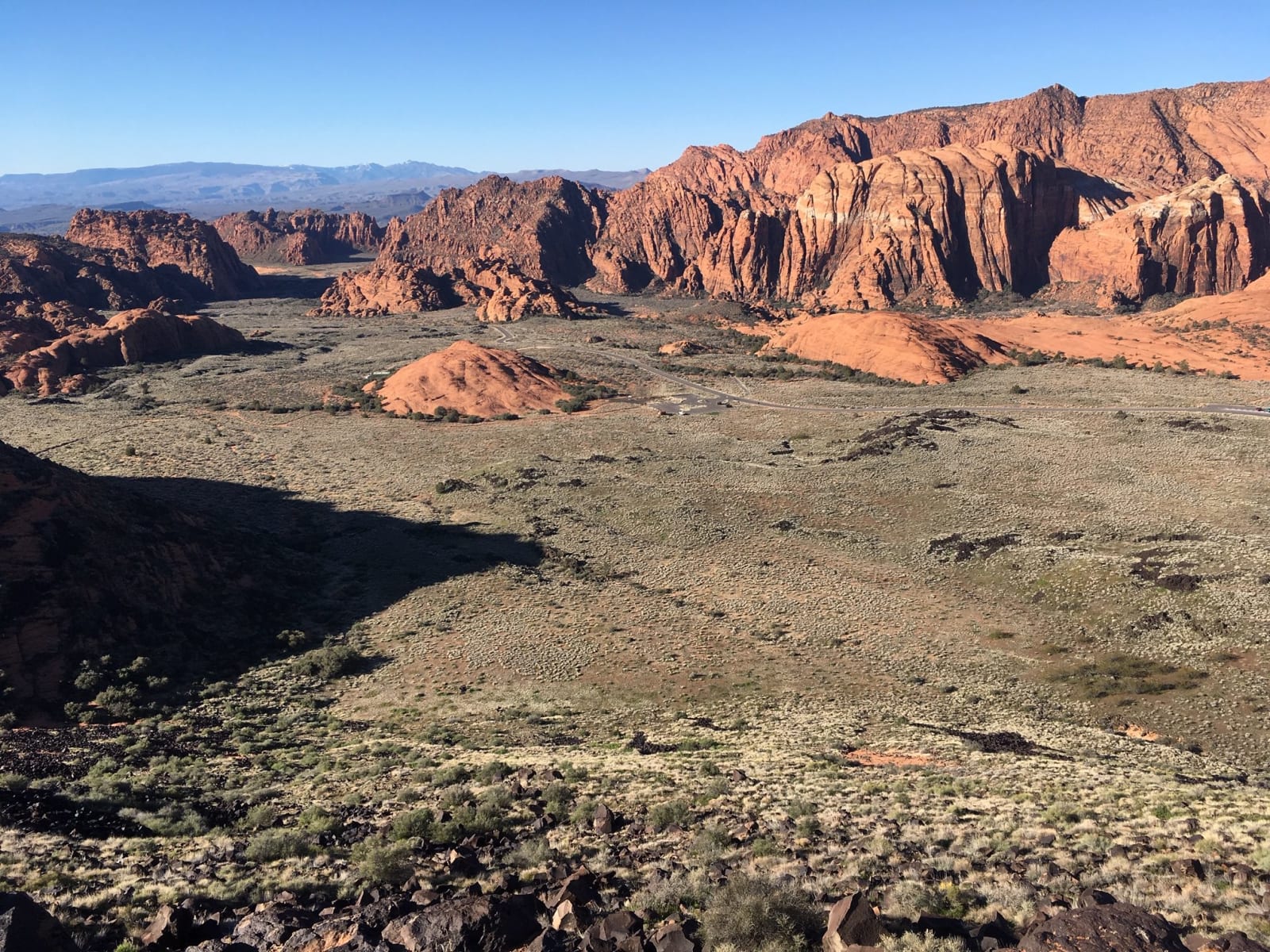
The geology is a collision of forces. The canyon walls are Navajo Sandstone — the same ancient sand dunes turned to stone that form the cliffs of Zion — but here they are interrupted by black basalt lava flows that poured across the landscape roughly 1.4 million years ago. The contrast is striking. White and red sandstone domes rise above fields of dark, chunky lava rock, creating a visual tension between the smooth, wind-sculpted curves of the sandstone and the rough, jagged textures of the basalt. It looks like two different planets merged into one landscape.
The lava tubes are one of the park's hidden gems. These are tunnels formed when the outer surface of a lava flow cooled and solidified while the molten interior continued to drain away, leaving behind hollow corridors. You can crawl into several of them on a short trail near the park's southern entrance. Bring a flashlight, wear clothes you do not mind getting dusty, and prepare for the strange thrill of climbing into a tube carved by liquid rock.
The Petrified Dunes trail is the park's most photogenic walk — a half-mile path across the tops of ancient sand dunes that have hardened into rolling waves of cream and salmon-colored slickrock. The cross-bedding patterns in the rock record the direction of winds that blew across this landscape 180 million years ago, during the Jurassic period when this region was a vast sand sea similar to the modern Sahara. Walking across these frozen dunes at sunset, when the low-angle light catches every ripple and groove in the stone, is one of the most visually stunning short hikes in southern Utah.
Jenny's Canyon is a narrow slot canyon reachable by an easy quarter-mile trail. The walls close in overhead, the light filters down in shafts, and the temperature drops ten degrees as you step into the shade. It is a miniature version of the slot canyon experience you would pay handsomely for in Antelope Canyon or Buckskin Gulch, and it is free with park admission.
The park also has excellent rock climbing, with routes on the Navajo Sandstone walls that range from beginner-friendly to expert-only. The sandstone here is softer and more featured than the granite climbing found in other parts of the West, which makes it forgiving for new climbers while still offering challenging lines for experienced ones.
Wildlife is more abundant than you might expect in a desert park. Sidewinder rattlesnakes leave their distinctive J-shaped tracks across the sand. Desert tortoises — a threatened species — lumber through the scrub in spring and fall. Roadrunners sprint across the trails with a comic urgency that never gets old. And the endangered Gila monster, one of only two venomous lizards in North America, makes its home in the rocky outcrops, though sightings are rare and thrilling.
The campground is the park's best-kept secret. Sites are nestled among red rock walls and juniper trees, with enough privacy and natural beauty that they feel more like backcountry campsites than developed campground loops. Reservations fill up fast, especially in spring and fall, so plan ahead.
Snow Canyon does not have the name recognition of Zion or Bryce, and it does not need it. What it offers is something those parks increasingly cannot — a world-class red rock landscape where you can hike a slot canyon, explore a lava tube, walk across petrified sand dunes, and sleep beneath sandstone cliffs without fighting for a parking spot or a permit. The locals have been keeping this secret for years. Now you know.
Visitor Info
On the Map
Nearby
The closest stops worth working into your route
Historical markers nearby
Roadside plaques and monuments within a short detour