The Story
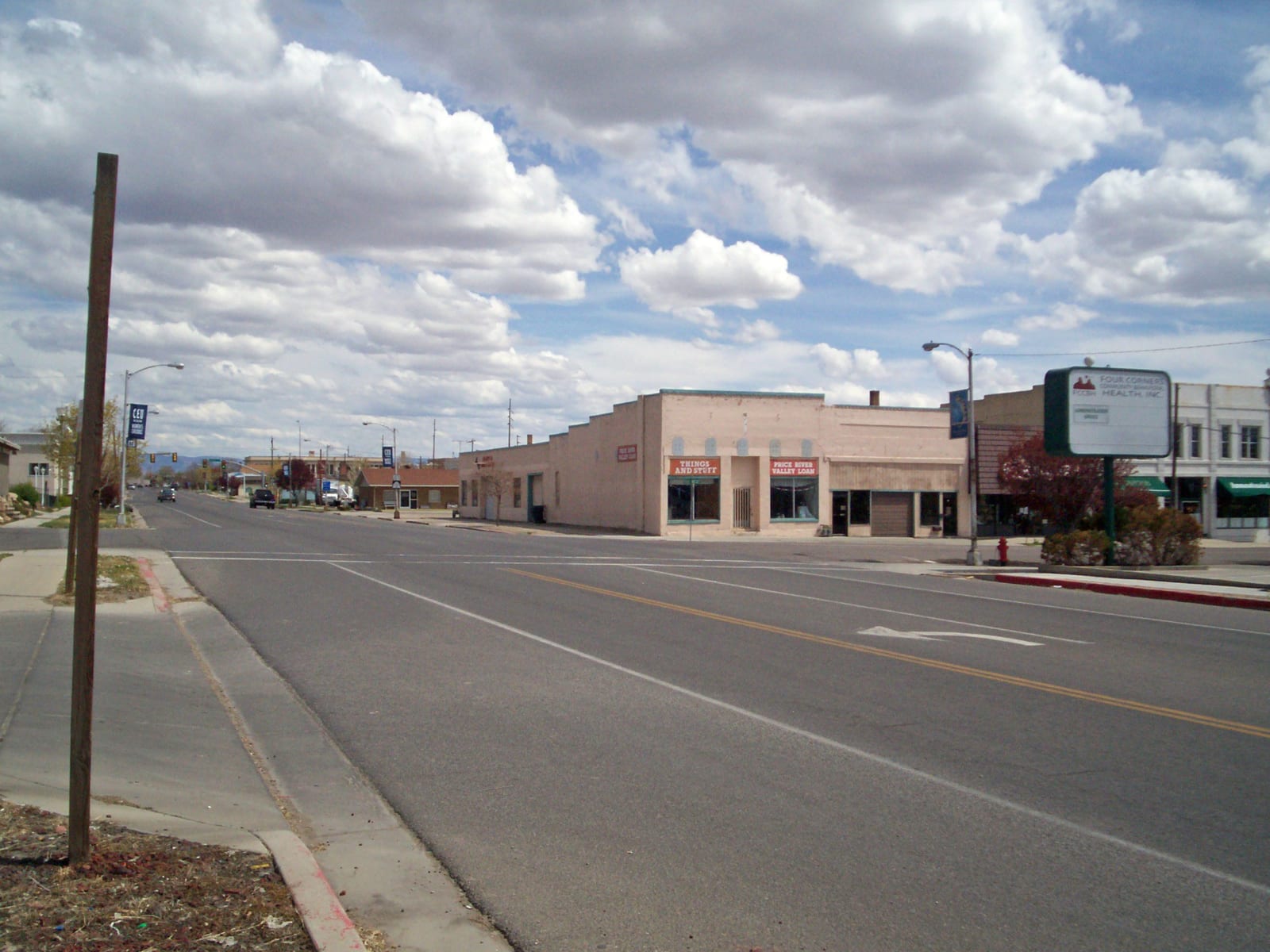
Price is the town that coal built, and the town is still figuring out what comes next. Settled in the late 1800s as a railroad and mining hub, Price grew on the labor of immigrants — Greek, Italian, Japanese, and Slavic families who came to work the coal mines of Carbon County and built a community that was, for a time, one of the most ethnically diverse in the American West. The downtown architecture reflects that era — solid, early-century commercial buildings lining Main Street with the confidence of a town that expected to be important — and the cultural heritage of those immigrant communities persists in the restaurants, festivals, and family names that distinguish Price from the more homogeneous Mormon communities elsewhere in rural Utah.
The Greek heritage is particularly strong. Greek immigrants arrived in Carbon County in the early 1900s, recruited by the mining companies to work the underground coal seams. They brought their language, their Orthodox faith, their food, and a communal resilience forged by centuries of survival in a different set of mountains. The annual Greek Festival in Price draws visitors from across the state for food, music, and dancing that connect the current community to the immigrants who built it. The Assumption of the Virgin Mary Greek Orthodox Church, with its distinctive dome, is one of the most visible landmarks on the Price skyline and a reminder that Utah's religious landscape is more varied than the dominant narrative suggests.
The coal mines that built Price are largely closed now, victims of changing energy markets and environmental regulation, and the economic transition has been painful. The boom-era population has declined, storefronts have emptied, and the community has faced the challenge that confronts every resource-extraction town when the resource runs out: what do you do next? Price is answering that question with a combination of institutional assets — the university campus, the museum, the hospital that serves the region — and a growing recognition that the landscapes surrounding the town are themselves a resource worth developing.
The Prehistoric Museum at USU Eastern gives Price a paleontological identity that transcends the coal heritage. Nine Mile Canyon, with its thousands of ancient rock art panels, is accessible from Price and draws a growing number of visitors. The San Rafael Swell, one of the most spectacular and least-visited geological features in Utah, begins just west of town. And the mountains of the Manti-La Sal National Forest rise to the west and south, offering hiking, hunting, fishing, and fall color drives that rival anything in the more touristed parts of the state.
The Helper Arts and Music District, in the neighboring town of Helper — five miles south on Highway 6 — has become one of the most unlikely cultural revivals in rural Utah. The former mining town, even smaller and more economically distressed than Price, has attracted a community of artists, musicians, and entrepreneurs who have converted the historic Main Street buildings into galleries, studios, performance venues, and cafes. The transformation is still in progress, and Helper retains the rough edges of a town that has not been fully gentrified, but the energy is real and the creative output is impressive.
Price sits at the intersection of US-6 and US-191, making it a natural crossroads for travelers moving between the Wasatch Front and southeastern Utah. The town offers the full range of services — gas, food, lodging, medical care — that are scarce in the more remote areas to the south and east. The motels are modest but adequate, the restaurants include a few genuine standouts, and the overall atmosphere is that of a working town that welcomes visitors without pretending to be something it is not.
The landscape surrounding Price is coal country in the most visual sense — the Book Cliffs march along the northern horizon in a wall of gray and tan sedimentary rock, and the remains of mining operations — tipples, rail spurs, settling ponds — are visible in the canyons that feed into the valley. The terrain is not conventionally beautiful in the way that southern Utah's red rock country is beautiful, but it has a stark, industrial grandeur that rewards attention. The stacked sedimentary layers of the Book Cliffs record the advance and retreat of an ancient seaway, and the coal seams that fueled Price's economy are the compressed remains of swamp forests that grew along that seaway's margin 80 million years ago.
Price is not on most tourists' itinerary, and it does not need to be. It is a real town with a real history, real problems, and real assets — a museum with world-class fossils, a cultural heritage shaped by immigration, and a surrounding landscape that offers geological and recreational riches that the more famous parts of Utah cannot match. The coal built this town. The question of what sustains it going forward is being answered one gallery opening, one rock art tour, and one museum visit at a time.
Visitor Info
On the Map
Stories featuring this place
Go deeper into the history and character of this stop
Nearby
The closest stops worth working into your route
Historical markers nearby
Roadside plaques and monuments within a short detour