 Bobak Ha'Eri / CC BY 3.0
The Story
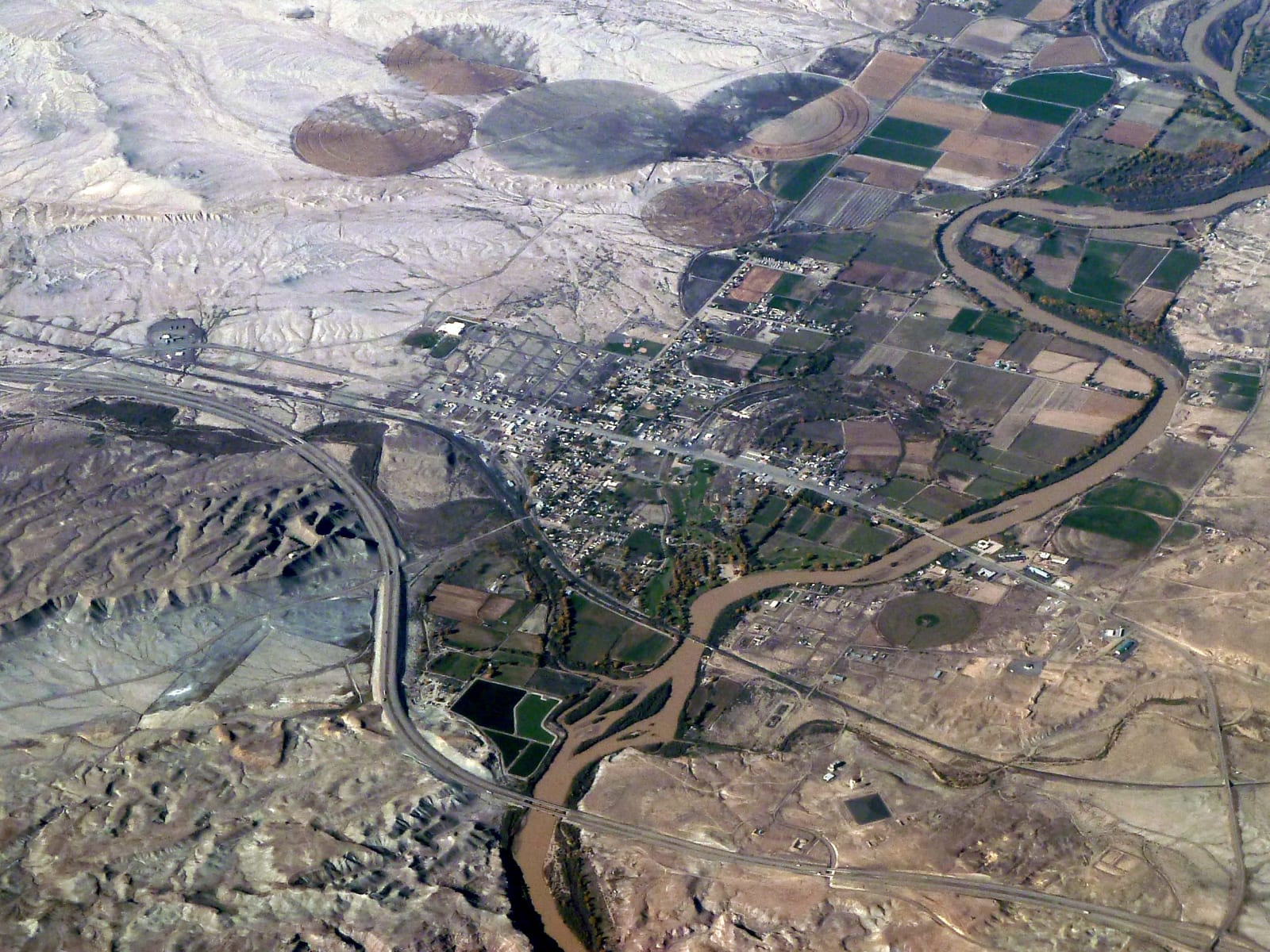
Green River is the kind of town that exists because geography said so. It sits where the Green River crosses Interstate 70 in the broad, arid valley between the Book Cliffs to the north and the San Rafael Swell to the south, and its entire history — from the earliest river crossings to the current gas stations and melon stands — is a story of people stopping at this point in the landscape because the river and the terrain gave them no better option. It is a crossroads town in the most literal sense, and its character reflects the transient, utilitarian energy of a place where people have always been on their way somewhere else.
The town's most beloved tradition has nothing to do with geography and everything to do with agriculture. Green River melons — cantaloupes and watermelons grown in the sandy, mineral-rich soil of the river valley — are famous across Utah and beyond for their exceptional sweetness and flavor. The desert heat, the sandy soil, the irrigation from the river, and the dramatic temperature swings between day and night create growing conditions that concentrate sugars in the fruit to an intensity that supermarket melons cannot approach. Every September, the town hosts Melon Days, a free festival celebrating the harvest with melon-eating contests, a parade, live music, and the kind of small-town community celebration that feels like a time capsule from an era before festivals needed corporate sponsors and VIP sections.
The roadside melon stands that line the main road through town from late July through September are the everyday expression of this tradition. You pull over, choose a cantaloupe or watermelon from a table stacked with fruit, pay a few dollars, and drive away with something that will be the best melon you eat all year. The transaction is simple, the quality is remarkable, and the experience of eating a Green River cantaloupe — split open on the tailgate of your car at a rest stop in the desert, the juice running down your arms — is one of the purest road trip pleasures in the American West.
The Green River itself is the town's other defining feature. The river flows through town on its way south to its confluence with the Colorado River in Canyonlands National Park, and it has been a transportation corridor for millennia. The Fremont people farmed its banks. Spanish explorers crossed it. John Wesley Powell launched his famous 1869 expedition down the Green and Colorado Rivers from a point near the current town, beginning one of the great exploration narratives in American history. The John Wesley Powell River History Museum, housed in a building on the east end of town, tells the story of Powell's expeditions and the broader history of river exploration in the region with exhibits that include replica boats, historical photographs, and maps of the river system.
The river also provides the town's primary recreational draw. Several outfitters operate from Green River, offering guided raft trips through Labyrinth and Stillwater Canyons — the calm, flat-water sections of the Green River downstream of town that wind through increasingly deep and beautiful canyon country before reaching the confluence with the Colorado in Canyonlands. These are not whitewater trips — the river is slow and gentle through this section — but the canyon scenery is extraordinary, and the multi-day float trips that camp on sandy beaches beneath 500-foot sandstone walls are among the most peaceful wilderness experiences in Utah.
The town sits at the intersection of Interstate 70 and Highway 191, making it a natural stopping point for travelers heading to Moab, Arches, Canyonlands, or the San Rafael Swell. The services are standard small-town highway fare — gas stations, fast food, a few independent restaurants, and motels that cater to the road-trip crowd. The town does not pretend to be anything other than what it is: a place to fuel up, eat a melon, and continue toward the landscapes that surround it on every side.
Those surrounding landscapes are worth noting, because Green River sits in the center of some of the most geologically diverse terrain in Utah. The San Rafael Swell rises to the west, with its slot canyons, natural bridges, and the Wedge Overlook. The Book Cliffs march along the northern horizon in a wall of layered sedimentary rock that stretches for over 200 miles. The canyons of the Green River deepen to the south. And the desert in every direction is vast, open, and empty in a way that gives the word "remote" a physical texture.
Green River is not a destination. It is a waypoint — a place where roads cross, where a river provides water in a landscape that otherwise offers none, and where melons grow sweet in the desert heat because the soil and the climate conspired to make one improbable thing possible. The town does not ask you to stay. It asks you to stop, eat a melon, fill your tank, and carry the sweetness with you as you drive toward whatever canyon or mountain is calling your name next.
Visitor Info
On the Map
Nearby
The closest stops worth working into your route
Historical markers nearby
Roadside plaques and monuments within a short detour