The Story
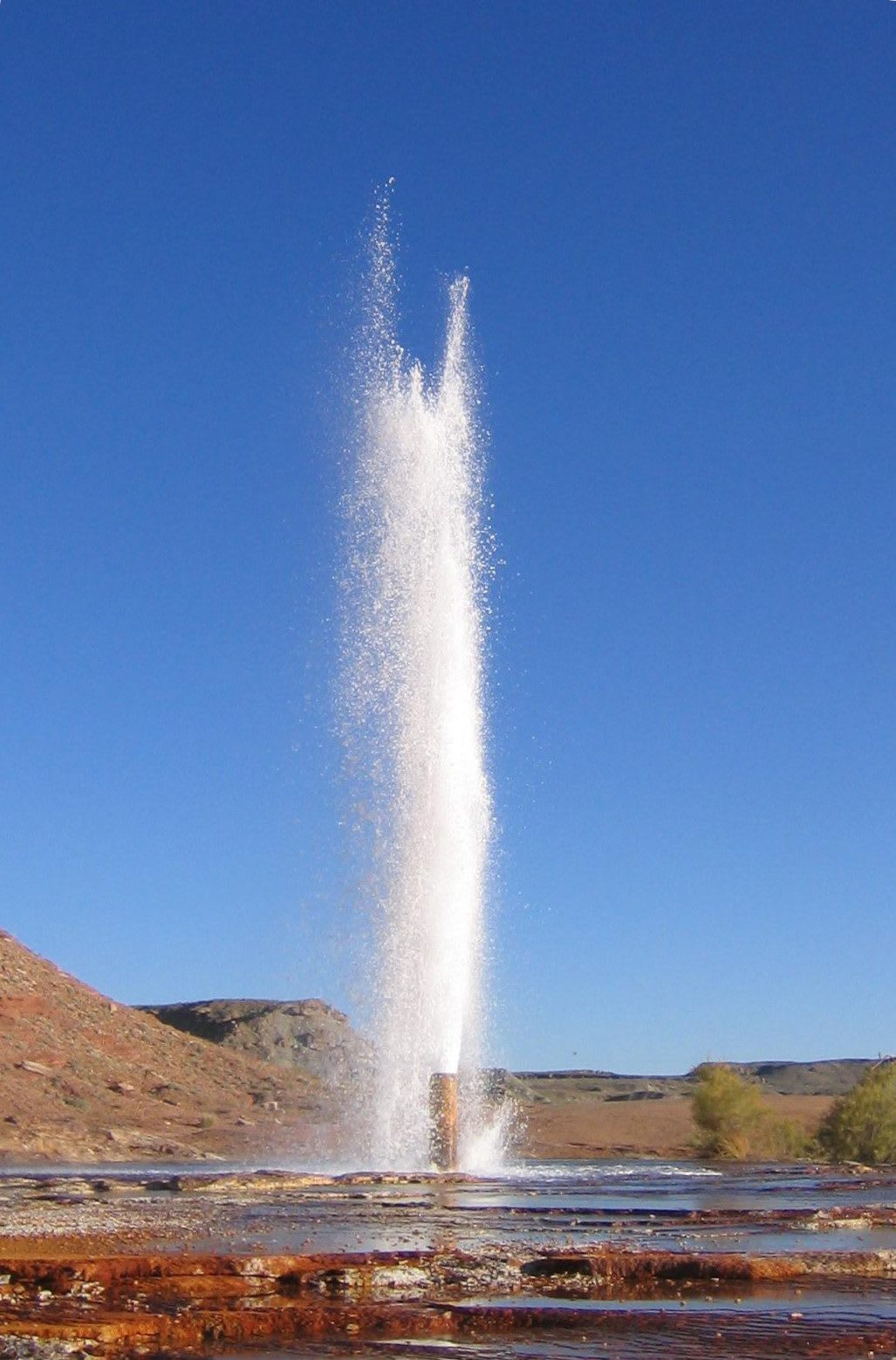
Crystal Geyser is not a geyser. Not in the Yellowstone sense, anyway. There is no superheated magma chamber beneath the surface, no boiling water reservoir waiting to blow. What there is, improbably, is an abandoned 1930s oil exploration well drilled into a pressurized aquifer of carbon dioxide-saturated water that periodically erupts in a fizzing, spraying column of cold water and gas, coating the surrounding rocks in a growing mound of orange and white mineral deposits. It is part geological curiosity, part industrial accident, part inadvertent art installation, and entirely unlike anything else in Utah.
The well was drilled in 1935-1936 by a petroleum exploration company looking for oil in the sedimentary layers along the Green River south of the town of Green River. They did not find oil. What they found was a pressurized aquifer — water saturated with dissolved carbon dioxide, trapped beneath a cap of impermeable rock at roughly 2,700 feet below the surface. When the drill bit punctured the cap, the pressurized water began rising through the wellbore, and the dissolved CO2 came out of solution as the pressure dropped, creating a self-sustaining cycle of eruption. The company abandoned the well, and the geyser has been erupting intermittently ever since.
The eruptions are unpredictable, which is part of the adventure. The geyser does not run on a schedule. It erupts roughly every 8 to 22 hours, with active periods lasting anywhere from a few minutes to several hours. Some eruptions are modest — a bubbling, fizzing pool that rises a few feet above the wellhead. Others are dramatic — a 40-foot column of cold, carbonated water spraying into the desert air, drenching everything within range and filling the air with a mineral mist that smells faintly of sulfur. There is no way to know in advance what you will get, or when. Visitors have been known to camp nearby and wait hours for an eruption, and the anticipation — watching the pool bubble and surge, wondering if this is the buildup or just a false start — is part of the experience.
The mineral deposits surrounding the geyser are visually striking. The carbonated water is rich in dissolved travertine — calcium carbonate — which precipitates out as the water hits the air. Over the decades, these deposits have built up into a mound of orange, white, and cream-colored travertine that spreads outward from the wellhead like a frozen waterfall. The colors come from iron oxides and other minerals in the water, and the textures range from smooth, glassy sheets to rough, bubbly crusts. The mound is still growing — every eruption adds another thin layer of mineral deposit — and the area immediately around the geyser is constantly being reshaped by the process.
The setting adds to the surreal quality of the experience. Crystal Geyser sits on the east bank of the Green River, about 10 miles south of the town of Green River, accessed by a rough dirt road that crosses a section of desert scrub and ends at the riverbank. The location is remote and undeveloped — no signs, no facilities, no admission fee. The BLM manages the site but has made no effort to develop it as a tourist attraction. You drive in, park on the dirt, walk to the mound, and wait. If the geyser is not erupting, you can explore the travertine deposits, walk along the river, or simply sit in the desert silence and listen for the first bubbling sounds that signal an eruption is building.
The water itself is fascinating. It is cold — roughly the temperature of the aquifer it comes from, which is significantly cooler than the desert air in summer — and it is naturally carbonated. Tasting it is possible but not recommended — the mineral content is high, the flavor is intensely mineral and slightly sulfurous, and the water has not been tested for safety. The carbonation is real, though — the water fizzes on your tongue like flat soda, a strange sensation in the middle of the Utah desert.
Crystal Geyser is a reminder that the Earth does not always behave the way we expect. A cold-water geyser powered by an abandoned oil well, building its own travertine monument one eruption at a time, sitting unmarked and unmanaged on the bank of the Green River — it sounds like something from a novel, but it is real, and it has been doing this for nearly a century. The well that was drilled to find oil found something stranger and more beautiful instead, and the Earth has been making the most of the opportunity ever since.
The access road can be rough, especially after rain, and a vehicle with reasonable clearance is recommended. Check conditions locally before driving in, and do not attempt the road if it is wet — the clay soil becomes slick and impassable quickly. Bring water, sun protection, and patience. The geyser runs on its own schedule, not yours, and the wait is part of the story.
Visitor Info
On the Map
Nearby
The closest stops worth working into your route
Historical markers nearby
Roadside plaques and monuments within a short detour