The Story
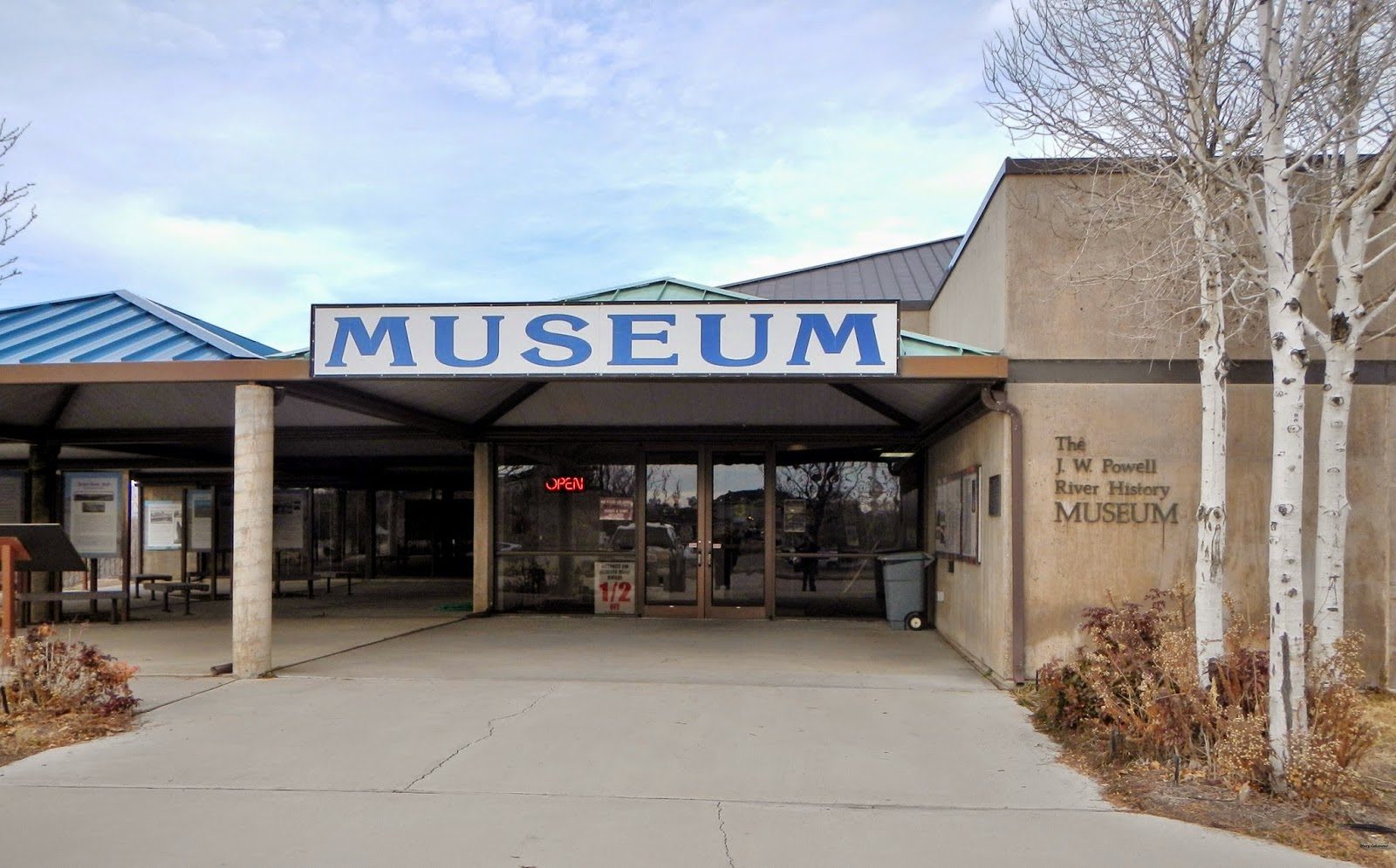
The John Wesley Powell River History Museum is the only museum in the United States devoted entirely to the history of river running, and it sits exactly where that story belongs — on the bank of the Green River at the east end of the town of Green River, the desert waypoint that has launched river expeditions for more than a century. It honors the one-armed Civil War veteran and geologist John Wesley Powell, who in 1869 led the first documented passage by Europeans down the Green and Colorado rivers and through the Grand Canyon — a treacherous, roughly thousand-mile, three-month descent into what was then one of the last blank spots on the map of the United States.
A visit usually begins in the museum's theater with the short film "The Great Unknown," a retelling of that 1869 journey, before opening into galleries of expedition sculptures and a hall of historic wooden boats built to run whitewater in the decades since Powell. The River Runners Hall of Fame honors the men and women — the Hatch family of river guides among them — who turned river exploration into a way of life. A dinosaur exhibit, a rotating art gallery, and a covered riverside patio lined with interpretive panels on the San Rafael Swell, the Outlaw Trail, and the region's ghost towns round out a stop that rewards far more than the twenty minutes most travelers expect to give it.
The museum makes a natural anchor for exploring this stretch of the Colorado Plateau. Crystal Geyser, a cold-water geyser that erupts on the riverbank a few miles downstream, is an easy side trip; the rivers Powell charted thread north toward Dinosaur National Monument and south toward the canyon country around Moab. For anyone who has floated these waters — or dreams of it — the museum turns the view out the window into a story a century and a half deep.
Visitor Info
On the Map
Nearby
The closest stops worth working into your route
Historical markers nearby
Roadside plaques and monuments within a short detour