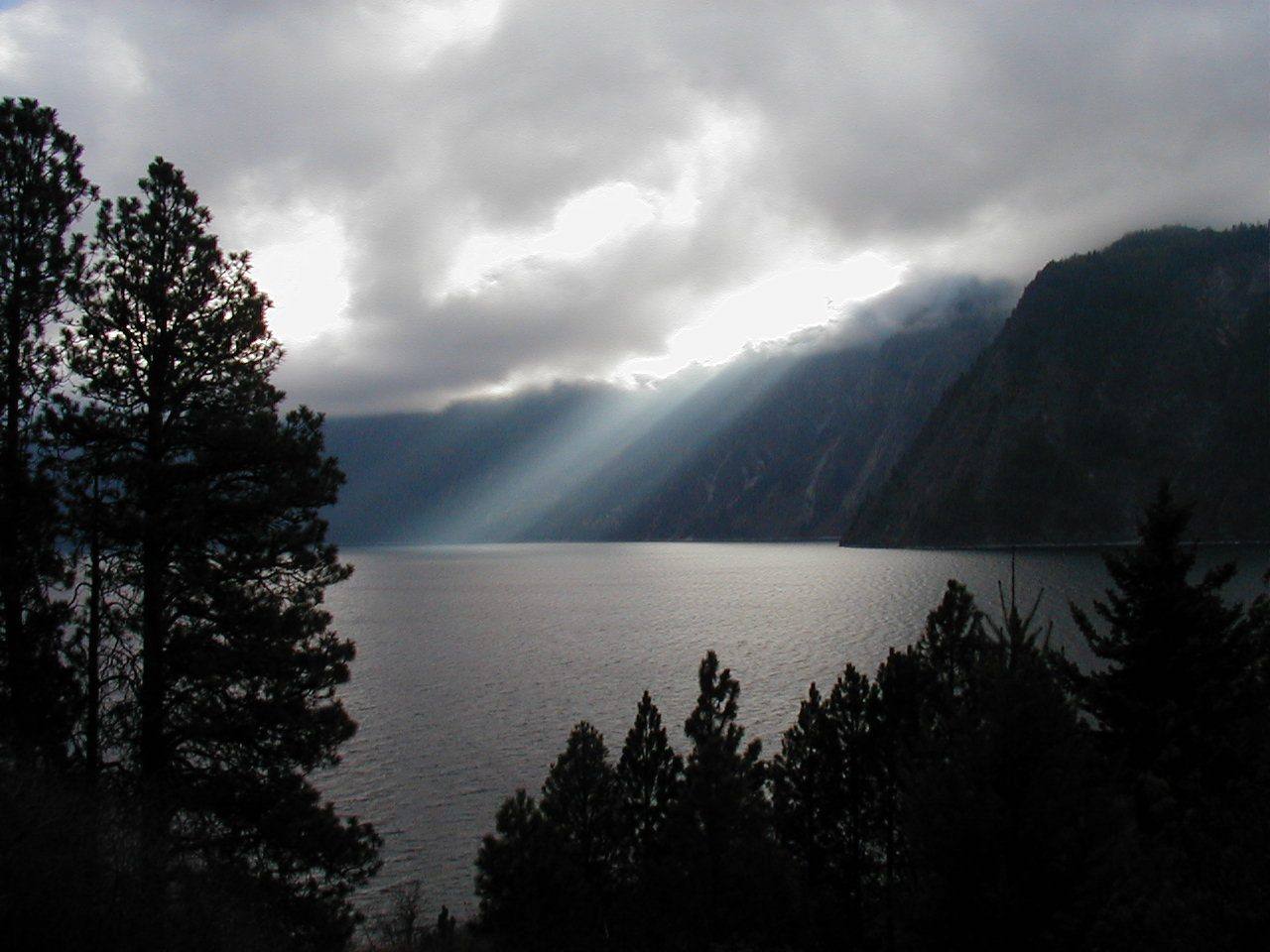
 David Blaine / CC BY 2.0 via Wikimedia Commons
The Story
Lake Pend Oreille is Idaho's largest and deepest lake, but what the Navy wanted in 1942 was its distance from any coast. Ground was broken in March, the first phase of the Farragut Naval Training Station opened in August, and by September the base held some fifty-five thousand people — for the moment the largest city in Idaho. Of the world's naval training centers, only Great Lakes outside Chicago was bigger.
It lasted thirty months. In that time 293,381 recruits went through boot camp here, drilling on parade grounds cleared out of the forest and riding liberty trains to Spokane. Late in the war nearly nine hundred German prisoners worked the grounds as gardeners and maintenance men. Ross Hall, a Sandpoint photographer, was hired to photograph every company, and his studio's archive grew past three hundred thousand images. The last recruits graduated in March 1945, the station was decommissioned in 1946, and after a brief life as a college the land passed to the state, which made it a park in the 1960s.
Of the station's 776 buildings, a handful remain. The brig, a square concrete-block building around an inner courtyard, now holds the Museum at the Brig. The rest of the base survives as the grid of roads, campgrounds and trails through the pines along the lake's south shore.
The Navy never entirely left. At Bayview, at the lake's southern tip beside the park, its Acoustic Research Detachment uses the deep, cold, quiet water to test large-scale models of submarines — work it mostly keeps to itself.
Visitor Info
On the Map
Nearby
The closest stops worth working into your route
Historical markers nearby
Roadside plaques and monuments within a short detour