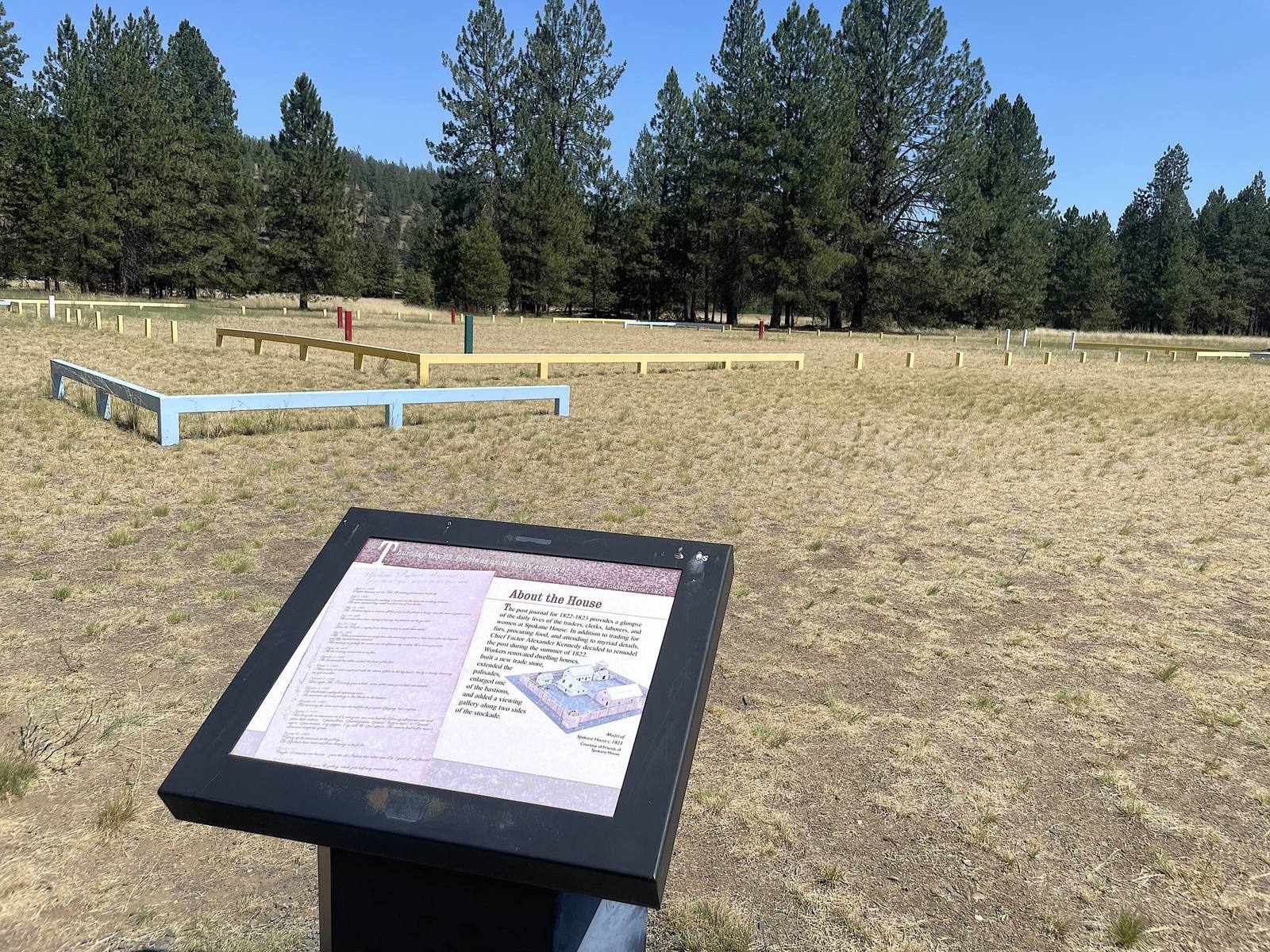
 SpokaneWilly / CC BY-SA 4.0 via Wikimedia Commons
The Story
In the summer of 1810 Jaco Finlay, a North West Company man born to a Scottish trader and a Native mother, followed a tribal trail down the Spokane River from Lake Pend Oreille, and a party of Spokane people guided him to one of their villages where the Little Spokane comes in. On a flat of ponderosa pine there he and Finan McDonald built a small trade house. Two years later John Jacob Astor's Pacific Fur Company put up a rival next door; the War of 1812 made the Americans sell in 1813, and the Nor'westers moved into their better buildings and kept the name Spokane House. For sixteen years the post was the center of the fur trade between the Rockies and the Cascades.
George Simpson, governor of the Hudson's Bay Company after it absorbed the North West Company, came through in April 1825 looking for savings. The post sat ninety miles from the Columbia, and he agreed to close it for a new one at Kettle Falls; the only difficulty he foresaw was offending the Spokane, who had always stood by the traders. In the spring of 1826 the last two men on the place were pulling the iron off it, hinges and all. Finlay stayed. He lived on in the empty compound with his wife and family, and when he died in May 1828 he was buried, by fur-trade tradition, under one of the bastions. By 1833 that bastion was the only building standing.
In September 1951 an archaeology student, Ray Carlson, found his remains during a dig that outlined the post's footprints, beside a clay pipe scratched with a rough JF that local historians read as his initials. On July 25, 1976, at the request of his descendants, he was reburied near the old bastion. The crib-log barn nearby has long been called the oldest building in Spokane County and a piece of the fur post. It is neither: it was most likely built in the late 1870s by James Walton, a roadhouse keeper on the Colville Road known as Peavine Jimmy.
Visitor Info
On the Map
Nearby
The closest stops worth working into your route
Historical markers nearby
Roadside plaques and monuments within a short detour