 Adam Kliczek / CC BY-SA 3.0
The Story
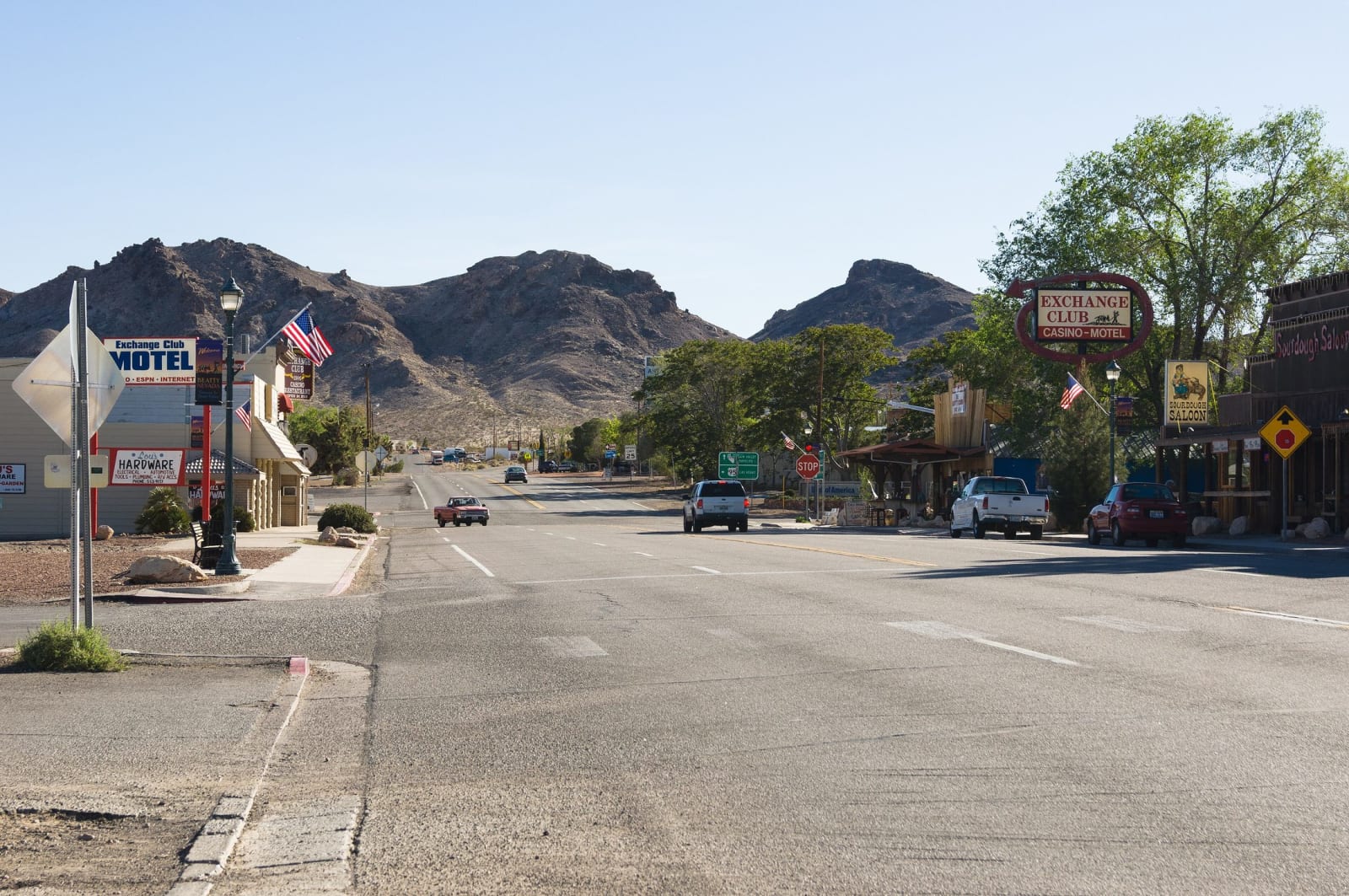
Four miles east of Rhyolite, and still very much alive, Beatty is the town that water built and water kept. It is the survivor of the Bullfrog boom — the one settlement in this corner of the desert that never had a mine of its own and never needed one. What Beatty had was a spring, the Amargosa River running underground beneath it, and a position at the crossroads of every freight road and rail line in the district. The glittering camps it supplied boomed and died inside a decade. Beatty just kept going, and a century later it is Nevada's gateway to Death Valley.
The town takes its name from Montillus "Old Man" Beatty, a Civil War veteran and old miner who bought a ranch in the Oasis Valley in 1896 and settled there with his Paiute wife, farming beside the spring and keeping an open door for anyone passing through to the Death Valley mines. When gold turned up in the Bullfrog Hills in 1904, Beatty's ranch was suddenly the nearest reliable water and produce for miles. A townsite was platted just south of it, the mine owner Bob Montgomery threw up a twenty-three-room hotel, and within a year some fifteen hundred horses were hauling freight between the new camps and the railhead at Las Vegas.
That was Beatty's role and its salvation: not gold but logistics. Three railroads reached the town between 1905 and 1907, and it became the railhead and supply center for the whole Bullfrog district — a freight stop on the long haul between Goldfield and the Las Vegas rail yards, the place the ore went out through and the food, lumber, and water came in through. When the mines failed, Beatty simply absorbed what was left of them; some of the town is literally built from Rhyolite's salvaged bones. By 1914, with its glamorous neighbors already going to ruin, Beatty had become the largest town in the district almost by default — the last one standing.
It went on reinventing itself. The last railroad pulled up its tracks in 1940, but by then Death Valley had become a national monument and the tourists had started coming; Prohibition kept a few desert stills busy; and after the war the Nevada Test Site to the east put a steady federal paycheck in town, work that a lot of Beatty families still remember. Mining, railroading, bootlegging, bomb testing, tourism — Beatty has worn every face the modern desert offers and outlasted each one.
The most charming reminder of where it all started wanders down Main Street on its own four legs. Beatty's wild burros are the descendants of the pack animals prospectors turned loose when the boom ended, and they never left — drawn to the Amargosa's water, hundreds of them now range in and around town, ambling across yards and parking lots like they own the place, which in some sense they do. The Park Service recently cleared the burros out of Death Valley as non-native, so more of them than ever have settled in around Beatty. They will walk right up for a scratch. Feeding them is illegal and a genuinely bad idea; admiring them is the whole point.
What's here now is a working desert town that has leaned cheerfully into being a way station: a good little museum on Main Street, the largest candy store in southern Nevada, a couple of authentic saloons pouring chili and cold beer, hot springs in an old railroad depot just north, and the wonderfully strange wreck of a brothel with a crashed airplane out front. Death Valley is eight miles west on State Route 374; Rhyolite and the Goldwell sculptures are right next door; Tonopah is ninety miles north up US-95. Come for the gateway, but give Beatty itself an hour — it earned its longevity, and it wears it well.
Visitor Info
On the Map
Stories featuring this place
Go deeper into the history and character of this stop
Nearby
The closest stops worth working into your route
Historical markers nearby
Roadside plaques and monuments within a short detour