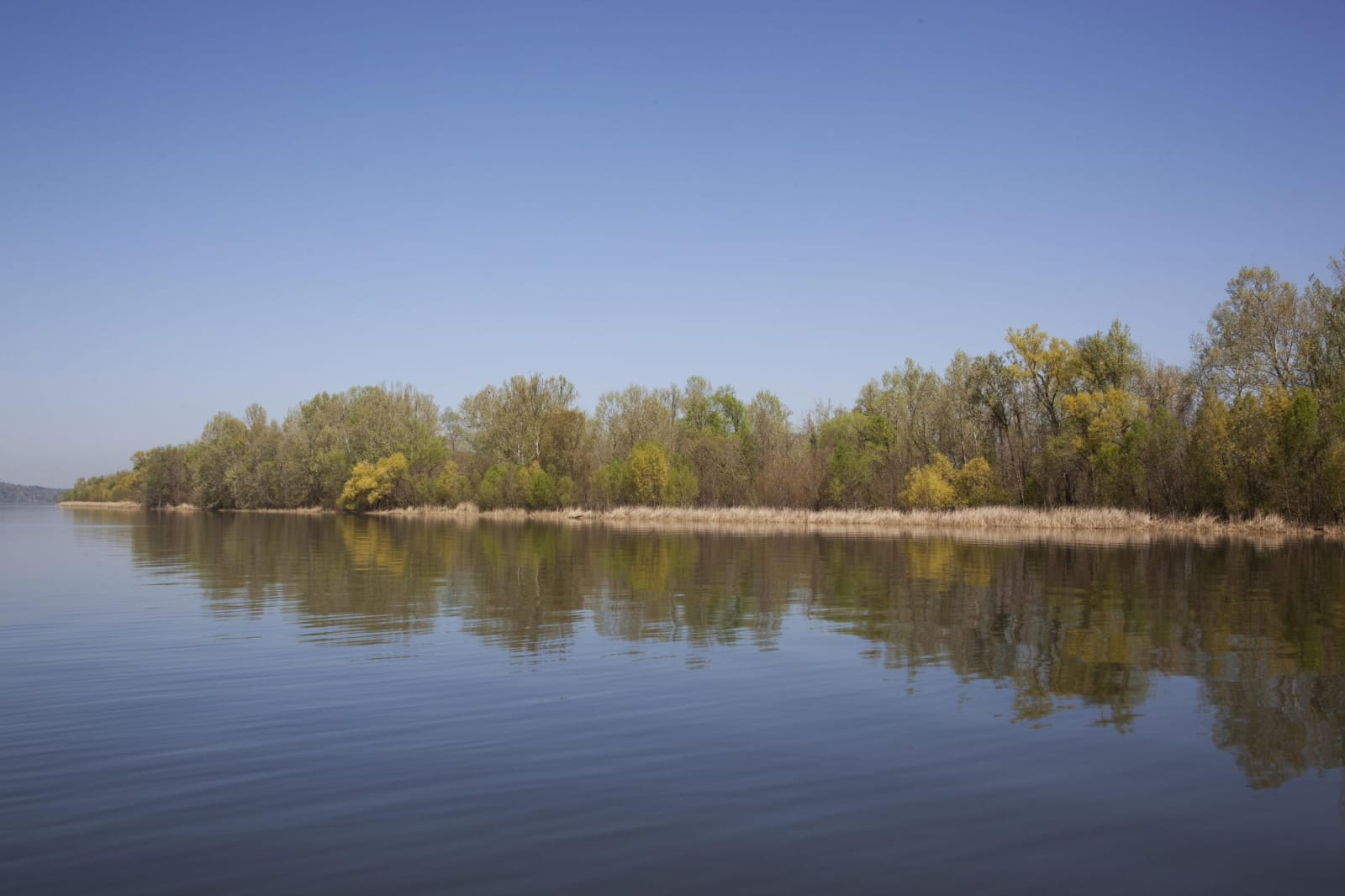
The still Alabama River at Gee's Bend, a line of spring-green willows and pale reeds reflected in the water under a clear sky.
Carol M. Highsmith / public domain via Library of Congress
Alabama · Region

Montgomery, Selma & the Black Belt

Fort Toulouse and Old Cahawba, the Edmund Pettus Bridge and Brown Chapel, Montgomery's Legacy Sites and Dexter Avenue: the Creek cession, cotton and the vote.

12 places to explore

Where the Coosa and Tallapoosa join to make the Alabama River, a Mississippian mound still stands at Fort Toulouse, in country the Muscogee (Creek) and Alabama towns held. In 1814 Andrew Jackson forced the Treaty of Fort Jackson there, taking 21 million acres from the Creeks and opening the Black Belt to cotton. Old Cahawba, the first state capital, rose on that land and sank back into the woods.

The cotton was raised by enslaved people, and the Legacy Museum in Montgomery starts on the site of a warehouse where they were forced to work. The National Memorial for Peace and Justice names more than 4,400 Black victims of lynching. In Gee's Bend, the descendants of people enslaved on one plantation came to own the land after the federal government bought it in 1937, and their quilts reached the Whitney.

Montgomery's Rosa Parks Museum, Dexter Avenue King Memorial Baptist Church and the Freedom Rides Museum hold the bus boycott and the 1961 riders. In Selma, Brown Chapel and the Edmund Pettus Bridge tell of Bloody Sunday and of Jimmie Lee Jackson and James Reeb. On US 80 the Lowndes Interpretive Center stands where evicted sharecroppers lived in tents, on the road where Viola Liuzzo was killed. The Hank Williams Museum adds the music.

What to See in Montgomery, Selma & the Black Belt

12 places across the region, grouped by what they are.

Historic Sites
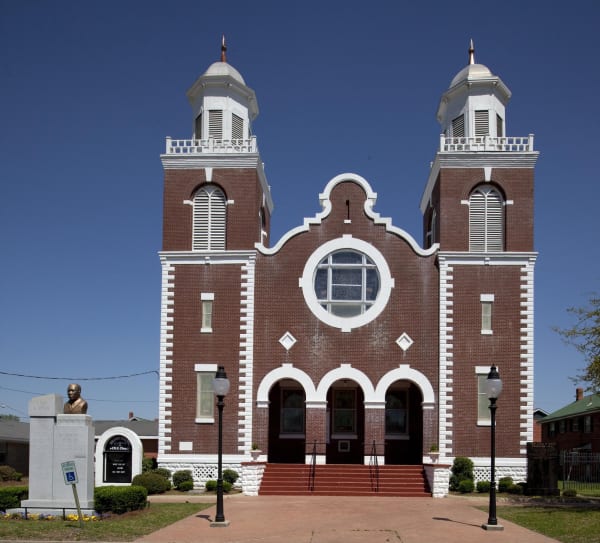
A red-brick church with two white-trimmed towers, a round window and three arched entrances above red steps.

Brown Chapel AME Church

Selma

The 1908 church a freed congregation built in Selma, headquarters of the 1965 voting-rights campaign and the starting point of all three marches toward Montgomery.

View details →
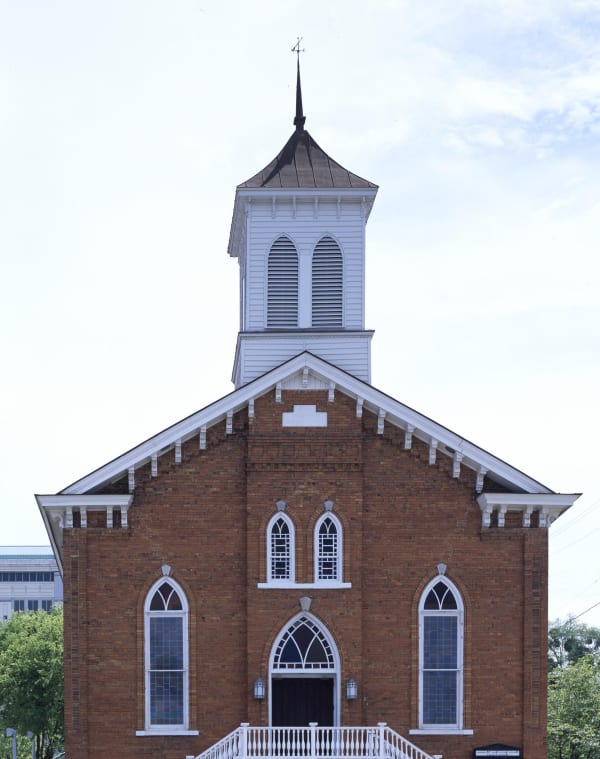
The red-brick front of a church with pointed windows and a white wooden steeple topped by a weathervane.

Dexter Avenue King Memorial Baptist Church

Montgomery

The red-brick 1889 church a block below the Alabama Capitol where Martin Luther King Jr. was pastor and the Montgomery bus boycott was run from the basement.

View details →
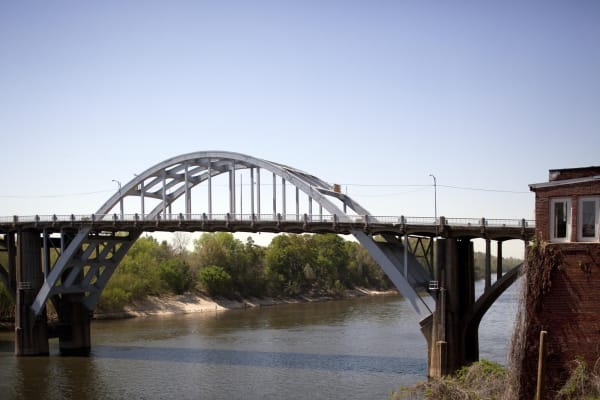
A gray steel arch bridge spanning the brown Alabama River between wooded banks under a clear sky.

Edmund Pettus Bridge

Selma

The 1940 steel arch over the Alabama River where state troopers and a mounted posse beat voting-rights marchers on Bloody Sunday, March 7, 1965.

View details →
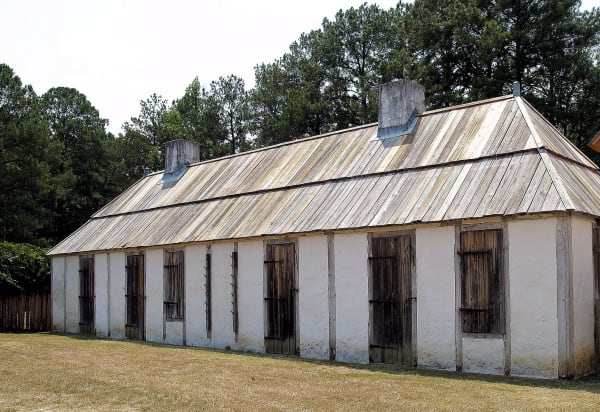
The reconstructed French barracks at Fort Toulouse, a long whitewashed building with plank shutters and a weathered board roof, before tall pines.

Fort Toulouse-Fort Jackson Park

Wetumpka

The point where the Coosa and Tallapoosa make the Alabama River: a Mississippian platform mound, a rebuilt French fort of 1751, and the ground where the Treaty of Fort Jackson took 21 million acres from the Creek Nation.

View details →
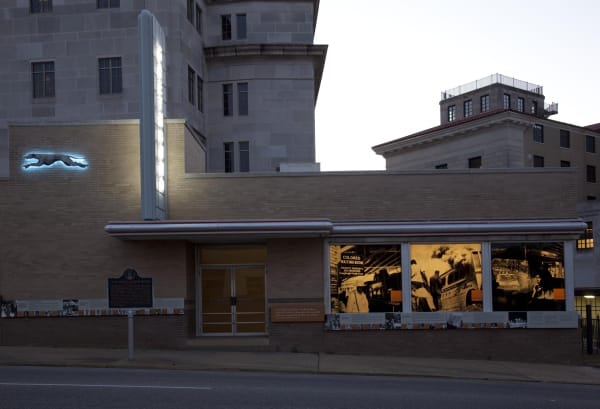
A low brick bus station at dusk with a vertical neon sign, a glowing running-dog logo and large historical photographs in its windows.

Freedom Rides Museum

Montgomery

Montgomery's 1951 Greyhound station, where a white mob beat the Freedom Riders on May 20, 1961, now an Alabama Historical Commission museum.

View details →
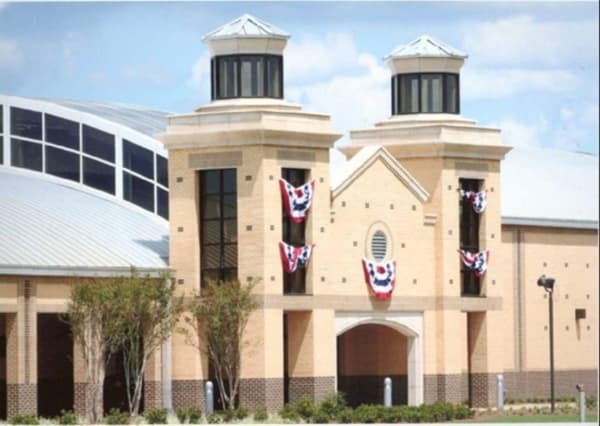
The tan brick Lowndes Interpretive Center, with two square lantern towers and a curved metal roof, hung with red, white and blue bunting.

Lowndes Interpretive Center

White Hall

The National Park Service center on US 80 built where Tent City sheltered sharecroppers evicted for registering to vote, midway along the Selma to Montgomery route through "Bloody Lowndes."

View details →
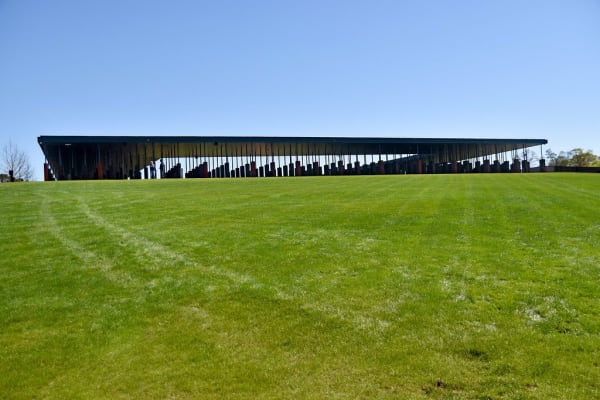
A long, low roofed pavilion of hanging steel columns at the top of a broad green lawn.

National Memorial for Peace and Justice

Montgomery

The hilltop memorial in Montgomery where more than 800 steel monuments, one for each county, carry the names of more than 4,400 Black people killed in racial terror lynchings between 1877 and 1950.

View details →
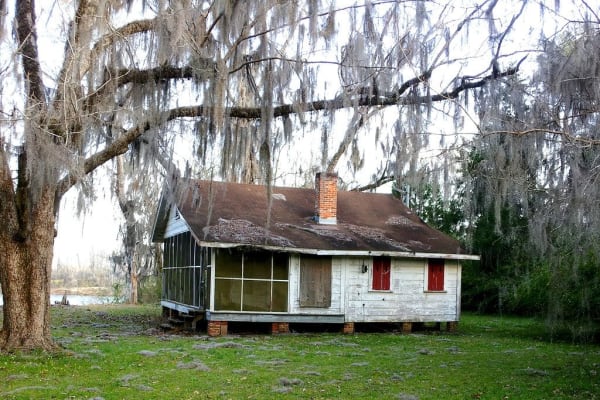
A weathered wooden cottage with a screened porch under a live oak hung with Spanish moss.

Old Cahawba Archaeological Park

Selma

Alabama's first state capital, at the mouth of the Cahaba River: a cotton town that faded into ruin and, for a few years after the Civil War, a center of Black political life.

View details →

Towns & Gateways

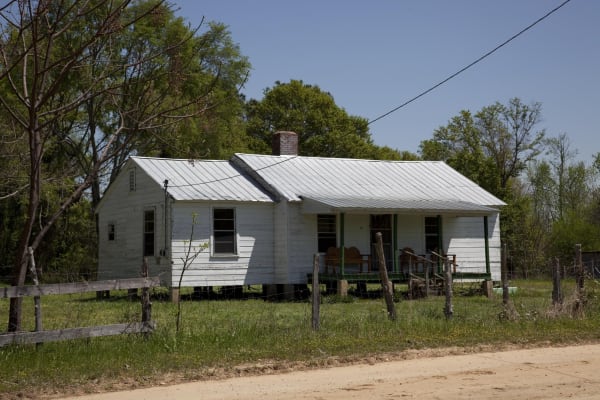
A white frame farmhouse with a tin roof and a front porch behind a wire fence on a sandy road.

Gee's Bend

Boykin

A Black farming community in a deep bend of the Alabama River, cut off from its county seat for 44 years after residents tried to vote, whose quilts are now shown in major museums.

View details →
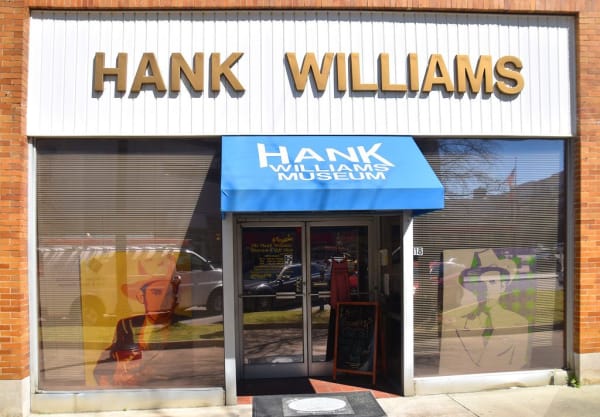
A downtown storefront with gold letters spelling Hank Williams above a blue awning over glass doors.

Hank Williams Museum

Montgomery

A privately run downtown Montgomery museum of Hank Williams's suits, hats and the car of his last ride, a mile from his grave in the Oakwood Annex.

View details →
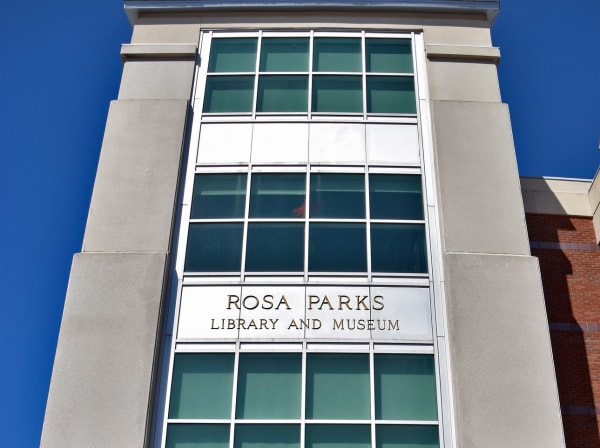
The glass-and-stone entrance tower of the Rosa Parks Library and Museum in downtown Montgomery, with the museum name lettered across it.

Rosa Parks Museum

Montgomery

Troy University's museum at the downtown Montgomery stop where Rosa Parks was arrested on December 1, 1955, telling the 13-month bus boycott through the women who organized it.

View details →

The Legacy Museum

Montgomery

The Equal Justice Initiative's museum on the site of a Montgomery cotton warehouse where enslaved people were forced to work, tracing a line from the slave trade to mass incarceration.

View details →

Scenic Drives through Montgomery, Selma & the Black Belt

Scenic Byway

The Selma to Montgomery National Historic Trail: US 80 from Brown Chapel to the Capitol

About 51 miles on the route of the 1965 voting rights march, from Brown Chapel and the Edmund Pettus Bridge in Selma east on US 80 through Lowndes County to the Alabama State Capitol in Montgomery.

51 mi · 1.2 hrs

Montgomery, Selma & the Black Belt rewards the unhurried. Pick a base, fan out, and let the country between the headline stops surprise you.

← Explore more of Open Road Guide