 Ron Cogswell / CC BY 2.0 via Flickr
The Story
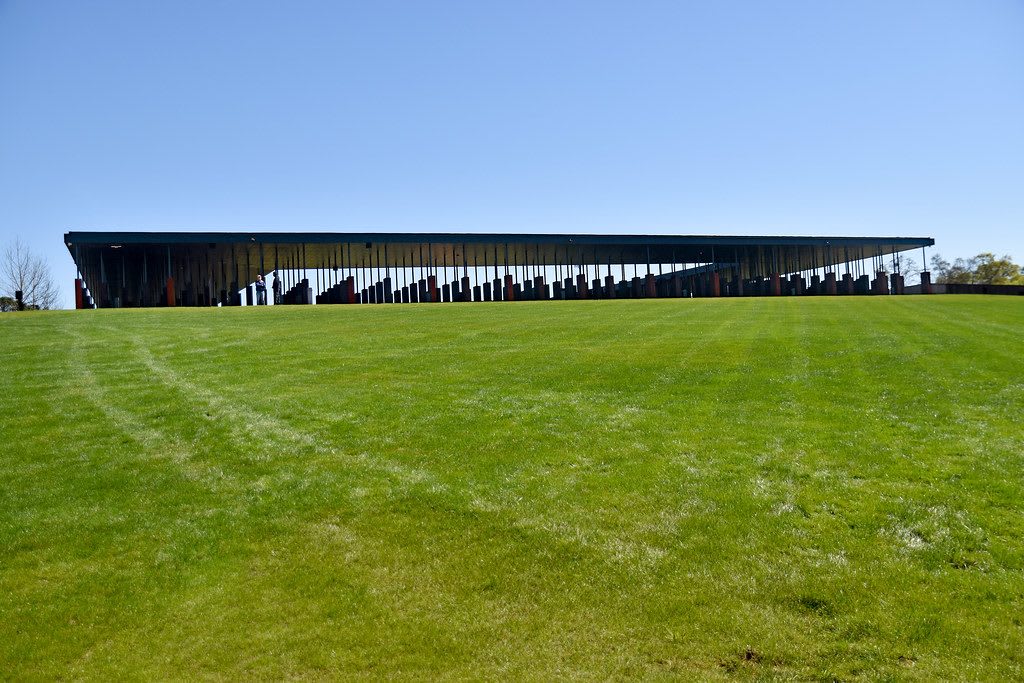
The Equal Justice Initiative opened this memorial on a hilltop overlooking Montgomery on April 26, 2018, after years of research in county records across the South. It is the first in the country to name the Black victims of lynching on this scale: more than 4,400 people killed in racial terror lynchings between 1877 and 1950 are remembered here, their names and the dates of their deaths cut into more than 800 corten steel monuments, one for each county where a lynching was documented. Where a victim's name is lost, the steel says "unknown."
The monuments are the size and shape of coffins, and they hang in a covered square designed by MASS Design Group. Walk the square slowly and look for the counties you drove through to get here. Outside, an identical set of monuments lies in rows on the ground, waiting for each county to claim its own and set it up at home, part of EJI's Community Remembrance Project. Sculptures by Kwame Akoto-Bamfo, Dana King and Hank Willis Thomas stand along the way, and a reflection space honors Ida B. Wells, who risked her life in the 1890s to document lynching. Across the street, the Peace and Justice Memorial Center remembers 24 people killed in racial attacks during the 1950s, Emmett Till among them.
The memorial is mostly outdoors and takes one to two hours. Free shuttles run from the Legacy Museum, and the same ticket covers both. It is a place for quiet, and most visitors keep it that way.
Visitor Info
On the Map
Nearby
The closest stops worth working into your route
Historical markers nearby
Roadside plaques and monuments within a short detour