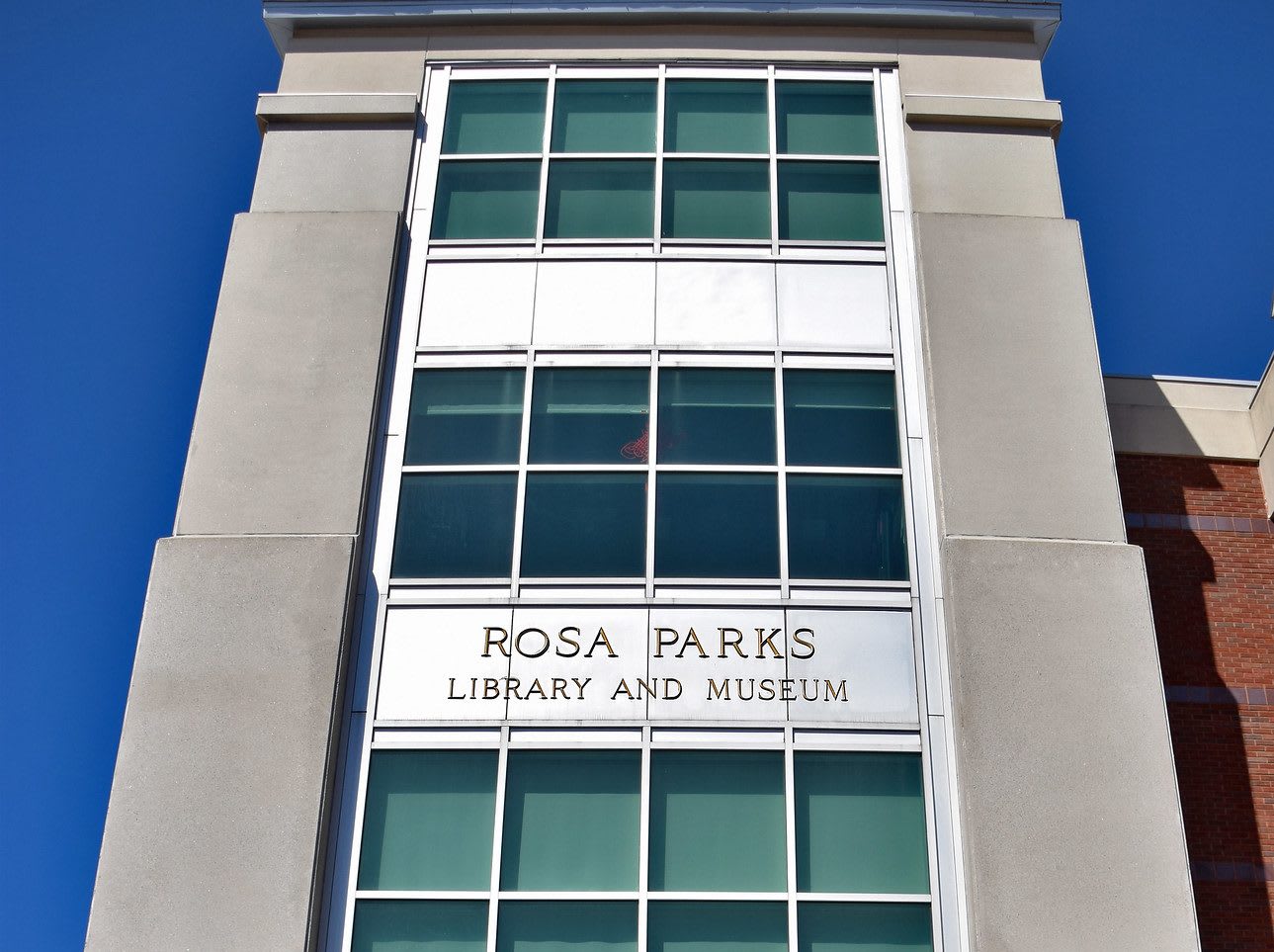
 Ron Cogswell / CC BY 2.0 via Flickr
The Story
On the evening of December 1, 1955, Rosa Parks left her job as a tailor's assistant at Montgomery's largest department store and boarded a city bus home. When the driver ordered her to give up her seat for a white man, she said no and was arrested at this downtown stop. She was secretary of the local NAACP branch and had been an activist for years, and she was not the first: Claudette Colvin, 15, had refused in March, and Mary Louise Smith, 18, in October.
Jo Ann Robinson of the Women's Political Council, an English professor at Alabama State College, stayed up that night with two students to mimeograph 50,000 flyers calling for a one-day boycott on December 5. The day held, and the Montgomery Improvement Association, with a young pastor named Martin Luther King Jr. as president, kept it going for thirteen months. Women ran the carpools, and Georgia Gilmore's Club from Nowhere sold food to pay for them. Attorney Fred Gray took the case to federal court on behalf of Colvin, Smith, Aurelia Browder and Susan McDonald, and in November 1956 the Supreme Court upheld the ruling in Browder v. Gayle. Black riders boarded integrated buses on December 21, 1956.
Troy University opened the museum on December 1, 2000, the 45th anniversary of the arrest. It holds Parks's original fingerprinted arrest record, a 1950s city bus, court papers and police reports, and a restored 1955 station wagon, one of the "rolling churches" that carried boycotters to work. The bus Parks rode is in Dearborn, Michigan.
Visitor Info
On the Map
Nearby
The closest stops worth working into your route
Historical markers nearby
Roadside plaques and monuments within a short detour