Home / Alabama / Montgomery, Selma & the Black Belt / Lowndes Interpretive Center
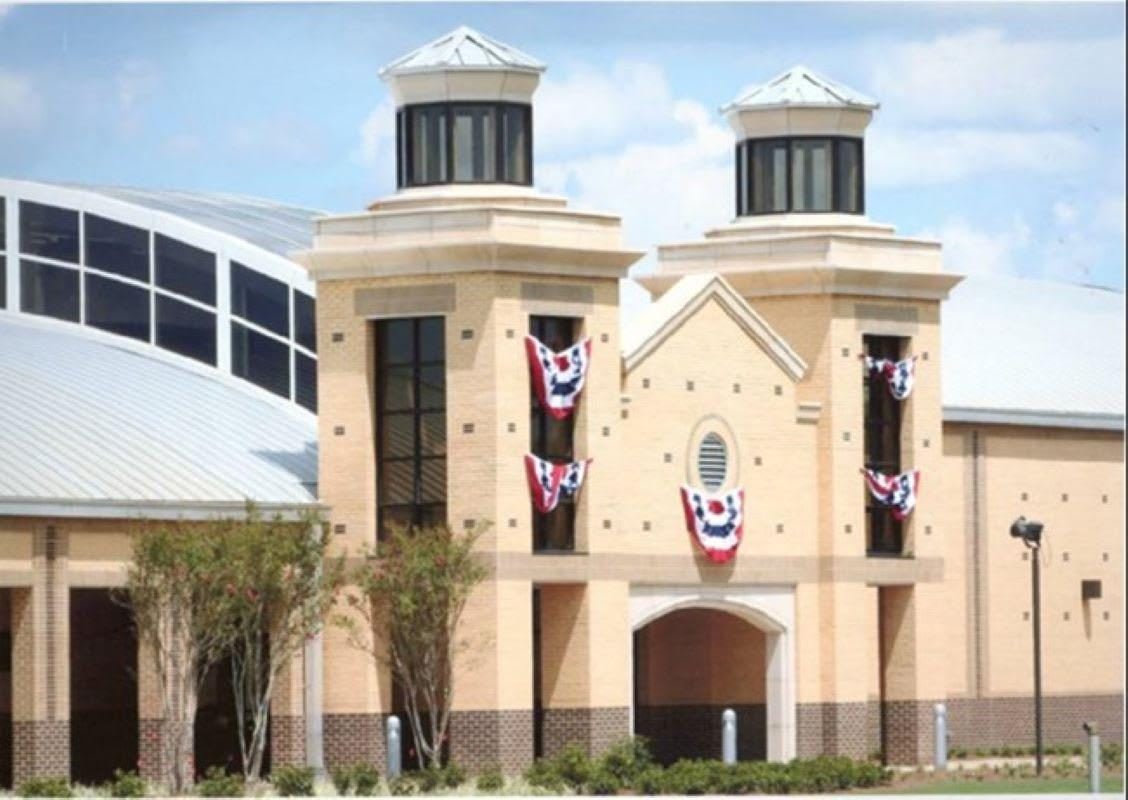
The tan brick Lowndes Interpretive Center, with two square lantern towers and a curved metal roof, hung with red, white and blue bunting.NPS / public domain
🏛️Historical

Lowndes Interpretive Center

Part ofMontgomery, Selma & the Black Belt
On this driveThe Selma to Montgomery National Historic Trail: US 80 from Brown Chapel to the Capitol

The National Park Service center on US 80 built where Tent City sheltered sharecroppers evicted for registering to vote, midway along the Selma to Montgomery route through "Bloody Lowndes."

⏱
Duration
One to two hours.
🎟
Admission
Free (NPS, 2026).
📅
Best Season
Year round. Open Monday through Saturday, closed on major winter holidays (NPS, 2026).

The Story

In 1965 about four in five people in Lowndes County were Black, and not one Black resident had managed to register to vote in more than sixty years. Some 86 white families owned 90 percent of the land, and the county was known as "Bloody Lowndes." The Selma marchers walked this two-lane stretch of US 80 in March 1965, a small group under the court order, camping in fields.

On the night the march ended, March 25, Viola Gregg Liuzzo, a white volunteer from Detroit, was driving marchers home to Selma when a car of Ku Klux Klansmen from Birmingham overtook her on this highway and shot her dead; Leroy Moton, the young Black man beside her, survived. A Hayneville jury acquitted three of the men of murder, and a federal court in Montgomery then sentenced them to ten years for violating her civil rights. Her roadside memorial stands to the east on US 80. That August, in Hayneville, a special deputy named Tom Coleman killed Jonathan Daniels, a white seminarian, as Daniels pushed 17-year-old Ruby Sales out of the line of fire.

The Park Service opened this center in 2006 on the site of Tent City, land owned by the Lowndes County Christian Movement where SNCC and local activists sheltered sharecroppers whose landlords had thrown them off for registering. Inside are a replica tent, tenant house and country store. The exhibits also tell of the Lowndes County Freedom Organization, whose 1966 black panther emblem was later taken up in Oakland, and of John Hulett, its first chairman, elected sheriff in 1970.

Visitor Info

⏱
Time Needed
One to two hours.
🎟
Admission
Free (NPS, 2026).
📅
Best Season
Year round. Open Monday through Saturday, closed on major winter holidays (NPS, 2026).
🛣️
Highway
US 80

On the Map

Nearby

The closest stops worth working into your route

historical19 mi away
Edmund Pettus Bridge
The 1940 steel arch over the Alabama River where state troopers and a mounted posse beat voting-rights marchers on Bloody Sunday, March 7, 1965.
historical19 mi away
Brown Chapel AME Church
The 1908 church a freed congregation built in Selma, headquarters of the 1965 voting-rights campaign and the starting point of all three marches toward Montgomery.
historical22 mi away
Old Cahawba Archaeological Park
Alabama's first state capital, at the mouth of the Cahaba River: a cotton town that faded into ruin and, for a few years after the Civil War, a center of Black political life.
historical25 mi away
National Memorial for Peace and Justice
The hilltop memorial in Montgomery where more than 800 steel monuments, one for each county, carry the names of more than 4,400 Black people killed in racial terror lynchings between 1877 and 1950.
cultural25 mi away
Rosa Parks Museum
Troy University's museum at the downtown Montgomery stop where Rosa Parks was arrested on December 1, 1955, telling the 13-month bus boycott through the women who organized it.
historical25 mi away
Freedom Rides Museum
Montgomery's 1951 Greyhound station, where a white mob beat the Freedom Riders on May 20, 1961, now an Alabama Historical Commission museum.

Historical markers nearby

Roadside plaques and monuments within a short detour

Marker0.2 mi away
Holy Ground Battlefield
White Hall
Marker6.1 mi away
Holy Ground Battlefield
White Hall
Marker6.9 mi away
Lowndesboro
Lowndesboro
Marker7.2 mi away
History of the Lowndesboro School
Lowndesboro
Marker7.2 mi away
First Missionary Baptist Church of Lowndesboro
Lowndesboro
Marker8 mi away
Elmore Bolling
Lowndesboro