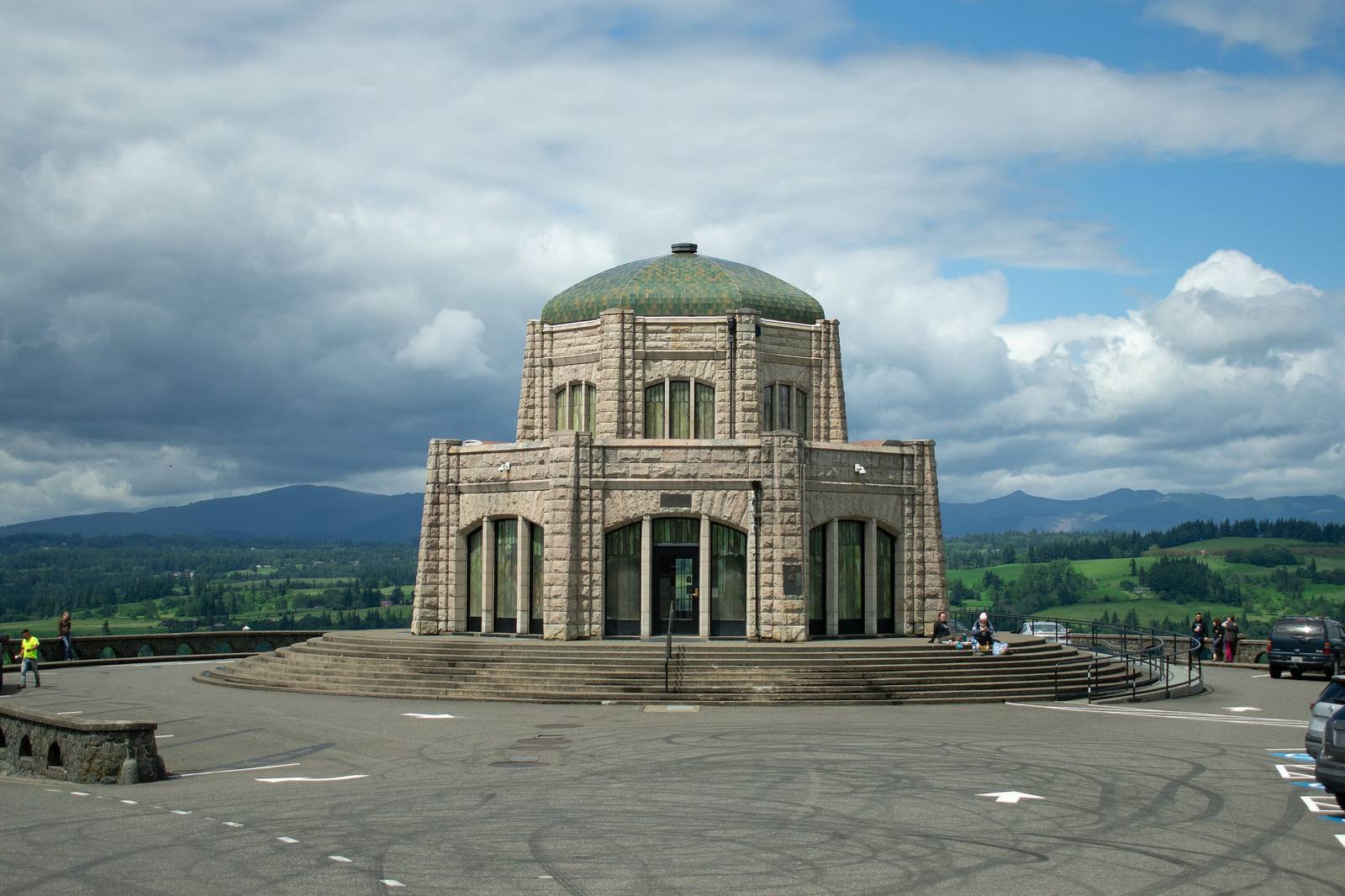
 Josh B / CC BY-SA 2.0 via Wikimedia Commons
The Story
Crown Point is a knob of Columbia River basalt standing 733 feet over the river at the western door of the Gorge, and Samuel Lancaster, the engineer who laid out the Columbia River Highway, wanted a building on it, an observatory, as he put it, from which the river could be seen up and down in silent communion with the infinite. The highway was dedicated here on June 6, 1916, and construction began that year under the Multnomah County roadmaster John Yeon, to a design by the Portland architect Edgar Lazarus.
What went up is an octagon of gray sandstone, 44 feet across, with a domed rotunda 55 feet high, marble inside and stained glass in the windows. It was finished in 1918 and dedicated to the Oregon pioneers. It was also, by function, a comfort station with restrooms, and its cost had climbed from a budgeted $12,000 to about $100,000 in a year when the war had made materials and labor scarce. Oregonians called it an overpriced outhouse, and the name stuck. Eighty years of Gorge weather followed; the building closed in 2001 for a restoration that cost about $4 million and reopened in 2005.
Inside are a small exhibit on the highway, a gift shop run by volunteers, and the restrooms that started the argument. Outside, the view runs east up the Gorge toward the waterfall corridor, and the wind on the balcony can be strong enough to lean on. The highway loops all the way around the building, which is the point: Lancaster built his road to arrive at views.
Visitor Info
On the Map
Nearby
The closest stops worth working into your route
Historical markers nearby
Roadside plaques and monuments within a short detour